A grape saved just in time
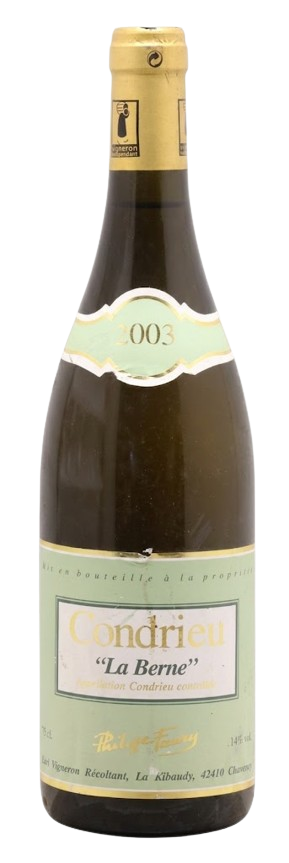
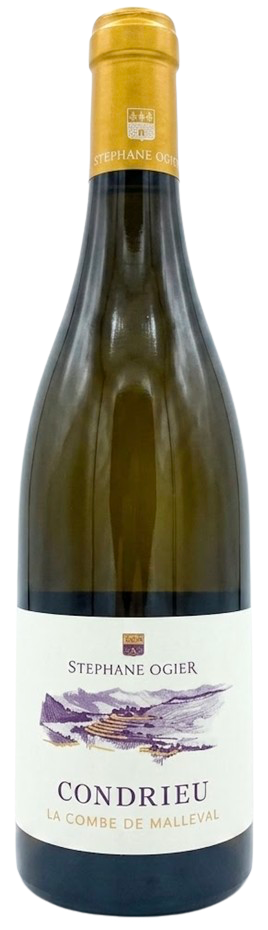
Recognised in 1940, Condrieu stretches along the right bank of the Rhône, south of Côte-Rôtie. Its story is one of rescue: after phylloxera and the wars, Viognier had almost disappeared, reduced to a handful of hectares in the 1960s. Its subsequent worldwide success restored its slopes and led to plantings everywhere else, without ever reproducing what it delivers here.
Viognier is a difficult grape: low-yielding and prone to poor fruit set, it releases its fragrance only at full ripeness, risking a loss of acidity if picking is delayed too long. The harvest window is narrow, partly explaining the wines' rarity and price.
Arzelle, the crumbling granite
Condrieu's soil is decomposed granite known locally as arzelle: a pale, poor, very well-drained sandy material mixed with mica. It heats quickly, warms early in spring and releases heat at night, conditions that drive Viognier towards the aromatic ripeness it needs.
As in Côte-Rôtie, slopes are so steep that they require terraces and manual work. The best plots face south-east and overlook the river directly.
A white for special occasions
Condrieu is instantly recognisable: apricot, white peach, violet, honeysuckle, sometimes a hint of almond or honey. The palate is broad, almost oily, with discreet acidity that invites drinking in its youth: most cuvées show their best between two and five years.
Served at 10–12°C, it accompanies fish in sauce, poultry with cream and blue cheeses. Too cold, it loses all its fragrance, precisely the reason for its appeal.
The grape varieties of Condrieu
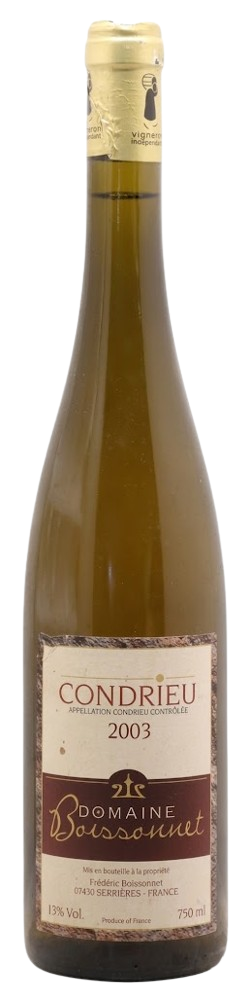
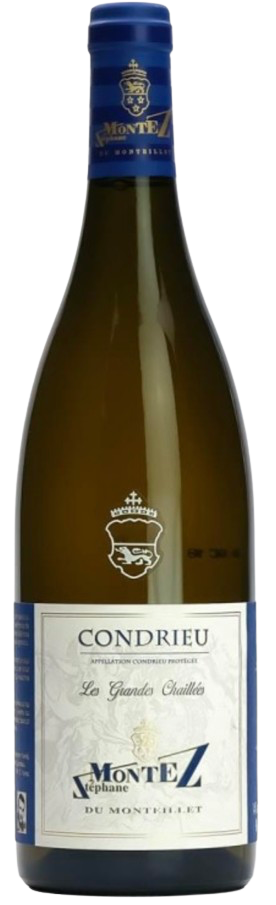
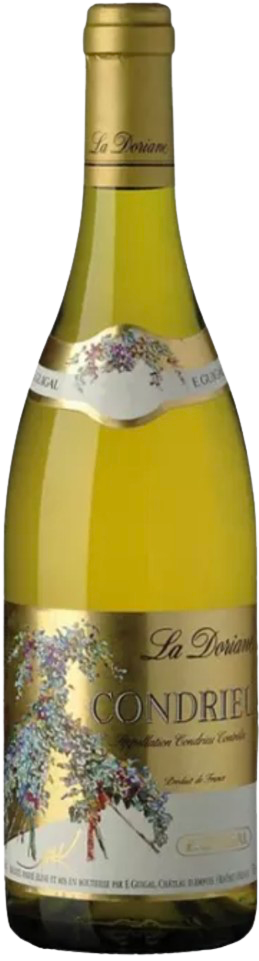
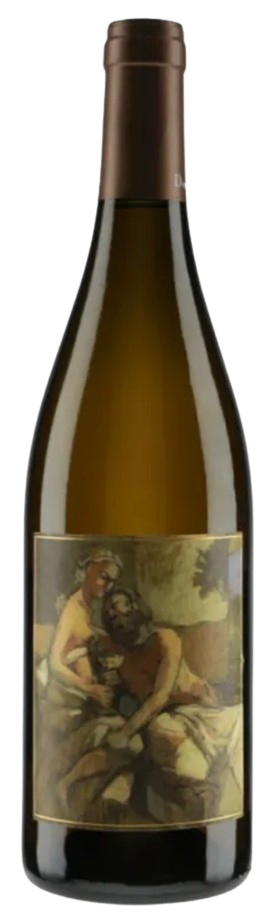
Condrieu wines on 1001caves
Detailed pages: the cuvée, the estate, the drinking window and the bottles for sale between collectors.