At the Gates of Dijon, the First Appellation of the Côte
Marsannay is the threshold of the Côte de Nuits vineyard. Its area extends over three communes of the Côte-d'Or département — Chenôve, Couchey and Marsannay-la-Côte — and stops in the north at the communal boundary of Dijon itself. To the south, the end of Couchey lies about twelve kilometres from Nuits-Saint-Georges. It is therefore a peri-urban appellation, long nibbled away by the expansion of the Dijon conurbation.
That position explains much of its history. For a long time Marsannay was the vineyard that fed Dijon: what was made here was table wine, often from gamay, rather than crus for the cellar. It took until 1987 for a village appellation of its own to be recognised — whereas most of its neighbours in the Côte de Nuits obtained theirs as early as 1936. Marsannay is thus the youngest of the villages of the Côte.
The Terroir: The Fault of the Côte and the Staircase Steps
The vineyard is tiered from 260 to 390 metres in altitude, on concave hillsides facing east and south, whose gradient can locally reach 20%. The subsoil belongs to the Middle Jurassic. From top to bottom one reads the white oolitic limestone and the hard grey-beige Prémeaux limestone (Bathonian), then the marls with Ostrea acuminata and the darker crinoidal limestone (Bajocian). In the south of the appellation, around the Champs Perdrix, the Comblanchien limestone outcrops.
Marsannay's particularity lies in its fracturing. The subsoil is cut by a series of north-south faults almost parallel to the relief, which organise the slope into staircase steps several hundred metres wide, dropping away from west to east. From one climat to another, the same succession of layers is therefore found at different altitudes — hence the mosaic of clay-limestone soils, thin on the slope, deeper at the piedmont. On the plain, there are the Pliocene Bresse marls covered by alluvium, and the silts of the Ouche in the north. The climats of Le Chapitre and Le Clos du Roy have a peculiarity of their own: they are covered by stratified scree known as grèzes litées.
The Rosé of Marsannay, a Burgundian Exception
No other village appellation in Burgundy officially produces rosé. At Marsannay, the rosé is not a separate AOC but a wording completing the appellation name — and above all it has its own delimited plot area, approved at the same time as those for red and white. This rosé area is systematically located at the foot of the slope, on the flat: the deep soils that would give dilute reds make, on the contrary, rosés of flesh and fruit.
The rosé's varietal make-up is equally singular: the cahier des charges admits pinot gris on an equal footing with pinot noir as a main variety, which exists nowhere else in the Côte. The base yield is more generous than in red — 60 hl/ha against 50 — and the total alcoholic strength after enrichment is capped lower. The success of the rosé dates from the inter-war years, driven by Joseph Clair-Daü, a grower who from 1919 pushed for the return of pinot and chardonnay against the common varieties; the precise paternity of the rosé is traditionally attributed to him, but the syndicat itself does not put it in those terms.
Three Colours, Three Styles
In red, Marsannay long suffered from a reputation for lightness, sustained by the gamay years. The rise in quality over the past thirty years has changed that: the best climats on the slope, on meagre, stony soils, give pinot noir of fine density, with clean black fruit and a straight tannic frame, capable of holding five to ten years in the cellar. In 2023, production stood at a little over 11,400 hectolitres of red, very much the majority in the appellation.
The white, with nearly 2,720 hectolitres in 2023 and some fifty hectares in production, holds a far larger place here than in the rest of the Côte de Nuits, where chardonnay is marginal. The rosé, for its part, has fallen back sharply in volume: of the order of 1,758 hectolitres on average between 2004 and 2008, it reached only 850 hectolitres in 2023. Most often made by the saignée method, it is drunk within two or three years, on brilliant red fruit and a taut acidity that clearly sets it apart from the rosés of the south.
The Climats and the Premier Cru Application
Marsannay claims about a hundred climats. Fourteen of them have been put to the INAO with a view to classification as premier cru: Le Clos du Roy at Chenôve; Longeroies, En la Montagne, Es Chezots, Charmes aux Prêtres, Boivin, Grasses Têtes, Clos de Jeu, Saint-Jacques and Favières at Marsannay-la-Côte; Champ Salomon, Aux Genelières, Le Clos and Champs Perdrix at Couchey. The application, filed in the early 2010s, is still under examination: no text has yet created a premier cru at Marsannay, and the growers hope for a decision applicable to the vintages of the middle of the decade.
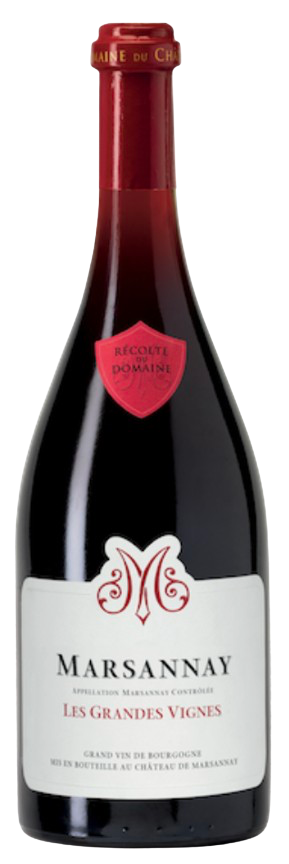
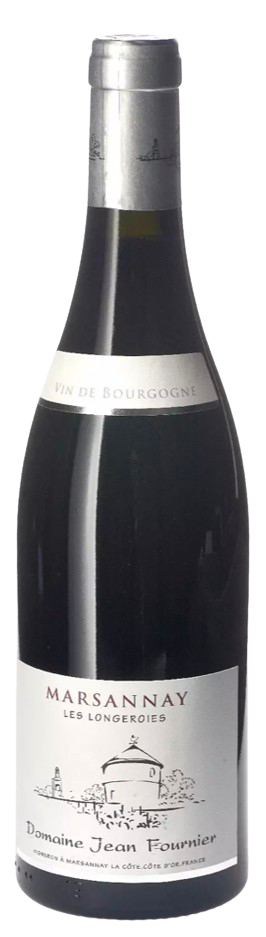
Production is carried by some forty estates, about fifteen of them based at Marsannay-la-Côte and half a dozen at Couchey; twenty-six of them opened a collective tasting cellar in the village in 2022. The reference names — Bruno Clair, Charles Audoin, Bart, Jean Fournier, Fougeray de Beauclair, Château de Marsannay, René Bouvier, Philippe Charlopin — have built in a single generation the credibility of an appellation that the Côte still looked down on thirty years ago.
The grape varieties of Marsannay
Marsannay wines on 1001caves
Detailed pages: the cuvée, the estate, the drinking window and the bottles for sale between collectors.