A Grand Cru in Two Pieces, North of the Slope
Richebourg occupies the northern part of the slope of the grands crus of Vosne-Romanée, just above and to the north of the Romanée-Conti, between altitudes of about 260-265 metres and 285-290 metres. The climat faces east, except for the upper part of Les Verroilles, which pivots slightly to the north. This detail of exposure is not theoretical: that portion is harvested two or three days later than the rest of the climat.
The appellation brings together two distinct lieux-dits, Les Richebourgs and Les Vérroilles ou Richebourgs. The survey published by Monocépage in 2021 gives 5.05 ha to the first and 2.98 ha to the second, for a total of 8.03 ha corresponding to the area assigned to the appellation; the BIVB counted 7.23 ha actually in production in 2022. It is, after the Romanée-Saint-Vivant, the largest of the grands crus of the commune, and the only one to be so widely shared among estates.
The Terroir: Marls, Clayey Limestone and Premeaux Limestone
The geological sequence read from the bottom to the top of the slope runs the Marnes à Ostrea acuminata, the clayey limestone and then the Premeaux limestone — the same succession as on the other grands crus of Vosne. These Middle Jurassic marls, riddled with small fossil oysters, retain water and feed the vine; the limestones above them drain and constrain. The general base of the slope is the hard Premeaux limestone, Jurassic in origin, of the order of 175 million years old.
The BIVB describes for Richebourg brown limestone soils that vary with the gradient and the aspect, shallow at the top, deeper at the bottom — rendzinas, as on La Tâche. This double reading, vertical (top and bottom of the slope) and lateral (Richebourgs to the east, Verroilles to the north-west), explains why one and the same appellation name covers appreciably different styles from one producer to another: nobody here owns the whole climat, and each farms a particular reading of it.
Climate and Exposure
The climate is that of the Côte de Nuits: temperate with a semi-continental tendency, cold winters, wet and frost-prone springs, hot summers broken by storms. The vines of Vosne-Romanée are tiered between 250 and 310 metres in altitude, facing east, sometimes slightly east-south-east. Richebourg lies in the upper range of this tiering, above the Romanée-Saint-Vivant and level with the Romanée-Conti.
The turn to the north of the upper part of Les Verroilles is the climat's only real difference of exposure. It slightly delays ripeness and, in hot vintages, brings a welcome freshness; in difficult years it demands, on the contrary, that one wait. It is a concrete example of what Burgundy calls a climat: a unit of name covering micro-conditions measurable in days of harvest.
The Style of the Wines and Their Ageing
Richebourg is reputed to be the most sumptuous of the wines of Vosne. Allen Meadows describes a character made of extremes: sublimely perfumed and yet powerful, muscular, rich and dense, of an intensity that can at times equal that of La Tâche. Clive Coates evokes an explosion of aromas — coffee and chocolate in youth, violet at maturity — wrapped in a velvet texture of small black and red fruits.
The robe is dark ruby, turning carmine with age; the bouquet opens on small red and black fruits, violet and spice, then turns to undergrowth, truffle and leather. On the palate the body is clean and powerful, the matter ample, the tannins tight but elegant. It is a wine that ought not to be opened before ten years or so and that gives its summit after twenty years or more, served between 15 and 16°C, with game, wild fowl or a fine roast cut of veal.
From Cîteaux to the Parisian Bankers
While the Cluniac monks of Saint-Vivant de Vergy held most of the vines of the future Romanée-Conti, the Cistercians of Cîteaux were among the principal owners of Les Richebourgs. Jean-François Bazin reports that, unlike the Échezeaux, which were entrusted to lay farmers, the monks looked after Les Richebourgs themselves, the wine of which gave rise to a particular cuvée vinified at the Clos de Vougeot, a little over a kilometre away.
Confiscated at the Revolution, the Cistercian vines of Les Richebourgs were acquired in 1791 by Parisian bankers who resold them among themselves speculatively until about 1820. In 1855, Jules Lavalle notes among the owners the names of Duvault-Blochet — ancestor of the de Villaine line — and of Liger-Belair, two families still present on the climat today.
Verroilles or Richebourg: The 1922 Lawsuit and the 1924 Ruling
Before the twentieth century the second lieu-dit was called "Varoilles-sous-Richebourgs" — it is under that name that Lavalle classes it in 1855, while Danguy and Aubertin designate it in 1892 as "Les Verroilles ou Richebourg ou Sous-Richebourg". It is said that Étienne Camuzet, mayor of Vosne-Romanée from 1900 to 1929, deputy for the Côte-d'Or from 1902 to 1932 and himself an owner in Les Verroilles, recommended removing the "sous" from the name. That is how Camille Rodier names it in 1920: "Verroilles ou Richebourgs".
The law of 1919 on appellations of origin, which entrusted the courts with fixing the areas by relying on fair, local and constant usage, was to settle the matter. In 1922, owners in Les Richebourgs brought an action to prohibit the use of the name "Richebourg" for wines from Les Verroilles. On 23 June 1924, the court of Dijon upheld on appeal both designations for the wines of Les Verroilles, taking note of an amicable agreement reached in the meantime: the two lieux-dits were henceforth legally united in a single climat. The appellation of origin "Richebourg ou Verroilles" became the AOC Richebourg on 11 September 1936.
Eleven Estates on One and the Same Climat
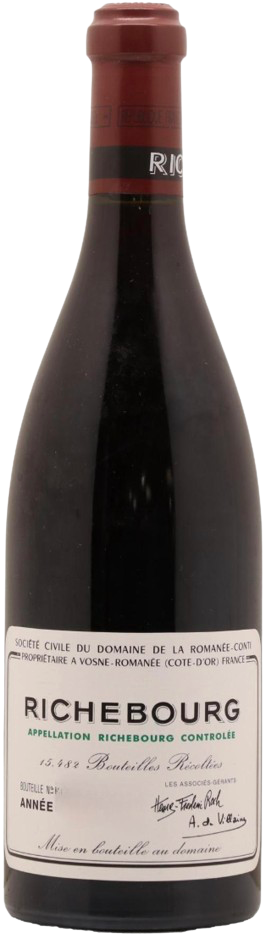
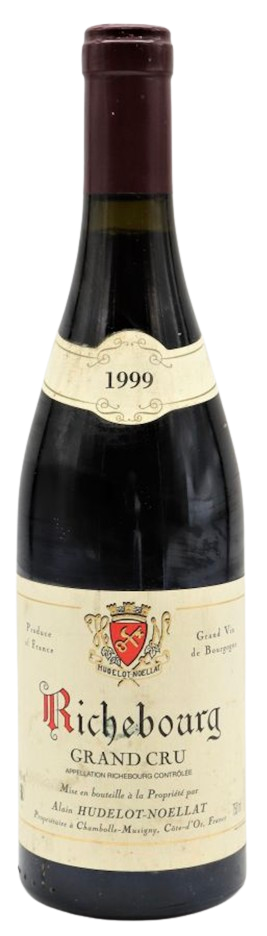
Unlike its neighbours Romanée-Conti, La Romanée, La Tâche and La Grande Rue, Richebourg is not a monopole: it is indeed the most widely shared grand cru of the upper part of the Vosne slope. In the survey published by Monocépage in 2021, eleven owners shared its area, including the Domaine de la Romanée-Conti with 3.51 ha (2.57 ha on Les Richebourgs and 0.94 ha on Les Verroilles), Domaine Leroy with 0.78 ha, Gros Frères et Sœurs with 0.69 ha, Anne-Françoise Gros and Anne Gros with 0.60 ha each, and Thibault Liger-Belair with 0.55 ha. Since parcels change hands, this breakdown must be read at the date on which it was recorded.
This dispersal is a piece of good fortune for the enthusiast: it makes it possible to compare, under one and the same name, very different readings of vinification — destemming or whole bunches, more or less oaky ageing, upper or lower parcels. Where the Romanée-Conti or La Tâche offer only a single possible interpretation, Richebourg remains a field of comparison, and that is probably the best way of understanding what the climat brings of itself.
The grape varieties of Richebourg
Richebourg wines on 1001caves
Detailed pages: the cuvée, the estate, the drinking window and the bottles for sale between collectors.