North of Mâcon, in the Cantons of Lugny and Mâcon-Nord
Viré-Clessé occupies the northern part of the Mâconnais vineyard, in Saône-et-Loire, a few kilometres north of Mâcon. The area covers four communes straddling the cantons of Lugny and Mâcon-Nord: Viré and Clessé, which give the appellation its name, joined by Montbellet to the north and Laizé to the south.
This is a vineyard of slopes, set against the relief that separates the Saône valley from the Mâconnais hinterland. The vines are tiered between 200 and 440 metres in altitude, a considerable range that explains harvest dates and balances differing greatly from one parcel to the next. These are not the spectacular rocks of Solutré-Pouilly in the southern Mâconnais, but a landscape of gentler limestone ridges, dotted with villages and Romanesque churches.
The Terroir: Limestone on the Slope, Clay at the Top
The soils are predominantly limestone, inherited from the Jurassic formations that structure the whole of the Mâconnais. The heart of the vineyard occupies the slope proper, where chardonnay draws from a limestone bedrock the tension and directness that hold the wine together. This is where the most highly regarded lieux-dits are found.
At the top of the slope the geology changes: here one finds deeper, cooler silty-sandy clays, which bring volume and delay ripening. The combination of the two — limestone at the foot of the slope, more clayey ground above — gives Viré-Clessé a palette of material that growers blend or vinify separately depending on the vintage. The dominant exposure is east, occasionally west: a morning orientation that favours aromatic freshness over overripeness.
Climate: Mâconnais Mildness and the Taille à Queue
The climate is temperate, with a slight continental tendency, as throughout the Mâconnais. Summers are hot and bright, autumn often mild, which allows chardonnay to reach high ripeness levels — the key, as we shall see, to the appellation's identity. The heatwave of 2003 thus started the harvest as early as mid-August on some estates, an earliness that, according to the archives, had not been seen since 1422 and 1865.
As everywhere in the Mâconnais, the vine is most often trained by the "taille à queue du Mâconnais", a variant of Guyot in which the cane is bent into an arch. This old gesture answers the acrotony of chardonnay — its tendency to push only the end buds — and gives partial protection against spring frosts. Cordon de Royat and single Guyot pruning are also permitted.
The Style of the Wines: Green Gold, Hawthorn and Persistence
The limestone soils give viré-clessé a green-gold robe and a highly aromatic profile: fruity notes, hawthorn, rose, a citrus purity suggesting lime, over a mineral base. The palate is ample and persistent, in a rounder register than Chablis but tauter than many whites of the southern Mâconnais.
Vinification follows that of the great white Burgundies: pressing, settling, temperature-controlled fermentation, then ageing on lees with bâtonnage, in tank or in barrel. Served between 11 and 13°C, viré-clessé accompanies fish and shellfish as readily as white meats and poultry, and pairs willingly with soft cheeses. It keeps for up to about five years, longer for the richest cuvées.
The Residual Sugar Quarrel, from 1999 to 2017
The story of the appellation is also that of a conflict. In 1936, when Pouilly-Fuissé, Pouilly-Loché and Pouilly-Vinzelles were created, the same possibility was offered to the growers of Viré, who declined it. It took until 26 February 1999 for the sector to reach village appellation status, by merging the Mâcon-Viré and Mâcon-Clessé denominations. But the 1999 cahier des charges required dry wines, and in effect excluded a local tradition: the wines known as "levroutés", made from very ripe grapes, sometimes partly botrytised, which retain unfermented sugars. The producers concerned — the best known being Domaine de la Bongran, of the Thévenet family, at Clessé — had to declassify these cuvées, notably into Mâcon-Villages.
The debate took nearly twenty years to resolve. The organisme de défense et de gestion argued the antiquity of the practice, attested in the writings of the historian and grower Émile Violet, the word "levrouté" referring to the appearance taken on by overripe grapes. Following the session of the INAO national committee on 15 June 2017, the cahier des charges took in two new categories, defined by their fermentable sugar content: "demi-sec" between 4 and 8 g/l, and "Levrouté" from 8 to 18 g/l, the latter mention being compulsory on the label and subject to its own constraints (no enrichment, longer ageing, capped yield). Viré-Clessé is thus one of the rare Burgundian appellations officially to embrace a non-dry white.
Lieux-Dits and Reference Houses
Viré-Clessé has no premiers crus, but it does have identified lieux-dits that are regularly claimed on labels. At Viré: le Creuseromme, le Chapitre, Chazelle, Roally and l'Épinet. At Clessé: Breillonde, Quintaine, le Chêne and la Troupe. Quintaine in particular is associated with the appellation's richest cuvées.
The economic landscape combines family estates and cooperation: the cellars of Viré, Clessé, Lugny and Charnay-lès-Mâcon vinify a substantial share of the crop. Among the most frequently cited estates are Domaine de la Bongran (Jean Thévenet), Domaine André Bonhomme, Domaine Sainte-Barbe, Domaine des Chazelles, Domaine de Chervin and Château de Besseuil.
The grape varieties of Viré-Clessé
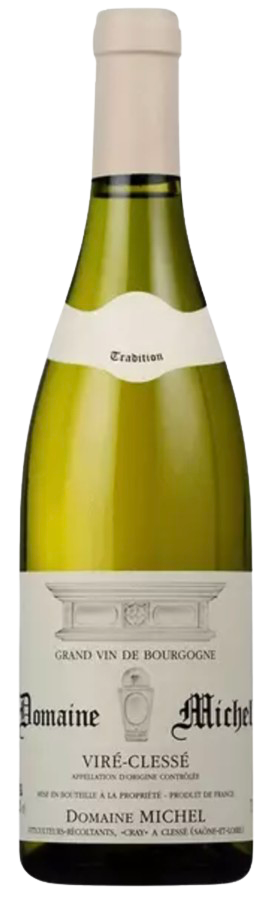
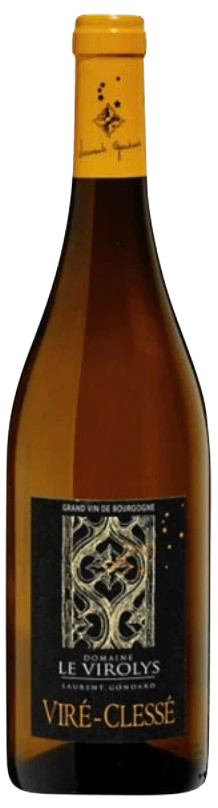
Viré-Clessé wines on 1001caves
Detailed pages: the cuvée, the estate, the drinking window and the bottles for sale between collectors.