At Flagey-Echézeaux, Not at Vosne-Romanée
This is the first confusion to clear up. Enthusiasts spontaneously attach Echezeaux to Vosne-Romanée, whose style it carries and from which most of its growers come; administratively, however, the grand cru lies in the territory of Flagey-Echézeaux, a commune whose village itself stands more than a kilometre from the slope, in the plain of the Saône, and which counts only a handful of estates. The village-appellation wines produced at Flagey are moreover entitled to claim the AOC Vosne-Romanée, which completes the blurring of the geography for the reader of labels.
The grand cru occupies a band of hillside wedged between the Clos de Vougeot and its wall to the east, the Grands-Echézeaux which it envelops, the premiers crus of Chambolle-Musigny to the north and those of Vosne-Romanée — Les Suchots, Les Beaux Monts — to the south and west. It unfolds at the outlet of the combe d'Orveaux, a dry valley that notches the Côte and opens precisely onto this sector: this position at the mouth of a combe, unusual for a grand cru, explains part of the differences in exposure between its parcels.
The Terroir: Eleven Lieux-Dits, Eleven Physiognomies
Echezeaux brings together the most numerous federation of lieux-dits of all the grands crus of the Côte — eleven, where the Clos de la Roche, second in this respect, aggregates eight. At the areas recorded by Winehog, these are Les Poulaillères (5.21 ha), En Orveaux (5.04 ha, in part), Les Treux (4.89 ha), Les Rouges du Bas (3.99 ha), Les Champs-Traversins (3.58 ha), Echézeaux du Dessus (3.55 ha), Les Cruots ou Vignes Blanches (3.28 ha), Les Loächausses (2.48 ha), the Clos Saint-Denis (1.80 ha, a namesake unrelated to the grand cru of Morey-Saint-Denis), Les Beaux Monts Bas (1.25 ha, of which only a small part is classed) and Les Quartiers de Nuits (1.12 ha, in part, at the eastern end against the Clos de Vougeot).
These lieux-dits differ not only in size: they are distinguished above all by altitude and orientation, with marked physiographic contrasts from one parcel to the next. En Orveaux, the most northerly, is also the coldest because of its exposure, and extends the combe; Les Rouges du Bas carry the highest point of the grand cru; Echézeaux du Dessus, the historic heart of the appellation, is described as having a deeper and more calcareous soil. The general rule of the slope applies here as elsewhere: the lower parcels, more clayey and more productive, give richer and heavier wines, while the higher parcels, on lighter and sandier soils, give more elegant and fresher wines.
Climate and Exposure
The climate is that of the Côte de Nuits: temperate with a slight continental tendency, pronounced winters, wet springs exposed to frost, hot summers punctuated by storms. Pinot noir ripens there in the first period; its potential for accumulating sugars is high for a moderate acidity, sometimes only just ripe, which makes the harvest date decisive.
On so extensive a grand cru, exposure is not uniform. The opening of the combe d'Orveaux sends cool air circulating over the northern part of the cru, whereas the lieux-dits facing east and south-east, more sheltered, ripen more regularly. Recent warming has made these gaps still more legible: during the heatwave of 2003, some estates of the Côte harvested in mid-August, a month ahead of custom, an earliness the archives had not recorded since 1422 and 1865.
The Style of the Wines and Their Ageing
A successful echezeaux is a wine of Vosne: a deep robe, a nose of spice and small black fruits, a fleshy and savoury palate, moderately present tannins, clean length. It is drunk earlier than the most austere grands crus of the commune — five to fifteen years cover most of its life, longer in the great vintages — and Aubert de Villaine summed it up, as quoted by Jean-François Bazin, as "a wine that lets itself be approached simply".
One still has to come across the right one. The cuvées from the lower part, more generous, may lack freshness and definition; those from the best-placed lieux-dits reach the level expected of the rank. Since most wines are blends of several lieux-dits and the name of the parcel rarely appears on the label — only about ten producers mention it, according to the Monocépage survey — the name of the estate remains, in practice, the most reliable indication.
An Uneven Reputation, and Why
The origin of the problem is judicial. On 16 July 1925, under the law of 6 May 1919 on the protection of appellations of origin, Étienne Camuzet — then mayor of Vosne-Romanée and deputy for the Côte-d'Or — and Mongeard-Mugneret summonsed eight growers of Vosne and Flagey for having declared the 1924 crop of neighbouring lieux-dits as Echézeaux. The plaintiffs wanted to reserve the name for Echézeaux du Dessus alone. The judges of Beaune found against them in the name of "local, fair and constant usage", in a judgment that Jean-François Bazin describes as summary, delivered without historical study or study of soils. The name spread at a stroke to a dozen adjoining or merely nearby lieux-dits. The AOC was approved on 31 July 1937, and the perimeter would be slightly widened twice more.
Hence a cru of which critics speak in the plural. "The extent of the appellation, the diversity of terroirs and of vinifications give birth to a multitude of different Echézeaux, some of which are magnificent and others of which do not deserve the name of Grand Cru", Bazin concluded in 1994; the Oxford Companion to Wine notes the same unevenness, which Echezeaux shares with its equally fragmented neighbour, the Clos de Vougeot. In "The Pearl of the Côte", Allen Meadows ranks the eleven lieux-dits: Echézeaux du Dessus ("the finest of the eleven") and Les Poulaillères at the head; then Les Rouges du Bas, En Orveaux and Les Cruots; next Les Loächausses, Les Champs-Traversins and Les Beaux Monts Bas; and finally the Clos Saint-Denis, Les Treux and Les Quartiers de Nuits, "the most criticised". He defends the ranking of the cru all the same, while noting that even its best examples do not have the class of the grands crus of the very first rank.
From Cîteaux to Eighty Owners
The sector owes much, like the Clos de Vougeot, to the patient consolidation carried out by the monks of Cîteaux, who gathered through gifts, exchanges and acquisitions a perimeter lying above the Clos and integrated it into the "Vignes du Territoire et Dépendances du Cellier de Vougeot" — a "Vignes des Echezeaux" appears on the Grand Atlas of the properties of Cîteaux (1718-1730), held in the Burgundy archives at Dijon. The difference with the Clos is decisive: whereas the abbey kept the latter under direct management, it had ceded the Echezeaux under quit-rent leases from the eighteenth century at least. Since these parcels escaped the sale of national property, they remained in the hands of their holders, and the fragmentation there therefore long predates the Revolution.
Today the grand cru has in the order of eighty to eighty-five parcel owners — eighty in the early 2000s according to the Oxford Companion, about eighty-five in the survey published by Monocépage — which makes it, after the Clos de Vougeot, one of the most divided crus in Burgundy. The best known of them is the Domaine de la Romanée-Conti, whose echezeaux comes mainly from Les Poulaillères. These breakdowns change with successions and sales: they hold good only for the date on which they were recorded.
The grape varieties of Echezeaux
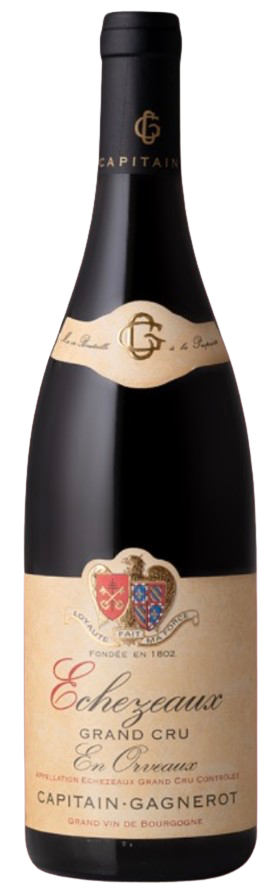
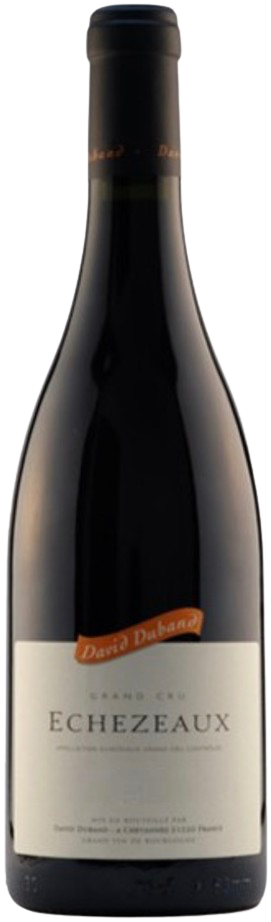
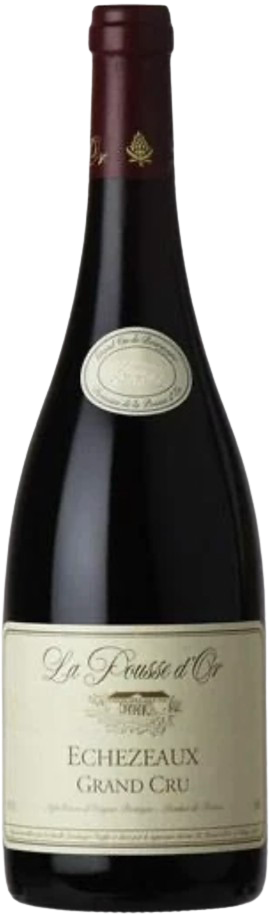
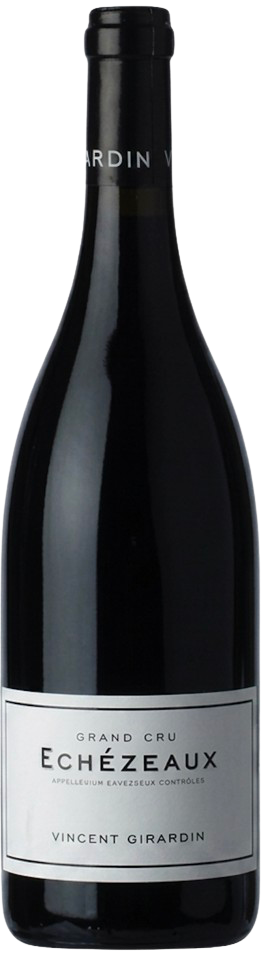
Echezeaux wines on 1001caves
Detailed pages: the cuvée, the estate, the drinking window and the bottles for sale between collectors.