Two Sectors on Either Side of Pouilly-Fuissé
Saint-Véran occupies the southern extremity of the Mâconnais vineyard, south of Mâcon, in Saône-et-Loire, at the hinge with Beaujolais. Its distinctiveness is geographical before it is oenological: the appellation area is not in one piece. It is made up of two separate blocks, one to the north — Prissé, Davayé and part of Solutré-Pouilly — the other to the south — Chânes, Chasselas, Leynes, Saint-Amour-Bellevue and Saint-Vérand.
Between the two lies Pouilly-Fuissé, with its rocks of Solutré and Vergisson. Saint-Véran therefore frames its more famous neighbour without ever overlapping it, which explains the diversity of its expressions: a single name on the label covers slopes that share neither the same rock, nor the same orientation, nor quite the same climate.
The Terroir: Crinoidal Limestone, Lias Marls and Chert Clays
The appellation's foundation is the crinoidal limestone of the Middle Jurassic, that rock built from the accumulation of fossilised crinoid segments, very much present throughout the southern Mâconnais. It is what gives saint-véran its mineral weave and its bright golden robe. But the appellation lives above all on the way the soils are distributed around these limestone bars.
On the western slope, older Lias formations outcrop: the steep slopes of Chasselas and Leynes are made of grey marls, which bring matter and depth. On the gentler slopes of the eastern side, at Prissé and Davayé, marly limestones dominate, favouring more supple wines. Finally, on the left bank of the Petite Grosne, at Chânes and Prissé, the crinoidal limestone hides beneath a cover of chert clay. Three soil configurations, three readings of chardonnay.
A Temperate Climate with a Continental Nuance
The climate is temperate, with a slight continental tendency and a southern influence that is already perceptible: we are here at the gateway to the South, in the continuation of the Beaujolais slopes. Summers are hotter and drier than at Chablis, which explains the generous ripeness that characterises saint-véran compared with the whites of northern Burgundy.
Chardonnay nevertheless remains an early variety, which breaks bud soon and fears spring frosts. The Mâconnais answers this with a local practice, the "taille à queue du Mâconnais", derived from Guyot: arching the cane limits chardonnay's acrotony and delays budbreak in the most exposed buds. It is one of the few vineyard gestures that amount to a regional signature in their own right.
The Style of the Wines: Richness and Freshness
Saint-Véran shows a fairly deep, bright golden robe. The nose blends ripe fruit — pear, peach, exotic fruit — with white flowers (acacia, honeysuckle) and a richer register of fresh almond, hazelnut, honey, butter and cinnamon when oak ageing plays its part. Fern recurs often in descriptions of the wines grown on marls.
On the palate, the attack is clean, then the substance settles in: unctuousness, richness, volume, before a fresh finish that sets the wine back on an even keel. The appellation's classic winemaking contributes to this — pressing, settling, fermentation at controlled temperature, then ageing on the lees with stirring. This is a white for the table, to be drunk between 9 and 11°C when young, 11 to 13°C with age, with fish, seafood and assertive cheeses such as goat's, bleu de Bresse or beaufort. It keeps up to six years, a little more in great vintages.
Saint-Véran or Saint-Vérand? The Story of a "d"
The appellation is young on the Burgundian scale: it was recognised by decree on 6 January 1971, the parcel-by-parcel delimitation of the communes in the area following immediately after and being validated in February 1972. The induction ceremony was held at the château de la Balmondière, at Saint-Vérand. Before that date, these vines were marketed under more modest denominations of the Mâconnais or of white Beaujolais.
That leaves the riddle of the "d". The village is today called Saint-Vérand; the appellation is written "Saint-Véran", without a "d". It is the old spelling of the village's name — formerly Saint-Véran-des-Vignes — that was chosen to christen the cru, the "d" remaining with the commune. A one-letter difference that is anything but trivial for anyone looking for the appellation on a map, and one that should not be confused either with the Saint-Véran of the Hautes-Alpes, which has no viticultural connection.
Climats, Communes and Benchmark Houses
Saint-Véran has no Premiers Crus, but a list of forty-two climats has been filed with the INAO, and producers readily claim lieux-dits on the label. Among the most frequent: Les Terres Noires, Le Clos, Au Château, Les Peiguins, Au Bourg, À la Croix, Aux Bulands, Vers le Mont, Les Chailloux, En Cras, En Crêches, Les Crays, Pommard and Les Mures. An application for recognition as Premier Cru has also been filed at the INAO's Mâconnais office, on the model of what has been done at neighbouring Pouilly-Fuissé.
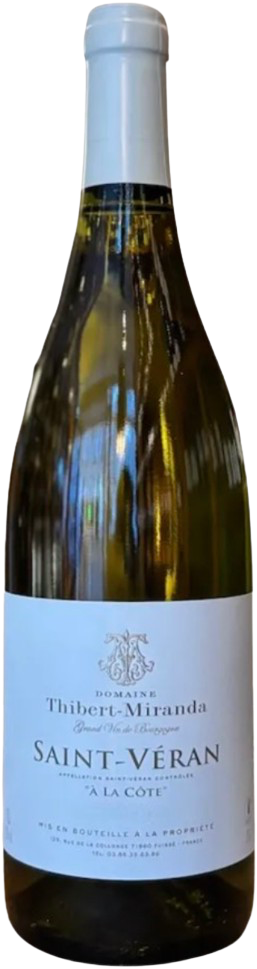
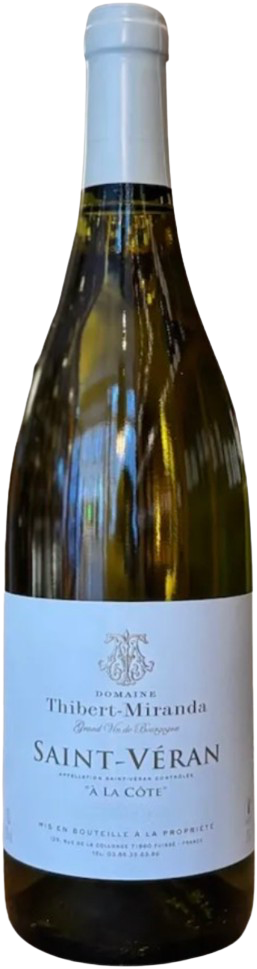
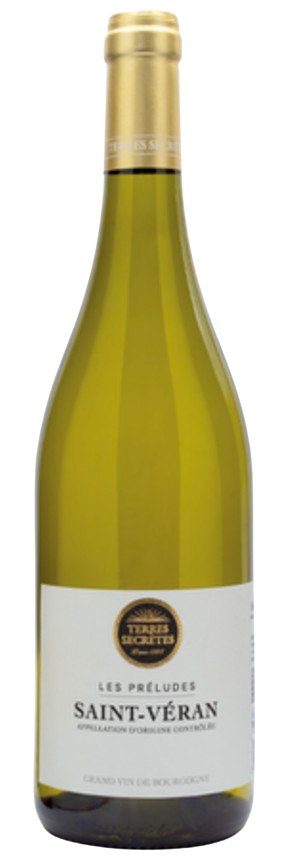
The production fabric mixes family estates, merchant houses and cooperatives — the Cave des Vignerons des Terres Secrètes, at Prissé, weighs heavily in the appellation. Among the estates regularly cited: Domaine des Deux Roches, Domaine de la Croix Senaillet, Domaine Corsin, Domaine Thibert Père et Fils, Domaine Saumaize and Château de Chasselas. In 2018, the appellation hosted the Saint-Vincent tournante at Prissé, which drew around 85,000 visitors.
The grape varieties of Saint-Véran
Saint-Véran wines on 1001caves
Detailed pages: the cuvée, the estate, the drinking window and the bottles for sale between collectors.