Two Communes, One Name on the Route des Grands Crus
The vosne-romanée appellation is produced in two communes of the Côte-d'Or: Vosne-Romanée and its neighbour Flagey-Echézeaux, whose wines take the name of the former. The vineyard occupies a stretch of the Côte de Nuits along the route des Grands Crus, between Vougeot to the north and Nuits-Saint-Georges to the south. Its area reaches 150.48 hectares, of which 54.85 are premier cru, for a production of 5,868 hectolitres.
The place is ancient: it was already called Vaona in 639. From the eleventh century, the monks of Saint-Vivant de Vergy, attached to Cluny, and the Cistercians of Cîteaux set about developing these terroirs. The Romanée-Conti is said to have been created by the monks of Cîteaux in 1232; Romanée-Saint-Vivant, for its part, preserves the memory of the monastery of the Hautes-Côtes. The village took its compound name in 1866, following the example of Gevrey-Chambertin, by joining that of its most famous cru to Vosne.
The Terroir: Pierre de Prémeaux Beneath the Greatest Crus
The slope belongs to the cuesta that borders the Saône plain to the west, structured by a network of faults running south-south-west to north-north-east. Reading from top to bottom, one finds the white oolitic limestones of the Middle Bathonian — the pierre de Comblanchien, which caps the summit of the Côte — then the Lower Bathonian limestones known as "pierre de Prémeaux", which carry precisely the Romanée-Conti, Richebourg and La Tâche, then the Upper Bajocian marls with Ostrea acuminata and the crinoidal limestones.
At the surface, the soils are limestone mixed with clayey marls, and their depth varies considerably: from about ten centimetres at the top of the slope to a metre at its foot. They are made up of scree fallen from the top of the Côte, of red silts deposited in the glacial periods, of the weathering of the underlying beds and of earth carried back up by growers over the centuries. The whole faces east. These few centimetres of soil more or less, over different bedrocks, are enough to distinguish a grand cru from a premier cru and a premier cru from a village wine — this is the very principle of the division into climats.
Climate and the Cycle of the Vine
The climate is temperate with a slight continental tendency: rainfall spread across the year, pronounced winters, hot summers. Pinot noir ripens here in the first period and takes full advantage of the growing cycle. A delicate variety, it is susceptible to downy mildew, parasitic rougeot, grey rot and leafhoppers, and requires careful disbudding since it produces many secondary bunches.
The work follows an unchanging calendar: single Guyot pruning with a cane of five to eight buds and a spur of one to three, pulling out and shredding the prunings, bending the canes, disbudding as growth resumes, two or three liftings of the wires, trimming and treatments. Green harvesting has become general in order to control yields and concentrate the remaining fruit. Here again, the vintage lays down the law: in 1422 as in 1865, the archives record harvests in August, and the heatwave of 2003 had some estates starting in mid-August, a month ahead of the usual rhythm.
The Style of the Wines and Their Ageing
Vosne-romanée shows a pure ruby robe. The nose combines red and black fruits — strawberry, raspberry, blueberry, blackcurrant — with a note of leather that asserts itself with age. The palate is tannic, powerful and velvety at once: this combination of density and silkiness, more than any other trait, is the appellation's signature. Pinot noir accumulates sugars easily here for a medium acidity, which gives rich, deeply coloured wines built to last.
The village appellation keeps for between five and fifteen years and is served between 14 and 16°C; the premiers crus of fine vintages go well beyond. At table it calls for red meats, feathered game, roast poultry and assertive cheeses. Prestige comes at a price: in 2015, the ouvrée of vosne-romanée premier cru was valued at 80,000 euros and the rest of the village appellation at 40,000 euros, the highest level of any village appellation in the Côte de Nuits.
Eight Grands Crus, Four Monopoles
The grands crus are autonomous appellations, distinct from the village. In the commune of Vosne-Romanée alone, six of them share 27.11 hectares for about 900 hectolitres a year: the Romanée-Conti (1.63 ha), La Romanée (0.84 ha), La Tâche (6.06 ha), La Grande Rue (1.65 ha), Richebourg (8.03 ha) and Romanée-Saint-Vivant (8.71 ha). Two others belong to Flagey-Echézeaux: Grands-Échezeaux (9.14 ha) and Échezeaux (37.69 ha). Rare in Burgundy, four of these grands crus are monopoles — the Romanée-Conti, La Romanée, La Tâche and La Grande Rue — while Richebourg and Romanée-Saint-Vivant are, like most Burgundian grands crus, divided among several owners.
The history of the Romanée-Conti sums up that of the commune. Taken over in the fifteenth century by the monks of Saint-Vivant, it owes its name to Prince Louis François de Bourbon-Conti, who bought it in 1760, before it was declared national property at the Revolution. In 1869 the merchant Jacques-Marie Duvault-Blochet, an ancestor of Aubert de Villaine, took it over. In the early 1940s it was the last vineyard in Burgundy still to hold ungrafted vines predating phylloxera; exhausted, they were pulled up and the cru entirely replanted in 1945, hence the absence of any harvest from 1946 to 1951. The village appellation, for its part, was recognised in 1936. Among the fifteen premiers crus, Les Suchots, Aux Malconsorts, Les Beaux-Monts, Aux Brûlées, Les Petits Monts, Aux Reignots and the Clos des Réas are among the most sought-after.
The grape varieties of Vosne-Romanée
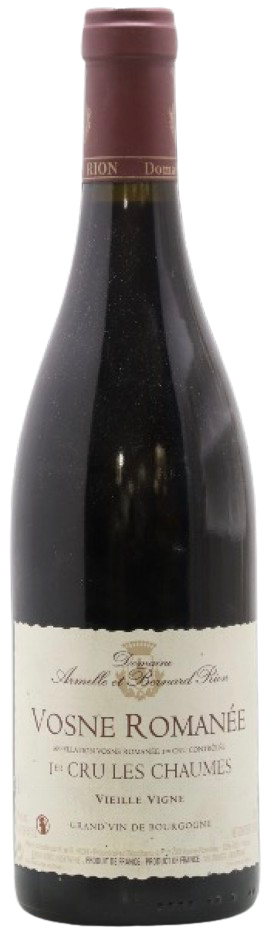
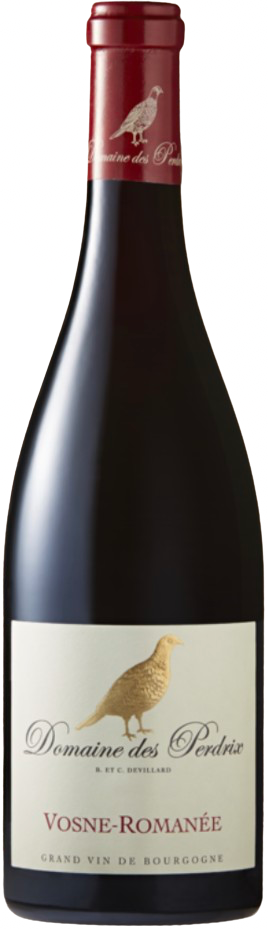
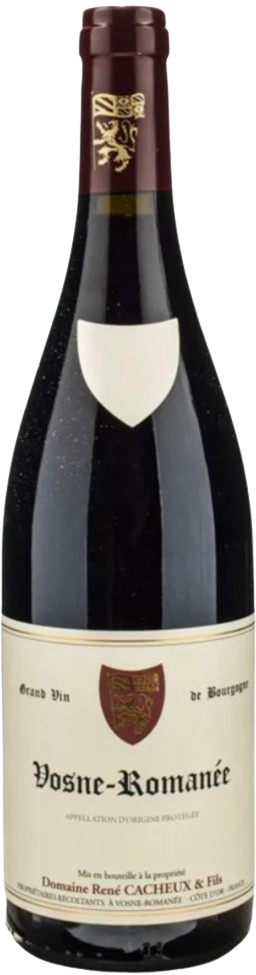
Vosne-Romanée wines on 1001caves
Detailed pages: the cuvée, the estate, the drinking window and the bottles for sale between collectors.