The Village of the Combe, on the Road to Saint-Romain
Auxey-Duresses sits at the heart of the valley that cuts into the Côte de Beaune between Monthélie and Meursault and climbs towards Saint-Romain and the Hautes-Côtes. It is a back-slope site in the literal sense: you leave the unbroken line of the main hillside for a country of short gradients, sharper relief and limestone cliffs. The vineyard occupies both sides of the combe, which gives it a range of exposures that no village on the Côte proper can match.
That geography dictates the planting directly. The best-exposed slopes and the gradients that continue the Monthélie hillside carry pinot noir — this is where the Duresses lie, which gave the village its name. The cooler sectors, and the parcels close to the Meursault boundary, are planted to chardonnay. The result: 35.60 hectares of white out of roughly 116, close to a third of the appellation, a proportion nothing like that of Volnay or Pommard.
The Terroir: Bathonian Limestone Laid Bare by the Valley
The opening of the combe has a major geological effect: it cuts through the cuesta and exposes, along its flanks, the full thickness of Jurassic limestone that elsewhere is visible only in a narrow section. Here you find the levels that make the whole Côte de Beaune — hard upper Oxfordian limestone at the top, marls, then the Bathonian limestones, among them the Comblanchien stone that carries neighbouring meursault.
The vineyard soils are made of scree fallen from these cornices, of red silts laid down during the glacial periods, and of rock weathered in place. They are lean, very stony, often thin — which limits vigour and yields wines of a definition beyond what their classification would suggest. The best climats — Les Duresses, Reugne, Les Bréterins, Le Val — sit mid-slope on this well-drained limestone scree.
Climate and Exposure: Two Slopes, Two Wines
The general climate is that of the Côte-d'Or: temperate with a slight continental tendency. But the opening of the valley alters it sharply on a local scale. The combe channels the wind and the cold air sliding down from the Hautes-Côtes, the nights are cooler, spring frosts more feared, and ripeness arrives later than on the main hillside — hence average yields noticeably lower than at Monthélie or Volnay.
That is also what makes the place valuable today. In a warming climate, back-slope sites, higher and cooler, preserve acidity and aromatic precision. Chardonnay keeps its tension and its mineral gunflint note here; pinot noir keeps a clean fruit and a slender frame rather than alcoholic power.
The Style of the Wines: Suppleness and Vivacity
The red of Auxey-Duresses has a measured, velvety tannic frame, a supple attack and notes of red and black fruit: a wine of synthesis, less sturdily built than a pommard, less perfumed than a volnay, but immediately approachable. It goes with delicate flesh and white meats — veal, roast pork, rabbit, brochettes — with charcuterie and cured hams, and is served between 15 and 16°C.
The white is recognisable by its pale, crystalline straw robe, its aromas of fresh almond and reinette apple, its biscuity nuances and a mineral gunflint scent. Lively in its youth, it then develops flesh and richness, with good persistence. Served between 12 and 14°C, it suits prawns, fish in a well-seasoned sauce, seafood gratins and blue-veined cheeses. For many wine lovers it is the best affordable substitute for meursault, made a few hundred metres away.
Nine Premiers Crus and the Shadow of Meursault
Auxey-Duresses has nine climats classified as premier cru: Les Duresses and Bas des Duresses, Reugne, Les Bréterins, Le Climat du Val and Clos du Val, Les Écusseaux, Les Grands Champs and La Chapelle. They account for 27 hectares of red and only 1.35 hectares of white: the appellation's hierarchy was built on pinot noir, even though chardonnay now occupies a third of the surface.
The village has always lived in its neighbours' shadow. To the south, Meursault; to the east, Volnay and Pommard; both sides of the combe carry the same limestone formations as those appellations, but the label does not say so. Part of the production can in fact be sold under the generic côte-de-beaune-villages denomination, which long diluted the name. For the buyer, that is a mechanical windfall: the price follows the village's fame, not the geology of the parcel.
A Late Recognition
The Auxey vineyard is as old as the rest of the Côte, and it shares the same chronology — expansion driven by the abbeys from the 6th century, the banning of gamay by Philippe le Hardi in 1395, the edict of Charles VI in 1416, then the scourges of the 19th century and the replanting of grafted vines after phylloxera.
But official recognition came well after that of its neighbours: the BIVB dates the creation of the auxey-duresses village appellation to 1970, when Beaune, Pommard and Volnay had been recognised as early as 1936 and Monthélie in 1937. That gap of a generation sums up the village's story: a quality terroir that long remained an anonymous supplier to the Beaune négoce before existing under its own name. The catching-up is under way, driven by a new generation of growers in the combe.
The grape varieties of Auxey-Duresses
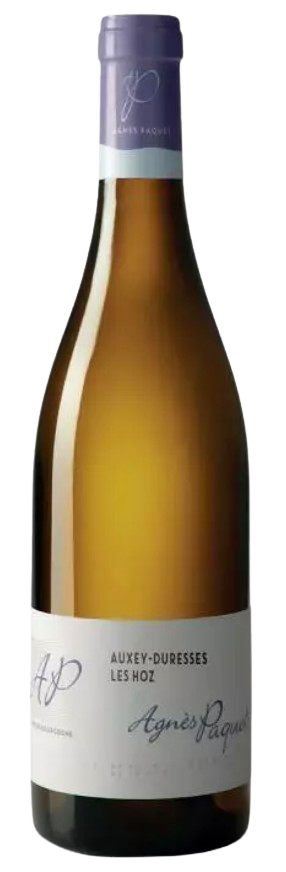
Auxey-Duresses wines on 1001caves
Detailed pages: the cuvée, the estate, the drinking window and the bottles for sale between collectors.