A Slope Cut by Four Valleys, Twelve Kilometres from Chalon
The appellation area extends across three communes of Saône-et-Loire — Givry, which carries most of it, Jambles to the south-west and Dracy-le-Fort to the north — about twelve kilometres west of Chalon-sur-Saône. Mercurey is its neighbour to the north and Montagny lies further south; the côte as a whole may in addition claim the geographical denomination bourgogne côte-chalonnaise.
The vineyard occupies a slope running broadly north-north-east / south-south-east, cut by four small valleys: from north to south, the combe de Savry, the combes Gris, that of the hamlet of Russilly and that of the Jambles stream. This carving explains the diversity of exposures, from due east to south-east and due south. The vines are tiered between 220 and 300 metres in altitude, on gentle slopes at the foot that steepen as they climb.
The Terroir: An Oxfordian Slope on a Lias and Dogger Basement
The geology of Givry reads like a section through the whole Jurassic. The layers were laid down by marine sedimentation, then the relief formed at the end of the Oligocene with the collapse of the Bresse rift: the côte is structured by a set of faults that break up the strata, and Quaternary erosion covered the whole with colluvium. The slope between Jambles and the hamlet of Charnaille rests on the Lower Jurassic — the Lias — with an alternation of limestones with giant Gryphaea, dark micaceous marls of the Upper Pliensbachian (the Domerian) and grey Toarcian marls. The upper part, under woodland, belongs to the Dogger: beige oolitic limestones of the Lower Bathonian, once quarried, overlying a narrow band of light grey Upper Bathonian marls, on which grow the vines climbing towards Russilly.
But the planted slope sits almost entirely on the Middle and Upper Oxfordian, and that is where the essentials are decided. Going down from the top, one crosses a thin layer of red or brown ferruginous oolitic marls, then the Nantoux limestones in beds of ten to twenty centimetres separated by marly horizons, then light beige marls corresponding to those of Mercurey and Saint-Romain, then the famous red oolitic limestones known as the Givry limestones, and finally the beige Germolles limestones, the "pierre de Dracy". The soils follow this slope: stony, shallow rendosols at the top, free-draining clayey calcisols at mid-slope, deep colluvial clayey calcisols at the bottom, in the spreading zone. It is the mid-slope, free-draining and clay-limestone, that carries the best climats.
A Temperate Climate with a Continental Tendency
Givry has a temperate climate with a slight continental tendency: hot summers, cold winters and a marked thermal range between the two seasons. Rainfall is fairly uneven across the year, May being the wettest month. The prevailing wind is the bise. In the absence of a local station, the reference readings are those of Dijon and Mâcon, roughly halfway between which the village lies.
Late frosts remain infrequent in the vineyard, apart from a few lieux-dits known to be frost-prone; violent storms are possible, but hail relatively spares the appellation. This relative mildness, combined with the east and south exposures of the slope, allows pinot noir — an early-ripening variety — to reach good sugar levels regularly. The 2003 heatwave pushed some estates to pick from mid-August, a precocity which, according to the archives, had not been seen since 1422 and 1865.
The Style of the Wines: Straightforwardness Before Power
The reds of Givry are recognisable by a bright ruby tint, a medium body, fruity and animal shades, and above all a warm straightforwardness that makes them immediately likeable. Where Mercurey looks for frame, Givry plays fruit and balance: pinot noir here is deeply coloured and rich in sugars, with only medium acidity and tannins that never crush. They are served between 14 and 16°C with fine charcuterie, braised veal, roast fowl or soft cheeses — brie de Meaux, camembert, reblochon. Their average cellaring span is four to eight years.
The whites are far more confidential: of the 2010 production, there were 10,410 hectolitres of red to 2,386 hectolitres of white. They are no less charming for that. Chardonnay reaches good sugar levels here while keeping substantial acidity, which gives ample, rich, well-balanced wines, aged on the lees with bâtonnage. Served between 10 and 12°C, they go with fish in light sauces, white meats and pressed cheeses, and are generally drunk within their first two to six years.
Henri IV's Wine: What the Sources Really Say
It is the appellation's oldest and most effective selling point: Givry is said to have been Henri IV's favourite wine. The attribution should, however, be read for what it is. The tradition is reported by the Burgundian historian Claude Courtépée — and by the village's growers themselves — in the conditional, and not by any court document. What the sources do document with certainty is the ancient and continuous reputation of the wines of Givry: as early as the sixth century they enjoyed high standing, in 1371 Philip the Bold had them appreciated by his father-in-law the Count of Flanders, the papal court at Avignon bought them in quantity in the fourteenth century and Eustache Deschamps sang them in his verse. At that time Givry was regarded as the wine centre of the Chalonnais.
The royal legend has in any case left an institutional trace: the Confrérie des Chevaliers du Cep Henry IV, founded in 1963, holds its solemn chapter at Givry every year on the third Saturday in January. A reminder that the story is part of the appellation's heritage — but that a givry is judged in the glass, not in the anecdote.
From Survival to Thirty-Eight Premiers Crus
The recent history of Givry is one of recovery. Under the Empire, the village counted about 350 hectares of vines. Then came the grape moth and powdery mildew in the 1830s and 1840s, downy mildew and phylloxera at the end of the century. Quality viticulture almost disappeared: pinot noir was replaced by gamay and by direct-producer hybrids, whose coarse but cheap reds sold in the industrial basin of Montceau-les-Mines and Le Creusot; only Baron Thénard's estate, backed by the family fortune and by its parcel of montrachet, remained profitable. The appellation d'origine contrôlée obtained by decree on 8 February 1946 was, by the chroniclers' own admission, more a lifebelt than a consecration — it came ten years after those of Mercurey and Montagny, the area planted with pinot noir or chardonnay then barely reached a few dozen hectares, and no Premier Cru was delimited.
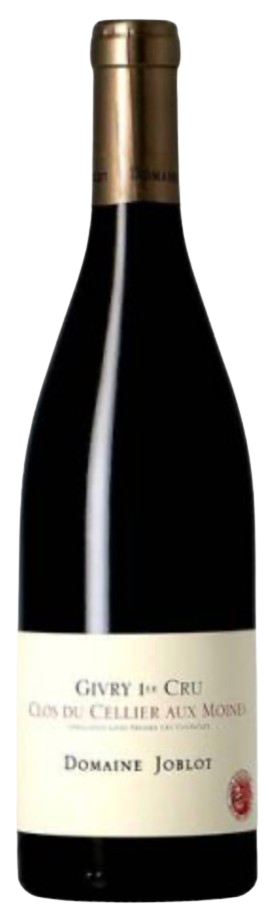
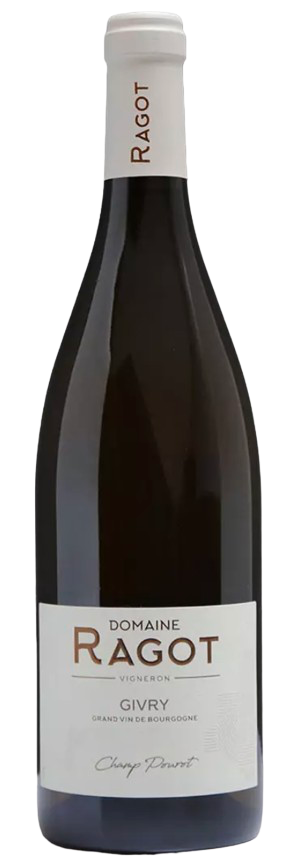
The real start came in the 1970s. A handful of growers' sons — the Joblot, Ragot, Lumpp and Chofflet families — the first generation to have been through the Beaune wine school, gambled on estate bottling and direct sales, replanted abandoned slopes such as the Clos Jus and modernised the cellars, even as housing pressure from Chalon threatened the vines. Classification followed: 26 climats were recognised as Premiers Crus in 1997, then twelve more brought the total to 38 by the decree of 9 November 2011. Among them are names that tell the story of the place — Clos du Cellier aux Moines, Clos Salomon, Clos Jus, Clos Saint-Pierre, Clos Saint-Paul, Servoisine, Crausot, Les Grands Prétans and À Vigne Rouge.
The grape varieties of Givry
Givry wines on 1001caves
Detailed pages: the cuvée, the estate, the drinking window and the bottles for sale between collectors.