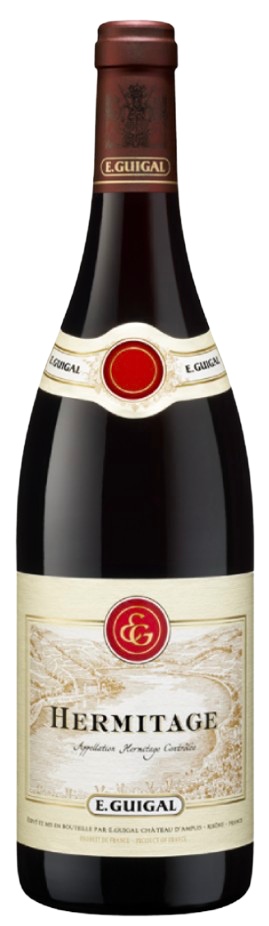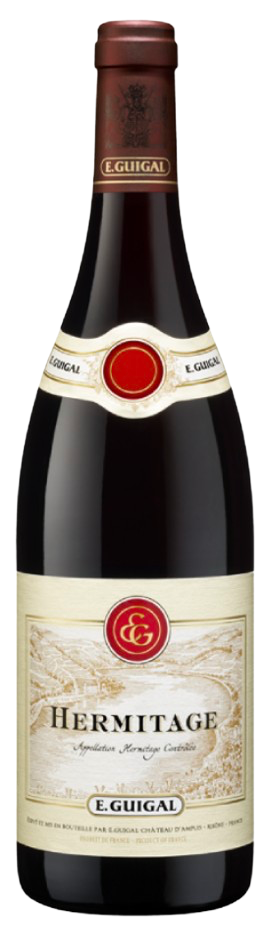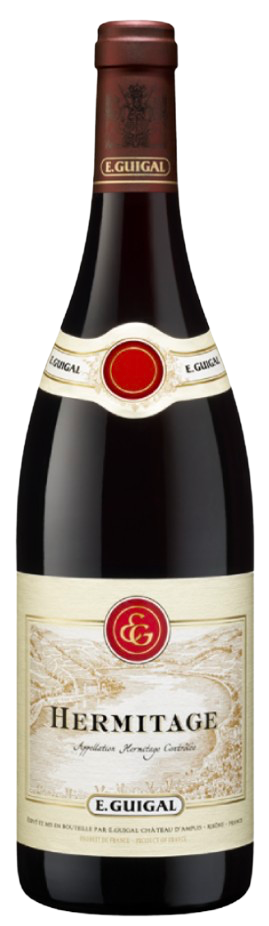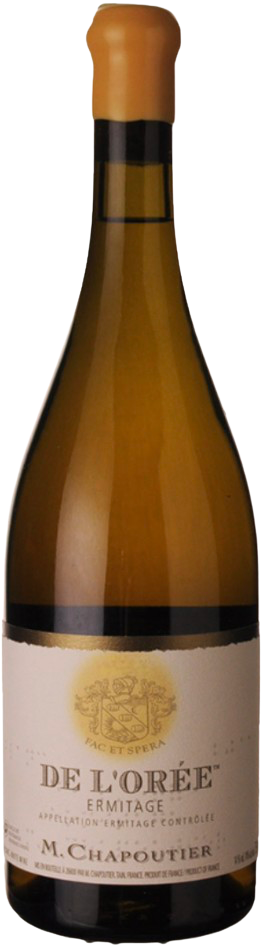
The hill and its chapel
Hermitage lies entirely on the hill overlooking Tain-l'Hermitage, on the Rhône's left bank. Around one hundred and thirty-five hectares are crowned by a chapel that gave the place its name and the appellation's most famous label its silhouette. Legend places a knight who retired from the world here in the thirteenth century, hence the hermitage.
Recognised in 1937, it is one of France's longest-renowned appellations: Hermitage wines were exported to England and Russia as early as the eighteenth century. In the nineteenth they were also used to strengthen certain Bordeaux wines, a common and openly accepted practice then known as making a wine hermitagé.
South-facing granite
The hill is a spur of the Massif Central left on the eastern bank as the Rhône flowed around it. Its due-south exposure, unusual in a north–south valley, gives it exceptional sunshine and protection from the mistral.
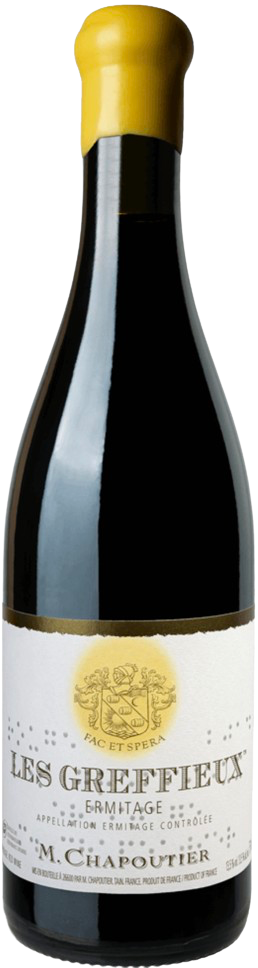
The soil is not uniform: very rugged granite to the west at Les Bessards produces the most tannic wines; limestone and siliceous soil covered with rounded stones at Le Méal; more fertile erosion-derived earth at Les Greffieux; and clay in Les Murets and Les Dionniers to the east, where most whites originate. The great cuvées traditionally blend these lieux-dits, each making its contribution.
Wines built to last
Red Hermitage is massive in youth: dense colour, tight tannins and aromas of blackcurrant, liquorice and leather, often closed for years. Patience is essential, at least ten years in a good vintage, rewarded by longevity exceeding that of most French wines.
The less familiar white concedes nothing to the red: broad and waxy, with hawthorn, hazelnut and honey, it too lasts for decades. Serve them at around 17°C and 12°C respectively, decanting young reds.
The grape varieties of Hermitage
Hermitage wines on 1001caves
Detailed pages: the cuvée, the estate, the drinking window and the bottles for sale between collectors.