A Cru Straddling Two Villages
The Montrachet belongs neither quite to Puligny nor quite to Chassagne: the communal boundary crosses the climat in its middle. Of the 7.80 hectares of the grand cru, 4.0107 hectares lie in the territory of Puligny-Montrachet and 3.9873 hectares in that of Chassagne-Montrachet, a distribution recorded by the Nouvel atlas des grands vins de Bourgogne of Sylvain Pitiot and Pierre Poupon. The two villages have moreover added its name to their own, Puligny in 1878, Chassagne in 1879 — a unique case of a cru renaming two communes at once.
This central position is not only administrative, it is topographic. The slope reads here as a staircase of grands crus: Chevalier-Montrachet occupies the upper step, entirely within Puligny; the Montrachet the middle step, between 250 and 270 metres in altitude; Bâtard-Montrachet the lower step, on the other side of the road that crosses the slope, likewise shared between the two communes, with Bienvenues-Bâtard-Montrachet at its northern end, on the Puligny side, and Criots-Bâtard-Montrachet at its southern end, on the Chassagne side.
The Terroir: Little Earth, Much Stone
The geological description of the Montrachet takes few words, and that is precisely what makes its singularity: shallow soils resting on a hard limestone, crossed by a band of reddish marl, the whole dated to the Jurassic, around 175 million years ago. On the scale of the slope, the cru belongs to the white oolith of the "calcaires de Chassagne", of the Lower Bathonian, the same bed that carries further north Les Pucelles, Clavoillon and Les Combettes.
The thinness of the soil is the key to the style. Unlike the climats at the foot of the slope, where colluvium and brown calcic soils thicken to the point that the bedrock disappears beneath several metres of earth, the vine of the Montrachet works on stone. It is held in check there, of low vigour, and drainage is immediate: nothing stagnates, nothing dilutes. It is this constraint, more than any other, that gives the concentration and the density of matter found nowhere else in the same proportions.
Exposure and Climate: A Perfectly Oriented Step
The climate is that of viticultural Burgundy, temperate with a slight continental tendency: cold winters, wet springs, hot and sometimes stormy summers, often generous autumns. Chardonnay buds there slightly before pinot noir, which exposes it to spring frosts, but it accumulates high sugars while retaining substantial acidity — the very equation of a great white for ageing.
The advantage of the Montrachet, within this common setting, is earliness. Its mid-slope position, on a decided and well-exposed gradient, regularly makes it the first in the sector to be harvested, while Chevalier, higher and cooler, ripens a little later. The heatwave of 2003 had started some harvests in mid-August, a month early, an earliness of which the archives had kept no trace since 1422 and 1865.
The Style of the Wines: Chardonnay at Its Fullest
The robe is gold, with mineral glints. The nose, which takes several years to open truly, mixes spice, honey, dried fruits, fern and butter. The palate is harmonious, structured, unctuous and deep: this is a wine that plays neither on a demonstration of power nor on tension alone, but on the balance between the two, over a length that remains its most recognisable signature.
Vinification follows the Burgundian canon — hand harvesting and sorting, pressing, settling, alcoholic fermentation conducted between 18 and 24°C, malolactic in barrel or in tank, ageing on lees with bâtonnage. The Montrachet demands patience: ten to fifteen years at the least, more than twenty in the great years. It is served between 12 and 14°C, with lobster, crayfish, white fish in a sauce, Bresse chicken or foie gras.
History: From the Monks of Maizières to the Lawsuit of 1921
The name comes from "Mont Rachaz", attested in 1252, which became "Mont Rachat" in 1380 and then "Montrachat" in 1473 — hence the custom of not pronouncing the final t. In Old French, "râche" designated what is bald: the Montrachet is the bare hill, that rocky outcrop where nothing grows which dominates the slope. The first known vines, in the thirteenth century, belonged to the abbey of Maizières, enriched by the gifts of Pierre and Arnolet de Puligny in 1252 and then of Gui Berrier de Chagny in 1286-1287; the Cistercian monks worked there for five centuries.
The renown of the cru eventually attracted usurpations. In 1921, Julien Bouchard, his nephew and seven other owners of the Montrachet took to court the agricultural committee of the arrondissement of Beaune and various owners of Chassagne and of Puligny. The judgment of 12 May 1921 settled the matter: the Montrachet appellation may be applied only to crops from the sector known as Grand-Montrachet, Vrai-Montrachet or Montrachet plain. This judicial delimitation served as the basis for the appellation decrees; the INAO register dates recognition of the cru to the decree of 31 July 1937, published on 11 August following, at the same time as its four neighbours.
A Cru Much Divided Among Many Hands
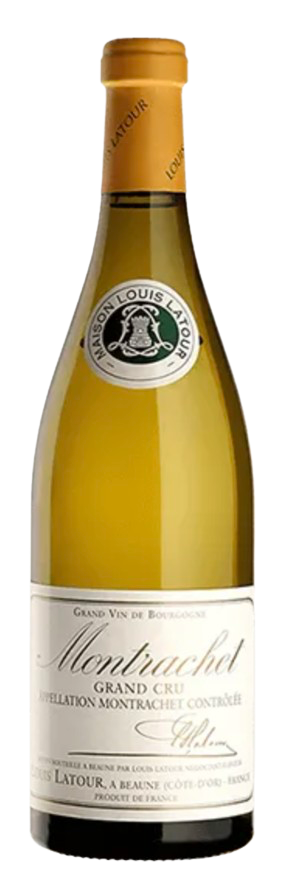
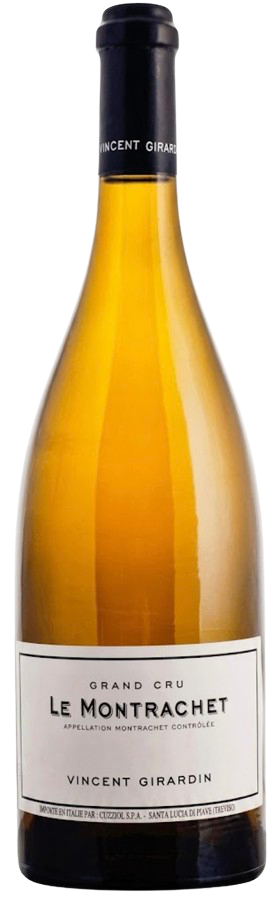
Like almost all Burgundian grands crus, the Montrachet is fragmented: eighteen producers shared its 7.80 hectares in the count consulted in 2026. Among them are the Domaine de la Romanée-Conti, Domaine Ramonet, Domaine Marc Colin & Fils, the house of Joseph Drouhin — which farms the parcels of the Marquis de Laguiche — Domaine Jacques Prieur and Domaine Guy Amiot & Fils. Parcels change hands and tenancy agreements evolve: this list is a photograph, not a civil register.
This fragmentation explains why there is not one montrachet but several. Vineyard management, harvest date, the proportion of new oak and the length of ageing vary from one owner to another, and with them the profile of the wine. The common denominator remains the terroir: that narrow band of thin soil over hard limestone, at mid-slope, which nothing has ever made it possible to imitate elsewhere.
The grape varieties of Montrachet
Montrachet wines on 1001caves
Detailed pages: the cuvée, the estate, the drinking window and the bottles for sale between collectors.