An Appellation in Two Pieces
Côte de Nuits-Villages is reserved for five communes spread over two separate blocks, at either end of the Côte de Nuits. In the north, just outside Dijon, Fixin and Brochon; in the south, beyond Nuits-Saint-Georges, Premeaux-Prissey, Comblanchien and Corgoloin. There is no geographical continuity between the two: in between lie all the famous villages of the Côte, from Gevrey-Chambertin to Vosne-Romanée, which have village appellations of their own.
The reality of production is more contrasted still. Fixin produces almost no côte-de-nuits-villages, its growers preferring to claim the fixin appellation; at Brochon, part of the village is entitled to sell under the name gevrey-chambertin, and duly does so. In practice the appellation is therefore concentrated in the three southern communes, and above all in Corgoloin and Comblanchien. Corgoloin recently hosted, for the first time, the Saint-Vincent tournante, the great annual gathering of the Burgundian vineyard.
The Terroir: Hard Limestones in the South, Marls in the North
Geology explains part of the appellation's character, and above all its dual nature. In the communes of Comblanchien and Corgoloin, hard Jurassic limestones make up gentle slopes; at the foot of the slope, silts appear and, in places, blue marls. In the north, towards Fixin, the soils are distinctly more marly. Comblanchien limestone, cream-white and so compact that it is quarried as an ornamental stone, has given its name to the geological bed that caps the whole Côte de Nuits, from Chambolle-Musigny to Corgoloin.
The whole belongs to the same cuesta: the western edge of the Saône plain, structured by a network of south-south-west / north-north-east faults. From top to bottom one finds the white oolitic limestones of the Middle Bathonian, the Prémeaux stone of the Lower Bathonian, the Upper Bajocian marls with Ostrea acuminata and the crinoidal limestone. As everywhere along the Côtes de Nuits and de Beaune, the best climats are on the mid-slope: Le Clos des Langres, Les Monts de Boncourt, Les Perrières or Les Chantemerles at Corgoloin; Les Essards, Le Vaucrain or Au Clos Bardot at Comblanchien; Les Vignottes at Premeaux-Prissey; Queue de Hareng and La Croix Violette at Brochon.
Climate and Vineyard Management
The climate is temperate with a slight continental tendency, with marked winters, hot, stormy summers and well-distributed rainfall. Pinot noir ripens early and accumulates sugars readily for medium acidity; the chardonnay of the whites breaks bud a little before it, which exposes it to spring frosts but allows it to keep fine acidity and to give ample, rich wines.
Vineyard management differs in no way from that of the great neighbours: single guyot pruning with a cane of five to eight buds and a spur of one to three, disbudding as soon as growth resumes, two or three wire-liftings, trimming, treatments against downy mildew, powdery mildew and grey rot, and an increasingly widespread green harvest. Picking may be by hand or by machine. Yields stand at around 40 hl/ha in red and 45 hl/ha in white — levels comparable to those of the most prestigious village appellations of the Côte.
The Style of the Wines and Their Ageing
The wines of the appellation are representative of the Côte de Nuits in robe, nose and palate, but with a lesser degree of finesse and concentration: that is precisely what makes them an excellent introduction to the style of the Côte. In red, the robe is ruby, and the profile varies greatly with the climat and the producer — sometimes fruity (fresh cherry, redcurrant, blackcurrant, strawberry), sometimes sturdy with a tannic austerity and fine alcoholic power, sometimes leaning towards sweet spices (liquorice) or the vegetal notes of undergrowth and mushroom.
Ageing in oak barrels, which some producers push to eighteen or twenty months, brings woody, vanilla notes and rounds the tannins, but calls for a little cellaring before it melds. The whites, very much in the minority, show a green-gold robe and a nose of white flowers — hawthorn, acacia — or of yellow fruits and citrus, often marked by oak; those which include a share of pinot blanc alongside the chardonnay gain in vivacity, with a tangy edge.
A History of Name and Hierarchy
The appellation was first recognised under the name "Vins fins de la Côte de Nuits", a wording that still appears in the official texts and on some old labels, before being renamed Côte-de-Nuits-Villages. This double name says much about its function: to gather under a collective name the wines of communes that never obtained a village appellation of their own — or which, like Premeaux-Prissey, share one with a more famous neighbour, in this case Nuits-Saint-Georges.
There is neither grand cru nor premier cru here, and that is what makes the appellation financially accessible: in 2015 the ouvrée of côte-de-nuits-villages was valued at 6,000 euros, against 25,000 for a village plot in Nuits-Saint-Georges and 40,000 for one in Vosne-Romanée. Many well-known estates of the Côte own a few plots here and give them the same care as their crus: this is often where the best value in the Côte de Nuits is to be found.
The grape varieties of Côte de Nuits-Villages
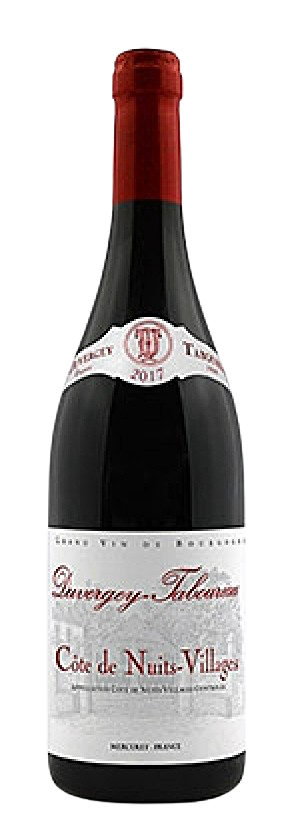
Côte de Nuits-Villages wines on 1001caves
Detailed pages: the cuvée, the estate, the drinking window and the bottles for sale between collectors.