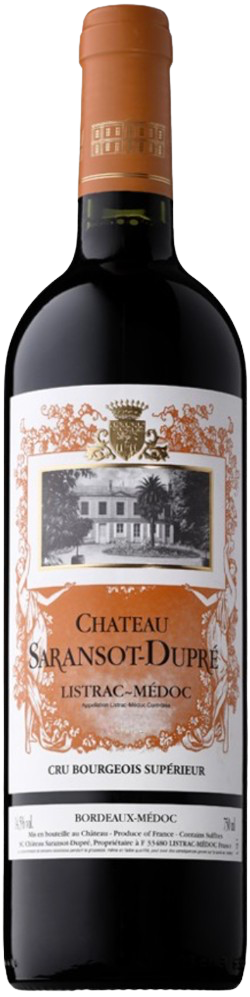
Listrac, the Médoc set inland
Confined to the single commune of Listrac-Médoc, the appellation stands apart from its neighbors through its position: a little removed from the Gironde estuary, set further back inland. Where Margaux, Saint-Julien or Pauillac lie along the river, Listrac occupies the hinterland, which gives it a somewhat more continental character.
The vine has been present here since ancient times — as early as the Roman era — but, as everywhere in the Médoc, it was the clearing and draining of the land in the 16th and 17th centuries that revealed its potential. The renown of its wines then quickly crossed borders.
Terroir: gravel rises on the bedrock of the Landes
Listrac's vineyard is planted on gravelly rises, formed from Quaternary sedimentary deposits resting on a bedrock of sand and silt from the Landes de Gascogne. These graves — sand and gravel mixed with a little clay — come from the erosion of the Pyrenees and the Massif Central, carried here by water.
As throughout the Médoc, the virtue of this soil lies in its drainage. Well-drained and relatively poor, gravel offers no easy water: the vine must send its roots deep, which curbs its vigor and concentrates the grapes. This is one of the keys to the power that characterizes Listrac wines.
Climate and grape varieties: a cabernet sauvignon of character
Listrac experiences the Médoc's temperate oceanic climate, but its more inland position makes it a little less directly softened by the estuary than the riverside appellations. On this terroir, cabernet sauvignon proves particularly outstanding: it yields wines that are very powerful, dark in color, with great cellaring potential.
Merlot comes in to soften it and make it more flattering in its youth, while cabernet franc brings complexity and fruitiness. The specifications impose no set proportion: each estate shapes its own blend, with a planting density of at least 7,000 vines per hectare.
Wine style: power and generosity
Listrac wine is a dark red, with a purple color that takes on mahogany highlights as it ages. The nose combines fruit (blackcurrant, blackberry, plum), spicy notes of vanilla and empyreumatic touches of caramel or toast. On the palate, it is powerful and generous, marked by a tannic presence that calls for time.
Depending on the vintage, it takes three to more than ten years for these tannins to soften and the wine to open up fully. It is then served with red meats, where its structure finds its natural playing field.
The grape varieties of Listrac-Médoc
Listrac-Médoc wines on 1001caves
Detailed pages: the cuvée, the estate, the drinking window and the bottles for sale between collectors.