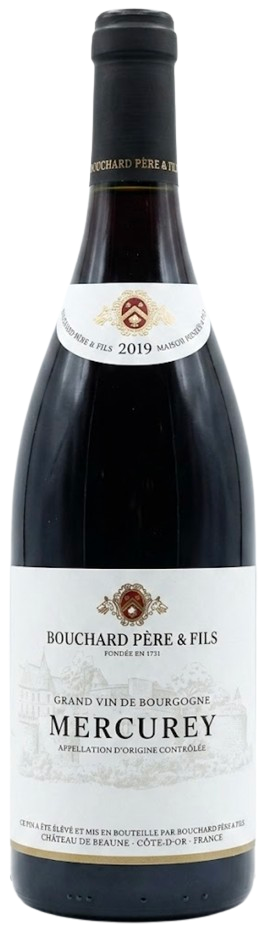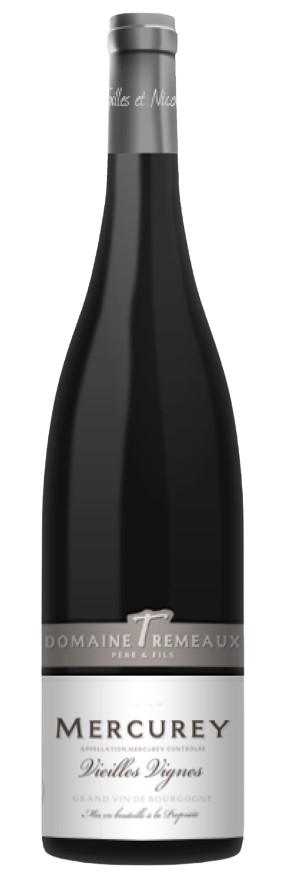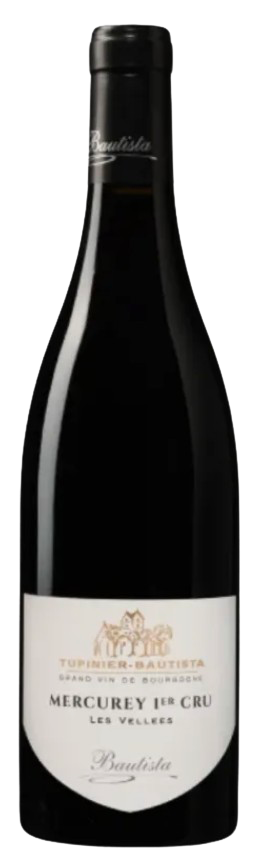
The Capital of the Côte Chalonnaise
Mercurey extends over two communes of Saône-et-Loire, Mercurey and Saint-Martin-sous-Montaigu, twelve kilometres north-west of Chalon-sur-Saône and seven kilometres from Givry. The village owes its name to the temple the Romans had dedicated to Mercury, god of commerce — and it was they who introduced the vine here. In 1970, Bourgneuf-Val-d'Or, which had already absorbed Touches in 1897, merged with Mercurey and took its name: the modern appellation is the heir of these three terroirs.
It is the most important AOC of the Côte chalonnaise, with 641 hectares in production in 2017. The Côte chalonnaise is not a continuous slope like that of the Côte d'Or: it is a string of broken-up hillsides, cut by combes, with varied exposures and higher altitudes. At Mercurey, the vineyard unfolds between 230 and 320 metres in altitude, with a majority of climats facing south and south / south-east. No Grand Cru has ever been recognised anywhere in the Côte chalonnaise.
The Terroir: Grey Oxfordian Marls and Dalle Nacrée
The sea covered the region in the Secondary era, laying down marly, clayey and calcareous sediments between 230 and 135 million years ago. It was then along a north-south fault line, caused by the raising of the Alps, that these stacks were tilted up into hillsides. The rocks that dominate Mercurey belong to the Middle Jurassic and to the beginning of the Upper Jurassic: a fairly thick layer of grey Oxfordian marl forms the subsoil of the best crus, while a second rocky crest is armoured by the limestone of the Dalle nacrée, of Callovian age.
A geo-pedological study carried out from 2006 to 2008 — forty-nine profiles dug, seven hundred soundings — made it possible to distinguish three broad soil groups: soils from hard limestones (244 hectares), which give very structured reds; soils from marls (194 hectares), with more varied reds and very good whites; and soils from stony deposits (102 hectares), which produce mainly fleshy reds of good poise. It is this mosaic, more than the grape variety alone, that explains the variety of mercurey — and that has fed the ambition, voiced by the syndicat, of one day having a Grand Cru recognised on climats such as the Clos des Barraults, the Clos des Montaigus or La Mission.
A Sheltered Semi-Continental Climate
The Côte chalonnaise lies in the temperate zone, under oceanic and Mediterranean influences, but its distance from the coasts gives it a clear continental tendency: hot summers, cold winters, a marked thermal range. The climate is drier, sunnier and brighter than in the neighbouring regions — the Côte chalonnaise receives about 700 millimetres of rain a year, against 700 to 1,000 millimetres to the west and to the east. May and November are the wettest months.
The hillsides protect the vineyard from damp westerly winds; the prevailing wind is the bise, dry and cold. Late frosts remain infrequent in the Mercurey sector, apart from a few frost-prone lieux-dits, and hail relatively spares the appellation — even if devastating storms marked memories in 1981 and 1983, gullying the vines and carrying away retaining walls. This combination of relative dryness, light and southern exposures explains the ripeness pinot noir reaches here, and the density of its wines.
The Style of the Wines: Frame Above All
The reds show a ruby robe, a nose of red fruits — raspberry, strawberry, cherry — evolving towards undergrowth, and a powerful, rich, structured palate. The sommelier Olivier Poussier sums it up: "The fine wines of Mercurey have a certain density, a substance that allows them to rival some crus of the Côte de Beaune and to age fifteen to twenty years in sunny vintages. These are very structured, quite tannic pinots noirs that naturally need time before being drunk." They are served between 14 and 16°C with meats in sauce — bœuf bourguignon, coq au vin — small game, charcuterie or an époisses.
The whites, more confidential with some hundred hectares, make good use of chardonnay's potential: a golden colour with green glints, aromas of white flowers, hazelnut, almond and spice, sometimes a mineral note, and a generous palate. Served between 11 and 13°C, they accompany grilled fish or fish in sauce, cooked shellfish, a blanquette de veau or hard cheeses. Their good acidity allows cellaring of two to eight years, longer in great vintages.
Why Mercurey Bears Comparison — and at What Price
Mercurey has always had a demanding clientele. Between 1385 and 1405, its wines appear on the list of those destined for the Duke of Burgundy's service at his residence in Arras, and they delighted Margaret of Flanders. Under Henri IV, a chronicle notes that they pleased Gabrielle d'Estrées — the king himself preferred Givry. On his way back from Elba, Napoleon stopped at Mercurey and tasted the wine of a grower named Prieur: "How excellent this mercurey is, its robe recalls the ribbon of the Légion d'honneur, and as for its bouquet, it is like the intoxicating scent of victory."
The appellation's international reputation places it today among the great wines of Burgundy, at a rank comparable to that of the finest crus of the Côte de Beaune or the Côte de Nuits. The difference comes down to one phrase: Grand Cru. The Côte chalonnaise has none, and its renown long suffered from its fragmentation and from its position south of Chagny. That is precisely what makes it one of the best density-to-price ratios in Burgundy: the same raw material — pinot noir on Jurassic marls and limestones — the same demands in the cellar, without the premium attached to the names of the Côte d'Or.
An Old AOC and Thirty-Two Premiers Crus
The vineyard counted 300 hectares at Mercurey, 400 at Touches and Bourgneuf-Val-d'Or and 300 at Saint-Martin-sous-Montaigu before phylloxera, which struck in 1878, followed by downy mildew in 1885. Reconstitution was not truly achieved until 1902. In 1899 the Revue des viticulteurs had published a classification of the climats — first class in red for Les Naugues, Les Crêts, Le Voyen, Les Champs Martin, Les Combins, the Clos de l'Évêque and the Clos du Roy — which prefigures today's hierarchy. In 1936 only 500 hectares of vines were left when the INAO endorsed the creation of the appellation: Mercurey is one of the oldest AOCs in France.
Five Premiers Crus were recognised as early as 1943 — the Clos du Roy, the Clos Voyen, the Clos Marcilly, the Clos des Fourneaux and the Clos des Montaigus. The current delimitations, which bring their number to thirty-two, date from 1988. Alongside the five historic ones are Les Champs Martin, Les Combins, Les Croichots, Les Naugues, Les Crêts, the Clos l'Évêque, the Clos des Barraults, En Sazenay, La Mission and Les Ruelles. The appellation also counts eighty-five village climats, and the regulatory planting density there is at least 8,000 vines per hectare.
The grape varieties of Mercurey
Mercurey wines on 1001caves
Detailed pages: the cuvée, the estate, the drinking window and the bottles for sale between collectors.