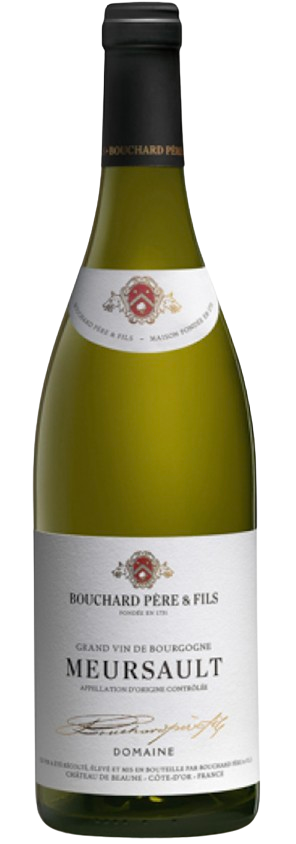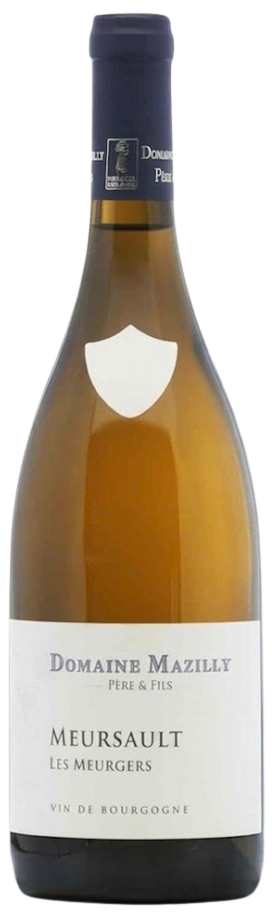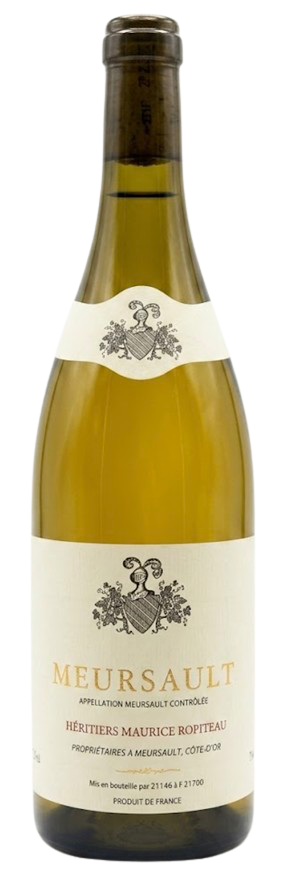
Eight Kilometres South of Beaune, an Almost Flat Slope
Meursault occupies part of the single commune of the same name, in the Côte-d'Or, about eight kilometres south of Beaune. The village is crossed at its foot by the Nationale 74 and at its top by the departmental road 73, the one that comes down from Pommard and Volnay. The area is tiered between 230 and 360 metres in altitude.
Meursault's topographical particularity is the gentleness of its relief. The vineyard's escarpment is slight: the average gradient of the slope is around 4%, and only the upper part steepens a little. Where Volnay or Corton cling to sharp slopes, Meursault spreads out. This relative flatness explains both the exceptional extent of the vineyard — the largest of the white appellations of the Côte — and the thickness of the soils at the foot of the slope, where colluvium has accumulated.
The Terroir: Calcareous Marls, Callovian and Argovian
The subsoil of Meursault belongs to the Jurassic series, from the Bathonian to the Oxfordian, and consists essentially of calcareous marls. The detail matters: the appellation's grands crus — in the sense of its best climats, since there is no official grand cru — rest on Callovian limestone rock and on Argovian marly rock. It is this alternation between hard beds and marly levels that organises the whole hierarchy of the slope.
The role of the marls is decisive in the meursault style. Clayey, they hold water and feed the vine more generously than pure limestone: the grapes reach high ripeness, the musts are rich, and the wine gains that broad, unctuous substance on the palate. Where the soil grows poorer and the limestone rock outcrops — in the Perrières, whose very name speaks of the quarry — the wine tightens, gaining tension and minerality. The contrast between the chiselled Perrières and the broader, fleshier Charmes, on the deeper soils at the foot of the slope, sums up the geology of Meursault on its own.
The Climate: Continentality, Bise and Thermal Range
Meursault lies in the temperate zone, with hot summers and cold winters, and a marked thermal range between the seasons. Rainfall is unevenly spread across the year, May being the wettest month. The prevailing wind for much of the year is the bise, dry and cold, which dries the foliage and limits the pressure of fungal disease.
Chardonnay finds ideal conditions here. An early variety, it breaks bud a little before pinot noir — which exposes it to spring frosts — but it accumulates high sugar levels while keeping substantial acidity. That is exactly the meursault equation: power and breadth without heaviness. Warming can be read in the local archives: in 2003, some estates picked from mid-August, a month early, a precocity that had not been seen since 1422 and 1865.
The "Meursault" Style: Richness as a Signature
A gold-green robe, a nose of ripe grapes in which almond and hazelnut dominate, completed by honey, citrus, floral notes (hawthorn, fern, lime blossom) and a mineral touch of gunflint; on the palate, a rich, unctuous, fat wine, supported by an assumed oakiness. That portrait is the one the BIVB gives of meursault, and it is also the one the whole world has ended up calling simply "the meursault style".
That richness is not only a matter of soil. It also comes from a way of working: the wines are aged on the lees in barrel, with regular bâtonnage that puts the lees back into suspension over several months. This practice, pushed further here than elsewhere, builds the characteristic volume and unctuousness. The whites are served between 12 and 14°C and keep eight to fifteen years; they call for foie gras, veal, poultry in white sauce, shellfish — prawns, lobster, spiny lobster — and blue cheeses. The reds, in the minority, are served between 15 and 17°C and keep five to ten years. Annual production reaches 18,843 hectolitres of white, of which 4,706 premier cru, against only 559 hectolitres of red.
No Grand Cru, but Seventeen Legendary Premiers Crus
It has to be said plainly: Meursault has no grand cru. Neither Perrières, nor Genevrières, nor Charmes — the appellation's three summits — carries that title, which on this stretch of the Côte is reserved for the Montrachet of Puligny and Chassagne. The seventeen climats classified premier cru are Les Cras, Les Caillerets, Les Santenots Blancs, Les Plures, Les Santenots du Milieu, Charmes, La Jeunelotte, La Pièce sous le Bois, Sous le Dos d'Ane, Sous Blagny, Perrières, Clos des Perrières, Genevrières, Le Porusot, Les Bouchères, Les Gouttes d'Or and Les Ravelles. Some — the Perrières first among them — have long been regarded by enthusiasts as of grand cru level.
That absence is no accident: the nineteenth century had, after all, recognised Meursault. The Burgundy of fine wines was then 95% red, and Meursault was the only commune known for its whites — "the little town of Meursault owed its ancient reputation to its white wines", wrote Denis Morelot. The classification by the Comité d'Agriculture de Beaune, in 1861, already placed in the first class of whites La Pièce-sous-le-Bois, Sous-le-Dos-d'Âne, La Jennelotte, Sous Blagny, les Charmes, les Perrières, les Genevrières, les Bouchères and le Porusot-Dessus. When the appellations d'origine contrôlée were instituted in the 1930s, none of these climats was raised to grand cru rank.
Moving Borders: Santenots on the Volnay Side, Blagny on the Puligny Side
Meursault has the peculiarity of sharing its margins with two neighbouring appellations, according to the colour of the wine. To the north, the climats bordering Volnay — Santenots-Blancs, Santenots-du-Milieu, Santenots-Dessous, Clos des Santenots, Les Plures — give reds sold as Volnay premier cru "Santenots". The same plots planted with chardonnay give, for their part, Meursault premier cru (Santenots-Blancs, Santenots-du-Milieu, Les Plures) or village Meursault (Santenots-Dessous).
To the south, the hamlet of Blagny, straddling Meursault and Puligny-Montrachet, works the other way round: the whites there are sold as Meursault "Blagny" or as Meursault premier cru — La Jeunelotte, La Pièce-sous-le-Bois, Sous-le-Dos-d'Âne, Les Ravelles, Sous Blagny — while the reds from the same climats come under the Blagny premier cru AOC. One and the same row of vines can therefore change appellation according to the colour of the grape planted there: one of the most disconcerting, and most Burgundian, singularities of the Côte de Beaune.
The grape varieties of Meursault
Meursault wines on 1001caves
Detailed pages: the cuvée, the estate, the drinking window and the bottles for sale between collectors.