A Tiny Commune, a Heavily Ranked Vineyard
Morey-Saint-Denis occupies a narrow band of the Côte de Nuits, immediately south of Gevrey-Chambertin and north of Chambolle-Musigny. The village appellation area covers 94.16 hectares, roughly an eighth of the commune's total surface, which is only 7.83 square kilometres. To this must be added 35.45 hectares of Grands Crus, which fall under their own separate appellations.
Production reflects that scale: around 4,088 hectolitres on average across the 2014-2018 vintages, of which 3,830 hectolitres of red — including 1,767 hectolitres ranked Premier Cru — and only 258 hectolitres of white. Measured against the surface, the share of Premiers Crus is considerable: more than 40% of the village appellation.
The Terroir: The Combe de Morey and the Limestone Staircase
The vineyard is tiered between 240 and 360 metres in altitude. The middle of the slope is cut by the combe de Morey, a dry valley with a slightly cooler climate, whose outlet corresponds to an alluvial fan. The subsoil layers were laid down in the Middle Jurassic — Bajocian and Bathonian — by marine sedimentation; the present relief formed much later, at the end of the Oligocene, during the collapse of the Bresse graben.
Reading the slope vertically is a textbook of Burgundian geology. At the summit, forest grows on beds of white oolitic limestone. Just below, the hard grey-beige Prémeaux limestone comes to the surface on the site of former quarries — at Monts Luisants and En la Rue de Vergy. In the southern part, upslope of the Clos de Tart, small beds of pale yellow-green Ostrea acuminata marls outcrop, elsewhere buried under thick scree. The Grand Cru zone corresponds to the crinoidal limestone, a massive ochre bed flecked with iron oxides and calcite — except for the Clos de la Roche and the Clos Saint-Denis, on white oolite in their upper part and crinoidal limestone lower down. Lower still, on either side of the departmental road, are blue-grey Bresse marls and salmon-coloured conglomerates.
Three Families of Premiers Crus, Three Subsoils
The twenty climats ranked Premier Cru fall into two topographic groups: sixteen lie just east of the Grands Crus, four at the top of the slope — Monts Luisants, Les Genavrières, Les Chaffots and Côte Rôtie. Some are only partly ranked.
Geologically, they read from north to south. The northern Premiers Crus — Aux Charmes, Aux Cheseaux, Clos des Ormes — rest on the hard, cream-coloured Comblanchien limestone. Those in the middle — Les Faconnières, Les Millandes, La Riotte, Les Blanchards, Clos Baulet — sit on the gravels of the combe's alluvial fan. Those in the south — Les Sorbès, Les Ruchots, La Bussière — rest, as soil pits have shown, on the Ladoix limestone, the "dalle nacrée", and on ferruginous oolite. Three terroirs, three expressions of the same pinot noir.
The Style of the Wines and Their Cellaring
Morey-Saint-Denis is often described as the hyphen between its two neighbours: less massive than Gevrey, less airy than Chambolle. The wines combine dense matter, firm but fine tannins, deep black fruit and a mineral thread that owes much to the hard limestones of the mid-slope. Actual yields remain well below the regulatory ceiling: 42.7 hl/ha on average for the 2022 vintage, against a base yield of 50 hl/ha and a cap of 58.
Village cuvées drink well between five and twelve years; Premiers Crus from fine vintages call for ten to twenty. The whites, made in tiny quantities, offer a curiosity: the climat Monts Luisants is the only one in the Côte de Nuits where aligoté is permitted for a white wine under the village appellation, alongside chardonnay and pinot blanc.
Five Grands Crus, Two of Them Monopole Clos
Morey's mid-slope is almost entirely occupied by Grands Crus, from north to south: the southern part of Bonnes-Mares, shared with Chambolle-Musigny; the Clos de Tart; the Clos des Lambrays; the Clos Saint-Denis; the Clos de la Roche. The Clos de Tart is a monopole, bought in 2017 by the Pinault family's Artémis company. The Clos des Lambrays is a near-monopole: the estate of the same name, acquired by LVMH in 2014, owns almost all of it, with one ouvrée remaining the property of Domaine Taupenot-Merme. The Clos de la Roche and the Clos Saint-Denis, by contrast, are highly fragmented.
The village appellation was created in 1936, at the same time as the Grands Crus of Clos Saint-Denis and Clos de la Roche; the Clos de Tart joined them in 1939. The Clos des Lambrays, made up of the climats of Les Larrets, Les Bouchots and Meix-Rentier, was promoted to Grand Cru only in 1981, having previously figured among the Premiers Crus of the village appellation. Several other clos are farmed as monopoles at village or Premier Cru level: the Clos de la Bussière at Georges Roumier, the Clos des Monts Luisants at Ponsot, the Clos de la Bidaude at Robert Gibourg, the Clos des Rosiers at Chantal Rémy.
The grape varieties of Morey-Saint-Denis
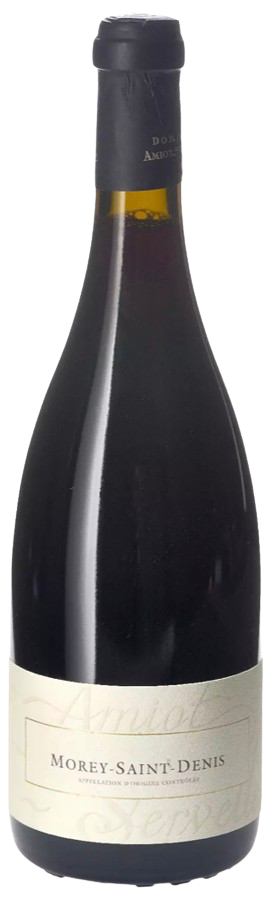
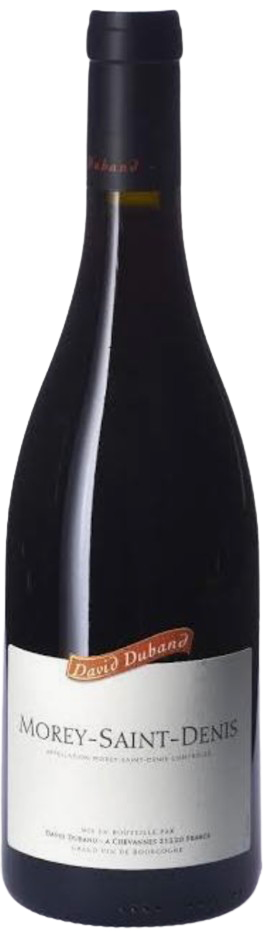
Morey-Saint-Denis wines on 1001caves
Detailed pages: the cuvée, the estate, the drinking window and the bottles for sale between collectors.