The Capital of the Côte de Nuits
The appellation extends across two communes, Nuits-Saint-Georges and Premeaux-Prissey, south of Vosne-Romanée. The town is the nerve centre of the Côte: many merchant houses are based there, and it was from there that Henri Gouges set out — president of the syndicate defending the Grands Vins de Bourgogne, who joined the campaign of Senator Joseph Capus and Baron Le Roy de Boiseaumarié and became the latter's right-hand man at the INAO. The appellation was created in 1936. The Confrérie des Chevaliers du Tastevin, for its part, had been founded two years earlier, in 1934.
With 306.84 hectares, Nuits-Saint-Georges is one of the largest village appellations of the Côte de Nuits. Production, overwhelmingly red, reaches 11,592 hectolitres, of which 4,965 in Premier Cru; white, on just 9.78 hectares, accounts for only 392 hectolitres. The name's fame has travelled far beyond Burgundy: Jules Verne has "a fine bottle of Nuits" uncorked in Around the Moon to celebrate the union of the Earth and its satellite, which earned a lunar crater the name "Saint-Georges" from the crew of Apollo 15; Baudelaire, meanwhile, cites "le nuits" alongside Constantia and opium in Sed Non Satiata.
The Terroir: Two Vineyards Separated by the Meuzin
The Côte here is cut by a deep notch, the Meuzin valley, which splits the vineyard in two. That break is not merely topographic: it separates two soil types. In the northern part, towards Vosne-Romanée, the soils derive from stony loams; in the southern part, towards Premeaux, they are loams forming a deeper, marl-limestone earth. Two subsoils, two expressions of the same pinot noir.
The whole belongs to the cuesta of the Côte de Nuits, the western edge of the Saône plain structured by a network of faults. The Jurassic layers are stacked here: white oolitic limestones of the Middle Bathonian — the Comblanchien stone — at the summit, Lower Bathonian limestones known as "Prémeaux stone" beneath, then Upper Bajocian Ostrea acuminata marls and crinoidal limestone. The name Premeaux itself was given to one of these limestone beds, which outcrops all along the Côte, from Chambolle to Comblanchien. The surface soils, for their part, mix limestone scree fallen from the top of the Côte, red loams from the glacial periods and earth carried back up by human hands.
Climate and Vineyard Management
The climate is temperate with a slight continental tendency, as along the whole Côte: sharp winters, hot and stormy summers, rainfall spread across the year. Pinot noir ripens here in the first period, with strong potential for sugar accumulation and moderate acidity. The chardonnay of the whites breaks bud a little earlier, which exposes it more to spring frosts, but it holds its acidity better and gives broad wines.
Work follows the Burgundian rhythm: simple Guyot pruning, a cane of five to eight buds and a spur of one to three, disbudding as soon as growth resumes, two or three wire-liftings, trimming, and increasingly frequent green harvesting to regulate yields. Barrel ageing classically runs twelve to twenty-four months for the reds; the whites are aged on the lees with stirring. Permitted yields in red start at 40 hl/ha, a lower floor than among the neighbours, with a cap of 58.
The Style of the Wines: Frame and Length
Nuits-Saint-Georges red shows a purple robe and a nose that moves from cherry, strawberry and blackcurrant towards more animal, forest notes with age: leather, truffle, game. The palate is balanced, firmly framed, full-bodied and long — a wine of structure rather than lace, the opposite of Chambolle-Musigny's floral profile. It is served between 15 and 16°C with roast lamb, rib of beef, duck breast or furred game, and goes particularly well with époisses and langres.
Its cellaring runs from five to ten years, up to fifteen in great vintages. The whites, made in tiny quantities, offer a golden robe and a nose of honey, brioche and white flowers, over a firm, opulent palate; they are served between 12 and 13°C with sea fish or grilled shellfish, and keep for four to eight years.
Forty-One Premiers Crus — and Not One Grand Cru
This is the most discussed anomaly of the Côte de Nuits: despite climats of the very first rank, the commune obtained no Grand Cru when the hierarchy was set in 1936, whereas Gevrey-Chambertin, Morey-Saint-Denis, Chambolle-Musigny, Vougeot and Vosne-Romanée all have them. Les Saint-Georges, the climat that gave the commune its name, is regularly presented as a missing Grand Cru: André Jullien, in his Topographie de tous les vignobles connus (1816), already placed "le Saint-George" in his first class, alongside Romanée-Conti, Chambertin, Richebourg and La Tâche.
The forty-one climats ranked Premier Cru are divided between the two communes: twenty-nine at Nuits-Saint-Georges — Les Saint-Georges, Les Vaucrains, Les Cailles, Les Pruliers, Aux Boudots, Les Damodes, Aux Murgers, La Richemone, Château Gris… — and twelve at Premeaux, where walled clos dominate: Clos de la Maréchale, Clos Arlot, Clos des Forêts Saint-Georges, Clos des Corvées, Aux Perdrix, Clos Saint-Marc. Land remains more affordable than among the northern neighbours: in 2015, an ouvrée of Premier Cru was valued at 40,000 euros and the rest of the village appellation at 25,000, against 80,000 and 40,000 at Vosne-Romanée.
The grape varieties of Nuits-Saint-Georges
Nuits-Saint-Georges wines on 1001caves
Detailed pages: the cuvée, the estate, the drinking window and the bottles for sale between collectors.
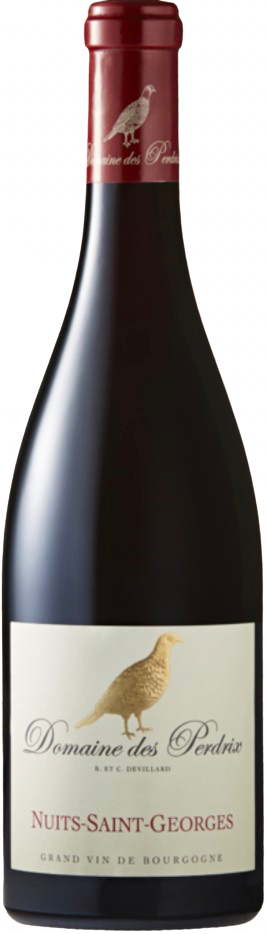 Domaine des Perdrix - Nuits-Saint-Georges 2022Nuits-Saint-Georges→
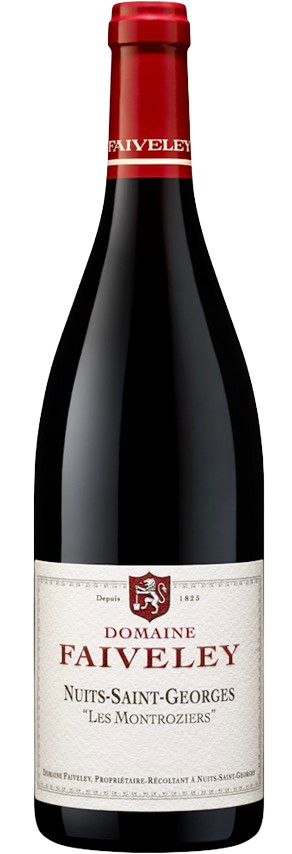 Domaine Faiveley Nuits-Saint-Georges "Les Montroziers" 2023Nuits-Saint-Georges→
 Domaine Pierre Thibert - Nuits-Saint-Georges 1er Cru 20061er Cru · Nuits-Saint-Georges 1er Cru→
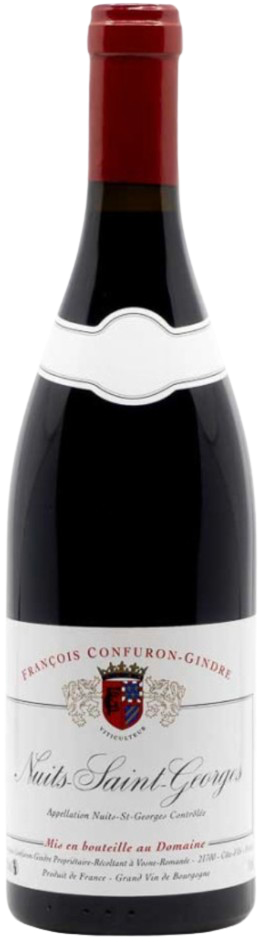 Francois Confuron-Gindre - Nuits-Saint-Georges 2017Nuits-Saint-Georges→
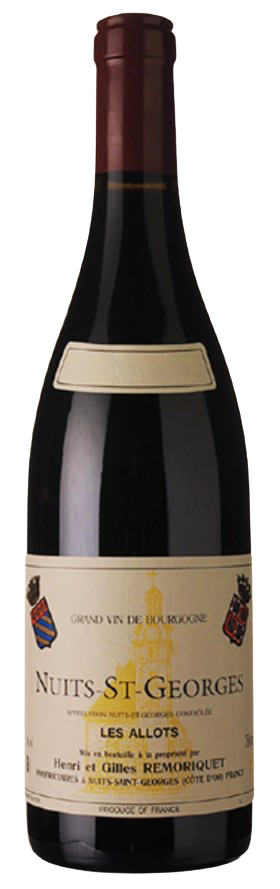 Henri et Gilles Remoriquet - Nuits-Saint-Georges Les Allots 2021Nuits-Saint-Georges→
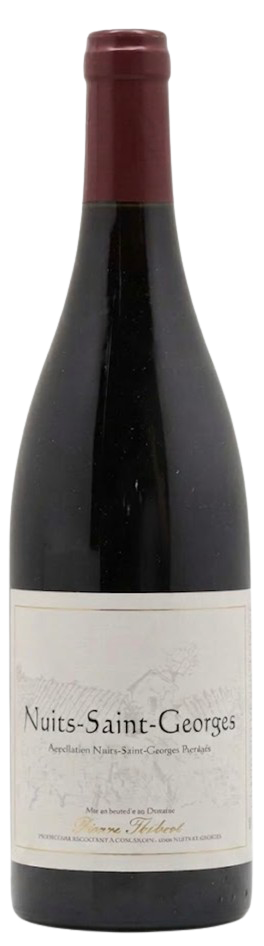 Pierre Thibert - Nuits Saint Georges 2014Nuits-Saint-Georges→