A Côte de Beaune Village Wedged between Meursault and Chassagne
The appellation area occupies the western half of the commune of Puligny-Montrachet, in the Côte-d'Or, on the route des Grands Crus. Meursault bounds it to the north, Chassagne-Montrachet to the south, and Saint-Aubin slips into a small valley to the west, while the hamlet of Blagny occupies the top of the slope, on the Meursault boundary. The slope faces south-east, the best exposure on the Côte, and falls from 429 m at La Roche Dumay to 201 m towards Ébaty.
The commune produces a good deal besides puligny-montrachet: montrachet, chevalier-montrachet, bâtard-montrachet and bienvenues-bâtard-montrachet at the top, blagny (red, shared with Meursault) on the upper slope, and bourgogne côte-d'or at the bottom, on the almost flat ground bordering the D974 and the railway. The village appellation area, for its part, stops at the level of the village: the soils there become too damp.
The Terroir: A Geological Scale from the Bathonian to the Oxfordian
The Puligny slope reads like a cross-section. Right at the top, beneath the woods, the white and beige limestones known as Fontaines limestones outcrop, of the Upper Oxfordian and Lower Kimmeridgian. Just below come the beige Chagny marls — the Argovian marls, also known as Pommard marls, of the Middle Oxfordian — which carry the climats of Le Trézin and Sous le Puits, doubled by a narrow band of reddish ferruginous oolite running through the climat of La Garenne. The Blagny slope then rests on the "dalle nacrée", a russet Lower Callovian limestone, and next on the gravelly limestones and Digonella divionensis marls of the Upper Bathonian.
The Mont-Rachet itself is a horst, an upthrust block wedged between two faults, formed by the outcrop of a pale, compact dolomitic limestone of the Upper Bathonian, once worked in quarries. Below it, on Chevalier-Montrachet and the upper part of Les Folatières, come light-grey marls of the Middle Bathonian; lower still, the white oolite of the Chassagne limestones, of the Lower Bathonian, lines up Montrachet, Les Pucelles, Clavoillon and Les Combettes. The upper slopes give stony, free-draining hypercalcareous rendzinas; the climats of the village appellation, further down, rest on thick brown calcic soils that are distinctly more clayey, covered with colluvium — at Corpeau, at the foot of the slope, the bedrock reappears only at 22.5 m in depth.
A Water Table at the Surface: The Village without Cellars
Puligny's most telling feature is one you cannot see. The village sits on a water table so high that it makes it impossible to dig the deep, cool cellars that the neighbouring communes possess. The place name itself is a reminder: alongside the Germanic hypothesis of a man named Puolo, another reading derives Puligny from "pol", the marsh, in memory of the Voëtte springs and the watering place at the foot of the slope, today captured.
This is no guidebook anecdote: the appellation area deliberately avoids the immediate surroundings of the village because of that dampness, and the part lying to the south rests on the alluvial fan emerging from the Saint-Aubin valley. Lacking underground cellars, the wines were long aged in less cool conditions and for shorter periods — a constraint that producers today get round with above-ground vat houses or cellars built elsewhere.
Climate: Oceanic with a Continental Tendency, and Measured Warming
The climate is that of viticultural Burgundy: temperate oceanic with a slight continental tendency, with frequent rainfall in all seasons — highest in autumn, lowest in summer — cold, snowy winters and hot, sometimes stormy summers. Chardonnay breaks bud a little before pinot noir, which exposes it to spring frosts, but it accumulates sugar while retaining acidity, hence these whites that are both powerful and balanced.
Readings from the stations of Savigny-lès-Beaune (220 m) and La Rochepot (410 m) show temperatures markedly on the rise since 1988, with harvests brought forward by about twelve days. The 2003 heatwave saw the harvest ban lifted in the Côte de Beaune a month early, a precocity with no equivalent in the archives since 1420 and 1523. The Côte de Beaune now shows thermal characteristics of a sub-Mediterranean type, while the back slopes have taken on the Côte's former climate.
The Style of the Wines: The Tension of Chardonnay
White puligny-montrachet shows a bright golden robe with green glints. The nose plays on white flowers — hawthorn, acacia — and yellow fruit, with hazelnut, almond and honey, extended by oaky and vanilla notes when ageing has taken place in barrel. Winemaking follows the Burgundian canon: pneumatic pressing, settling, fermentation in 228-litre pièces, ageing on the lees with stirring, the balance of that ageing being the grower's whole art — too short and the wine stays lean; too long and it loses its freshness.
At the table this is a wine for fine cuisine: poultry in sauce, lobster and crayfish, fish including grilled, jambon persillé, goat's cheeses, comté and beaufort. It is served between 11 and 13°C and keeps for 8 to 10 years, longer for the Premiers Crus of the best vintages. The reds, now anecdotal — 0.36 ha claimed — offer a ruby robe, aromas of red and black fruit and a fleshy palate, to be drunk within six to eight years.
History, Climats and the Hierarchy of the Crus
The parish of "Pulyniacus" appears in the Cluny cartulary after the donation of the church in 1094, and the Montrachet is mentioned as early as 1252 in the form "mont Rachaz". In 1728, Abbé Claude Arnoux was already praising "the most curious and most delicious white wine in France" produced on this "small terroir between Chassagne and Puligny". Yet in the mid-nineteenth century Puligny mainly produced ordinary red from gamay: chardonnay conquered almost the whole of the village vineyard only gradually. In 1878, following Gevrey (1847), the village added to its name that of its cru — Chassagne would follow in 1879.
A lawsuit brought by eight merchants and owners of the Montrachet, led by Julien Bouchard, resulted in 1921 in a judgment delimiting the cru and prohibiting any usurpation of its name. Taking up that delimitation, the decrees of 1937 created the appellations puligny-montrachet, montrachet, chevalier-montrachet, bâtard-montrachet and blagny; bienvenues-bâtard-montrachet would obtain its own later. Today seventeen climats are ranked Premier Cru; those of Blagny — Hameau de Blagny, La Garenne and Sous le Puits — have the peculiarity of being able to produce only white puligny-montrachet or red blagny. Within the commune, Chevalier-Montrachet (7 ha 58 a 89 ca) and Bienvenues-Bâtard-Montrachet (3 ha 68 a 60 ca) are Grands Crus in their own right, while Montrachet and Bâtard-Montrachet are shared with Chassagne-Montrachet.
The grape varieties of Puligny-Montrachet
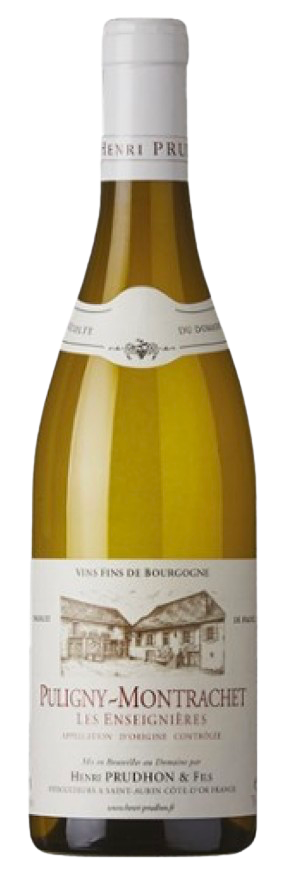
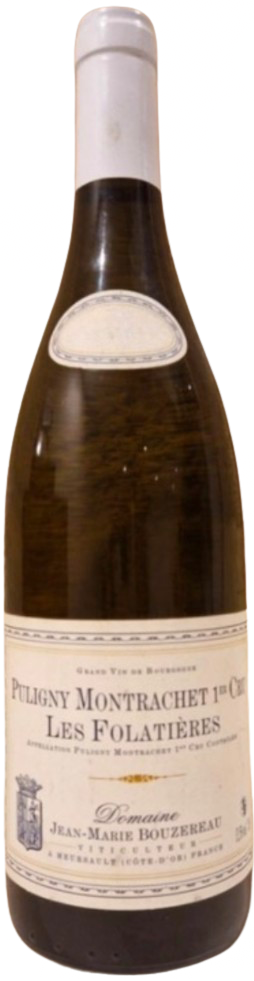
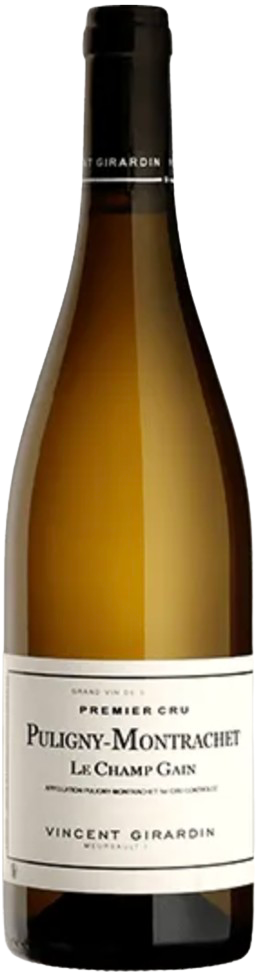
Puligny-Montrachet wines on 1001caves
Detailed pages: the cuvée, the estate, the drinking window and the bottles for sale between collectors.