A Combe Cutting into the Côte d'Or
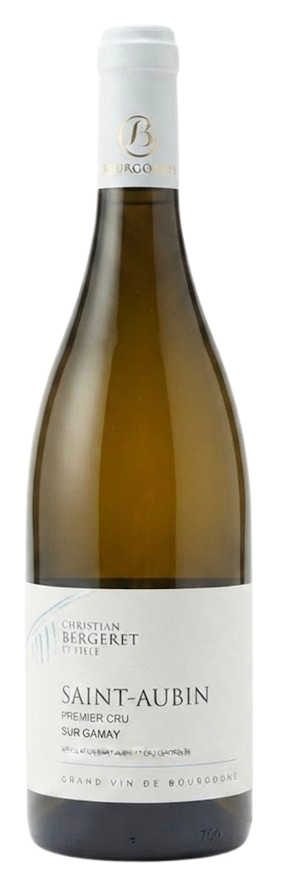
The appellation area lies entirely within the commune of Saint-Aubin, in the Côte-d'Or, in a dry valley that cuts across the Côte and allows access to the back slopes via the D 906, the former downgraded route nationale 6. The route des Grands Crus, for its part, avoids this valley and passes through Puligny-Montrachet; only the Grands Crus de Bourgogne footpath ventures in, descending from La Roche Dumay to cross the hamlet of Gamay and the village before climbing back towards the Grande Montagne de Chassagne.
Yet this position set back from the line puts the southern part of the vineyard in direct contact with the most prestigious appellations of the Côte de Beaune: chassagne-montrachet, puligny-montrachet, and above all the Grands Crus montrachet and chevalier-montrachet, which the Premiers Crus of Saint-Aubin overlook. It is the same configuration as saint-romain and auxey-duresses facing Meursault, or savigny-lès-beaune and pernand-vergelesses facing Aloxe-Corton: a valley village backing onto a village of the Côte.
The Terroir: Two Slopes, Two Geologies
The valley was carved by run-off water, exploiting a fault and above all the contact between alternately soft and hard layers of the Upper Jurassic (Malm) and the Middle Jurassic (Dogger). The result: two slopes with opposing geologies. The northern slope is dominated by the hard limestones of the Lower Kimmeridgian, which form the summit of the Montagne de Savoie at 461 metres, and by the "Saint-Romain limestones" of the Upper Oxfordian, at the top of the roches d'Éguison at 485 metres. Beneath them outcrops the lithographic limestone of Nantoux, covered at the foot of the slope by scree on which the hamlet of Gamay is built, then white marls and red ferruginous-oolite marls of the Middle Oxfordian.
The southern slope, for its part, belongs to the Bathonian: marly limestones of the Upper Bathonian with the "dalle nacrée", a soft russet bioclastic limestone; then dolomitic limestones once worked in quarries and underground galleries; and finally light-grey calcareous marls of the Middle Bathonian. The whitish clay-limestone soils, where the valley opens onto the Côte, carry chardonnay; the stonier brown soils carry pinot noir. At the top of the slopes, the soils are stony and shallow; they deepen and grow richer in clay towards the bottom.
Altitude, Exposure and Freshness
The elbow shape of the valley multiplies exposures, and the vines are tiered along both slopes on well-drained soils. The best parcels are concentrated in two pockets: the northern slope of the valley, between the village and the hamlet of Gamay, facing south-east; and the mouth of the valley, in contact with the Grands Crus. The rest of the commune's vineyard, facing north or at the top of the slopes, falls rather under bourgogne hautes-côtes-de-beaune and bourgogne aligoté.
Altitude makes all the difference. The vines climb to 450 metres on the best exposures, whereas the reference station of Savigny-lès-Beaune stands at the foot of the Côte at 237 metres: the climate of Saint-Aubin is therefore appreciably cooler than that of its neighbours. This thermal deficit gives slightly tangier wines, lower in alcohol and more aromatic — livelier whites, fruitier reds. At a time when temperatures on the Côte have risen markedly since 1988 and harvests have moved forward by about twelve days, that freshness of altitude has become an asset.
The Style of the Wines
White saint-aubin shows a golden robe and a straightforward chardonnay nose: white flowers — hawthorn, acacia — and yellow fruit, often marked by time in oak, which brings the woody and vanilla notes. It is served cool, between 11 and 12°C, with jambon persillé, terrines, Burgundy snails, all kinds of fish including grilled, goat's cheeses, comté or beaufort.
The reds carry a ruby robe and vary greatly according to the climat and the grower: from tangy fruit — cherry, redcurrant, blackcurrant, strawberry — to a firmer frame, sometimes with austere tannins, with registers of sweet spice or undergrowth. Ageing in wood softens the tannins but calls for patience: most need three to six years' cellaring, and are served between 15 and 16°C with a cut of beef, a bœuf bourguignon, feathered game or an époisses.
A Young Appellation, and an Unmatched Proportion of Premiers Crus
Saint-Aubin has existed under its own name only since the twentieth century. In the nineteenth, the village was part of the back slopes specialising in everyday gamay-based wines: Jullien does not mention it in 1816, and the 1861 classification deliberately ignores it. Until the 1930s, part of its production was sold under the borrowed names of beaune, volnay or pommard in red, of montrachet or meursault in white. The 1937 decree brought it into the Côte de Beaune-Villages appellation, with a yield then limited to 35 hl/ha; it was not until 1970 that saint-aubin became a village appellation in its own right.
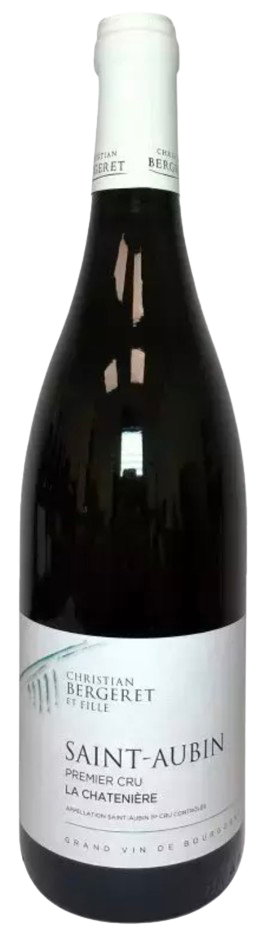
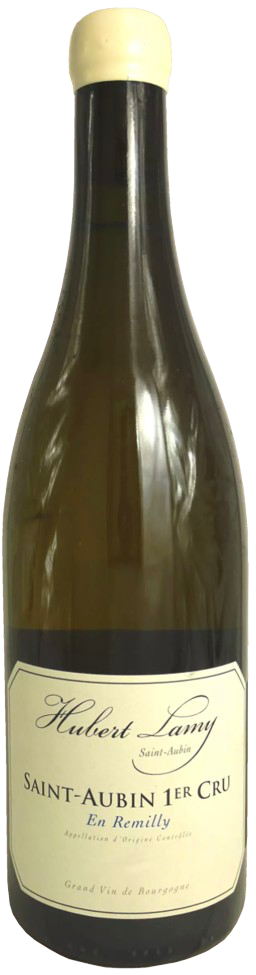
Thirty lieux-dits are ranked Premier Cru, and their weight is spectacular: of the 108.73 hectares of white claimed, 91.86 are Premier Cru; in red, 32.30 hectares out of 45.28. Three zones structure the area: the top of the Côte, entirely Premier Cru and in white, in line with the Premiers Crus of Puligny and Chassagne and just above the Grands Crus — Le Charmois, En Remilly, Les Murgers des Dents de Chien; the northern slope of the valley between Gamay and the village, likewise Premier Cru and mainly in white; and finally the upper part, on the road to La Rochepot, under the village appellation and mainly in red. In the late 1980s, moreover, a land reallocation brought back into cultivation some ten hectares of rocky waste ground just above Chevalier-Montrachet. Add that in 2012 an ouvrée of white Premier Cru here was worth a quarter of one in Chassagne, and it becomes clear why Saint-Aubin has become the insider's choice for lovers of great white Burgundy.
The grape varieties of Saint-Aubin
Saint-Aubin wines on 1001caves
Detailed pages: the cuvée, the estate, the drinking window and the bottles for sale between collectors.