A Village Perched Five Kilometres from Beaune
Volnay clings to the slope five kilometres south-west of Beaune, wedged between Pommard to the north and Meursault to the south. The village sits higher than its neighbours, and the vineyard drops below it on a clean gradient: it is one of the most consistent exposures in the whole Côte de Beaune, with no major combe to interrupt it. Three hundred inhabitants, some fifty holdings — Volnay is a wine village in the strictest sense.
The appellation spills slightly over into the neighbouring commune of Meursault: 29 hectares of the climat Les Santenots may claim volnay premier cru, provided they are planted with pinot noir. Vinified as white, the same rows become meursault. It is one of the most elegant administrative curiosities in Burgundy: here the appellation depends on the variety, not on the parcel alone.
The Terroir: Lean, Barely Ferruginous Limestones
The geological section at Volnay reads in three levels. At the top of the slope a hard, poor white Argovian limestone outcrops, leaving the vine only a thin layer of earth over the rock. At mid-slope one moves onto Bathonian limestones and a bed of ferruginous ooliths. At the foot of the slope the soils become more clayey and deeper. Volnay also sits on the syncline that bears its name, the undulation that lowers the beds in the middle of the Côte de Beaune and brings younger strata to the surface than in the Côte de Nuits.
This is where the contrast with Pommard, a few hundred metres away, is played out. In its northern neighbour, the slope cuts through Callovian ferruginous oolitic limestones particularly charged with iron and clay, whose colour the Rugiens carry in their very name. At Volnay the ferruginous band exists but remains thin, and most of the great climats sit on lean, very stony white limestones, on shallow soils. Less clay, less iron, less water reserve: less tannic matter, and more perfume. The two styles arise not from the temperament of the growers but from two different formations.
Climate and Exposure: The Consistency of the Slope
The climate is temperate with a slight continental tendency, as along the whole Côte-d'Or, with the nuance that the Côte de Beaune lies further south: around one degree separates the averages of the southern Côte de Beaune from those of the northern Côte de Nuits. The general exposure of the Côte de Beaune is south-east, against due east in the Côte de Nuits — an additional measure of sunshine that is decisive for pinot noir.
At Volnay this exposure is expressed without obstacle on a continuous, well-inclined slope. The gradient accentuates the natural drainage of the limestones and limits vigour: the berries stay small, the skins fine, and the wine keeps the tangy freshness that is its signature. The upper parcels, on almost bare rock, are the latest and the tautest; those at the bottom, more clayey, give rounder but less finely chiselled wines.
The Style of the Wines: Finesse Rather than Force
Volnay is traditionally described as the most "feminine" of the reds of the Côte de Beaune, precisely by contrast with pommard. Its robe is ruby, rarely very dark; the nose plays on tangy red fruits — redcurrant, cherry — and a floral note of violet. The palate is supple, the tannins fine and well coated: where pommard imposes its frame, volnay advances through length and perfume.
This delicacy does not preclude ageing, quite the contrary. Some volnay, fuller and more austere in youth depending on the climat and the producer, need ten to twenty years to open completely, and then develop sweet spices — cinnamon, liquorice — along with notes of game and musk. They are served between 14 and 18°C, with white meats, good poultry or duck: dishes that pommard would overwhelm.
Thirty-Four Premiers Crus and No Grand Cru
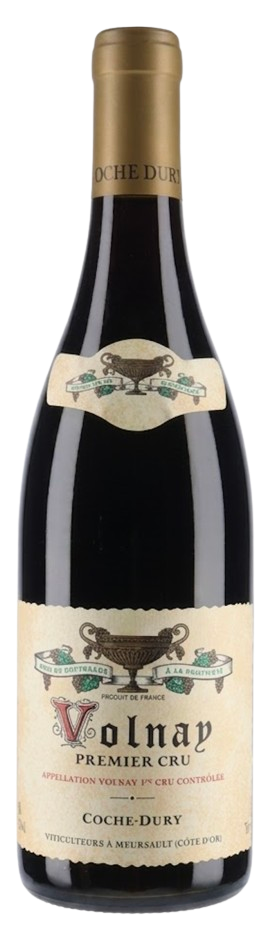
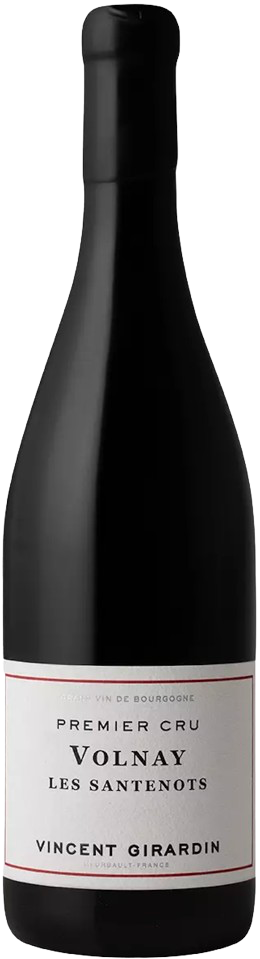
Volnay counts thirty-four climats ranked premier cru, that is 126 hectares out of 213 — nearly 60% of the appellation. Les Caillerets, Les Champans, the Clos des Chênes, Les Taille Pieds, the Clos des Ducs, the Clos des 60 Ouvrées, Les Frémiets, Les Santenots at Meursault: the list brings together some of the most sought-after names on the Côte. Labelling follows the Burgundian rule: premier cru alone, the name of the climat alone, or both together.
And yet, like Pommard, Volnay has no grand cru. The fact is all the more puzzling in that Les Caillerets or the Clos des Chênes regularly taste at the level of grands crus of the Côte de Nuits. The explanation is historical: the hierarchy was fixed by decree in the 1930s and 1940s on the basis of commercial usage and the prices recorded at the time, and it has scarcely ever been revised since. This anomaly works in the amateur's favour, giving access to a very high level of terroir without the price premium attached to the words "grand cru".
An Ancient Name, a Village of Growers
The origin of the name is lost: perhaps a man's name, Volumnius, perhaps a Celtic root "vol" suggesting an idea of roundness, echoing the shape of the site. The vineyard belongs to the long history of the Côte — the banning of gamay in favour of pinot noir by Philip the Bold in 1395, the edict of Charles VI in 1416 fixing the limits of the wine of Burgundy — before being recognised as an appellation d'origine contrôlée in the 1930s, like its neighbours.
Unlike Beaune, dominated by the merchant houses, Volnay has remained a village of family estates, often minute, many of them bearing names that have become benchmarks of fine Burgundy. It is a constant of the appellation: little volume, many signatures, and an extremely precise parcel-by-parcel reading of a vineyard that fits into two kilometres of slope.
The grape varieties of Volnay
Volnay wines on 1001caves
Detailed pages: the cuvée, the estate, the drinking window and the bottles for sale between collectors.