A classification of terroirs
The first Alsace grand cru, Schlossberg, was recognised in 1975. The list then grew to fifty-one sites. Since 2011, each has legally constituted an independent appellation d'origine contrôlée with its own production rules.
The principle differs radically from Bordeaux: plots are classified, not châteaux, as in Burgundy. A producer has grand cru status only for rows of vines within the perimeter.
Stricter rules
Yields are reduced, minimum must richness is increased and only four grapes are admitted — Riesling, Gewurztraminer, Pinot gris and Muscat — with historical exceptions such as Sylvaner at Zotzenberg or Pinot noir recently admitted in three crus.
The vintage and site name must appear on the label. The grape is almost always mentioned, except for rare blends allowed by exception, as at Kaefferkopf, where a wine of Gewurztraminer, Riesling and Pinot gris may be claimed without naming a single variety.
Strongly distinctive terroirs
Rangen de Thann on volcanic rock, Kientzheim's granitic Schlossberg, Barr's limestone Kirchberg and Turckheim's Brand: each cru has its signature, and a Rangen Riesling resembles no other.
These are ageworthy wines, often closed in youth, gaining complexity over one or two decades. Serve around 11–12°C with elaborate dishes rather than as an aperitif.
The grape varieties of Alsace Grand Cru
Alsace Grand Cru wines on 1001caves
Detailed pages: the cuvée, the estate, the drinking window and the bottles for sale between collectors.
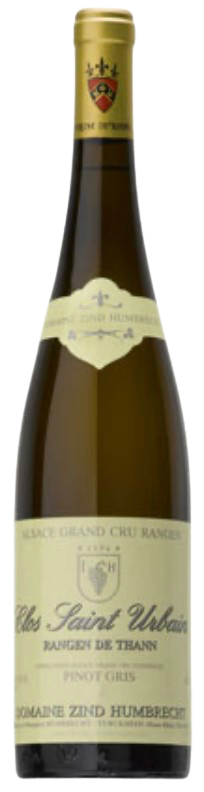 Domaine Zind Humbrecht - Clos Saint Urbain 2006Grand Cru · Alsace Grand Cru Rangen→
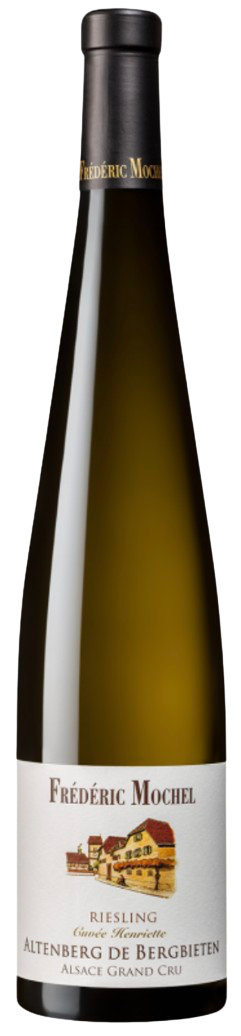 Frederic Mochel - Henriette Riesling Grand Cru 2019Grand Cru · Altenberg de Bergbieten→Frederic Mochel - Henriette Riesling Grand Cru 2021Grand Cru · Altenberg de Bergbieten→
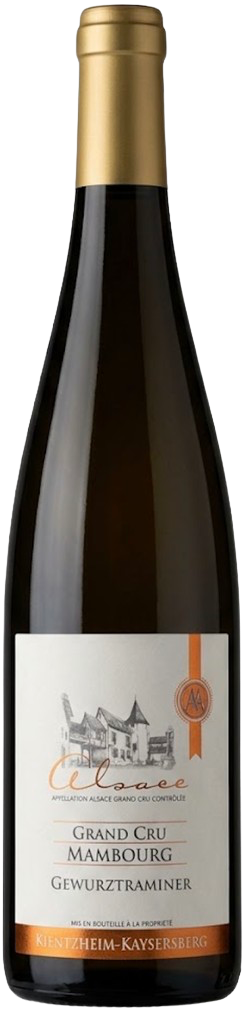 Kientzheim-Kaysersberg - Grand Cru Mambourg 2011Grand Cru · Alsace Grand Cru→