Burgundy's Other White Grape
White Burgundy, in the public mind, comes down to chardonnay. That forgets that the region has a second historic white grape, aligoté, present in Burgundy from the 17th century. Genetic analysis carried out in 1999 by the University of California, Davis showed that it shares exactly the same parentage as chardonnay: both come from a cross between pinot and gouais blanc, as do gamay, melon and auxerrois. Aligoté is not a distant cousin of chardonnay — it is its brother.
The Bourgogne Aligoté appellation, recognised by the decree of 31 July 1937, is the grape's only regional outlet. It can be produced in the Yonne, the Côte-d'Or and Saône-et-Loire — the area covers 54 communes in the Yonne, 91 in the Côte-d'Or and 154 in Saône-et-Loire. The BIVB counts about 1,575 hectares in production for some 103,000 hectolitres, Saône-et-Loire leading with 740 ha, ahead of the Côte-d'Or (about 650 ha) and the Yonne (302 ha).
The Terroir: Clay-Limestone, but Rarely the Best Slope
Aligoté expresses itself, like chardonnay, on the clay-limestone soils of the Burgundian Jurassic: Oxfordian and Callovian marls and limestones at the foot of the slope, Bajocian and Bathonian scree higher up, Kimmeridgian in the Yonne. Geologically, nothing prevents it from making great wine — and the proof is delivered every year at Bouzeron.
Its problem lies elsewhere: historically, aligoté was relegated. On the Côte, the best exposures were reserved for pinot noir and chardonnay, and aligoté was sent to the cold upper slopes, the combes and the clay-rich lower slopes. A fertile variety, it was pushed for yield there, producing thin, acidic wines that lastingly damaged its reputation. The growers behind the revival have done exactly the opposite: well-exposed parcels, old vines from massal selection, restrained yields, careful ageing.
Bouzeron, the Counter-Example That Proves Everything
Burgundy has only one village appellation entirely devoted to aligoté: Bouzeron, in Saône-et-Loire, at the northern gateway to the Côte chalonnaise. The village and its neighbour Chassey-le-Camp also belong to the Bourgogne Aligoté area, but Bouzeron has won recognition for a specific terroir, where aligoté is grown in its so-called "doré" biotype — thinner-skinned and lower-yielding than "green" aligoté — and gives a far denser white.
That precedent is essential to reading the regional appellation: it shows that aligoté's supposed mediocrity was never inherent to the variety but the result of choices about where to plant it and how to farm it. Wherever aligoté has recovered a real slope and a reasonable yield — in the Hautes Côtes, around Marsannay, in the Auxerrois, in the Côte chalonnaise — it produces taut, saline whites that age far better than the reputation of a wine "to drink within the year" would suggest.
The Kir: A Fame That Came at a Price
No French wine has been so thoroughly defined by a cocktail. The pairing of aligoté with crème de cassis, popularised after the Second World War by Canon Félix Kir, mayor of Dijon, gave blanc-cassis its modern name and took it around the world. For the appellation, the success was double-edged.
For the kir planted a false idea in consumers' minds: that aligoté was too acidic, too rustic to be drunk on its own, and needed correcting with syrup. For decades, Bourgogne Aligoté was therefore bought at the lowest price, made accordingly, and left off the wine list. It is this vicious circle that the quality revival is working to break — the best way to do aligoté justice today being to serve it without cassis.
The Style of the Wines and the Revival
Classic Bourgogne Aligoté shows a pale robe with green glints and a fresh, herbaceous bouquet: lemon, green apple, acacia, sometimes hazelnut. The palate is lively and slender, often tauter than that of a chardonnay-based white Bourgogne. It is served cold, between 9 and 11°C, with grilled andouillette, river fish, oysters, snails or a salad — a bistro wine in the best sense of the term, to be drunk within two or three years. The grape also goes into the blend for crémant de Bourgogne.
Over the past fifteen years a second face has emerged. In 2017, the grower Sylvain Pataille and Philippe Delacourcelle founded Les Aligoteurs with a dozen colleagues, to promote and safeguard the variety; the first aligoté fair was held in 2018 and the association brought together some sixty growers by 2024. Their cuvées, from old vines and sometimes barrel-aged, show an aligoté that is broad, saline and capable of several years' cellaring. On the market, these bottles have become one of the few ways to buy a grower's white Burgundy at a still-reasonable price.
The grape varieties of Bourgogne Aligoté
Bourgogne Aligoté wines on 1001caves
Detailed pages: the cuvée, the estate, the drinking window and the bottles for sale between collectors.
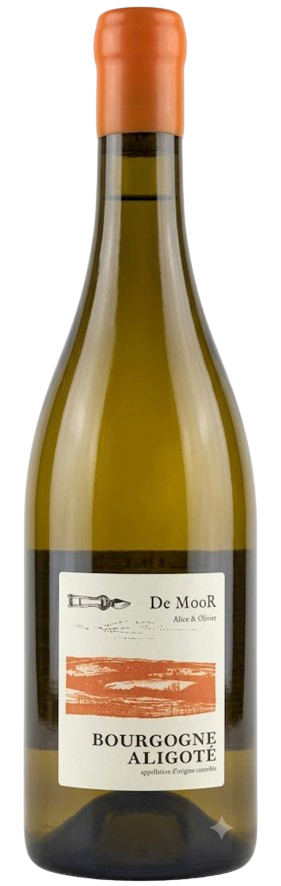 Alice & Olivier de Moor, Bourgogne Aligote 2023Bourgogne Aligote→
 Domaine Paul Pillot 2021Bourgogne Aligoté→
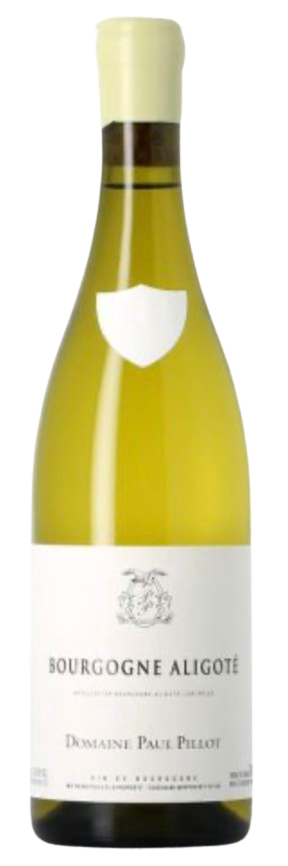 Domaine Paul Pillot - Bourgogne Aligote 2022Bourgogne Aligote→
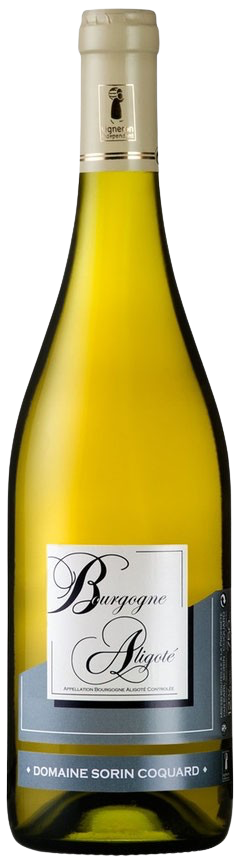 Domaine Sorin Coquard - Bourgogne Aligoté 2025Bourgogne Aligoté→
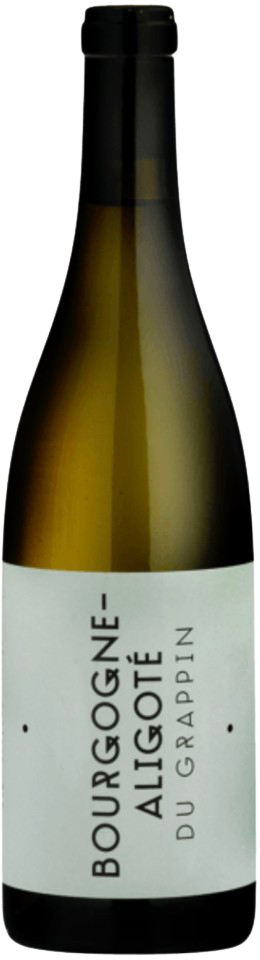 Domaine Le Grappin - Bourgogne Aligoté, Le Grappin 2023Bourgogne Aligoté→