
South of the Côte de Beaune, Between Puligny and Santenay
The appellation covers most of the commune of Chassagne-Montrachet, in the Côte-d'Or, along with a small part of its neighbour Remigny, in Saône-et-Loire, near Chagny. It slots into the Côte de Beaune between the vines of Puligny-Montrachet to the north and those of Santenay to the south, with Saint-Aubin set back in the combe that climbs to the west.
The production area is tiered between 220 and 325 metres in altitude on clay-limestone soils, more or less stony or marly depending on the position on the slope. The climate is temperate with a slight continental tendency, with the double Burgundian risk: spring frosts on an early-budding chardonnay, and summer storms. The 2003 heatwave saw some estates start picking in mid-August, a month early — an earliness the archives had not recorded since 1422 and 1865.
The Terroir: The White Oolite of the Bathonian
The geologists' terminology pays tribute to the village: the "Chassagne limestones", a white oolite of the lower Bathonian, form the bedrock of the lower slope and continue northwards beneath the line of Le Montrachet, Les Pucelles and Clavoillon, in Puligny. Above, the sequence moves forward through geological time: light grey marls of the middle Bathonian, then the compact dolomitic limestone of the upper Bathonian that forms the bare outcrop of the Mont-Rachet, a horst wedged between two faults.
This architecture explains Chassagne's duality. The stoniest, most calcareous soils, on the upper slope and in the sector known as "la Montagne", suit chardonnay; the marlier, deeper, browner soils of the lower slope long carried pinot noir. It is precisely because the commune has both families of soil that it was able, within a generation, to reorient its plantings without giving up its reputation.
The Swing from Red to White
It is the most spectacular viticultural story on the Côte de Beaune. For centuries, Chassagne was a red-wine village: pinot noir occupied the bulk of the vineyard, chardonnay remaining the exception — starting with the grands crus at the top of the slope.
The ratio has now reversed. The BIVB's figures give 188 hectares in white against 127 in red, and the gap in production is starker still: 9,125 hectolitres of white to 5,860 of red, with the white premiers crus alone accounting for 5,720 hectolitres. The market did the rest: white chassagne has climbed to the level of its neighbours in Puligny and Meursault, while red chassagne, now scarce, has remained one of the best bargains on the Côte for anyone after a pinot noir with character.
The Style of the Wines
White chassagne-montrachet wears a gold-threaded robe with green glints. The nose blends acacia and hawthorn, honeysuckle and verbena, hazelnut, with a mineral flint note; the palate is opulent, mellow and intense, broader and fleshier than the tension of neighbouring puligny. Made by the Burgundian book — pressing, settling, fermentation and ageing on lees in barrel with lees stirring — it is served between 12 and 14°C and goes with white meats, salmon, crayfish and lobster.
The red, for its part, has brightness: a vivid robe with violet glints, aromas of morello cherry, redcurrant, raspberry and wild strawberry lifted by spice, a full, concentrated, fairly tannic and complex palate. Aged for twelve to twenty-four months, it is served between 14 and 17°C with grilled or roast lamb, pork or feathered game. It is one of the few villages of the Côte de Beaune where the two colours still play in comparable measure.
History: From Cassaneas to Chassagne-Montrachet
The village appears as early as 886 in the cartulary of the abbey of Saint-Seine under the name Cassaneas or Cassania — a name whose origin is still debated: a small house, the estate of a Cassius, or a place planted with oaks. The Cluniac monks founded the priory of Morgeot there, the Benedictine abbey of Saint-Jean-le-Grand of Autun owned the Clos Saint-Jean, and the Cistercian abbey of Maizières held a grange at Morgeot until the end of the 16th century. In 1476, after its lord had embraced the cause of Mary of Burgundy, the village was burned by the troops of Louis XI.
As Puligny had done the year before, Chassagne-le-Haut obtained permission in 1879 to add to its name that of its most prestigious climat and became Chassagne-Montrachet. "Montrachet" comes from "Mont Rachaz", after the neighbouring rocky outcrop, a bare relief where nothing grows. The village appellation was recognised by the founding decrees of 1937 and today has fifty-seven premiers crus, among them Morgeot, Les Caillerets, Les Ruchottes, La Maltroie and the Clos Saint-Jean.
The grape varieties of Chassagne-Montrachet
Chassagne-Montrachet wines on 1001caves
Detailed pages: the cuvée, the estate, the drinking window and the bottles for sale between collectors.
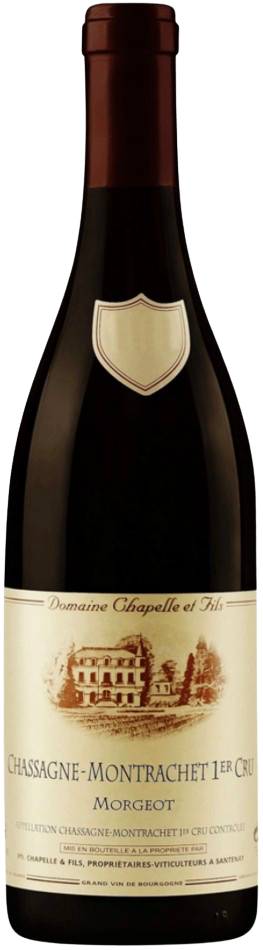 Domaine Chapelle & fils - Chassagne-montrachet 1er Cru Morgeot 20231er Cru · Chassagne-montrachet 1er Cru→
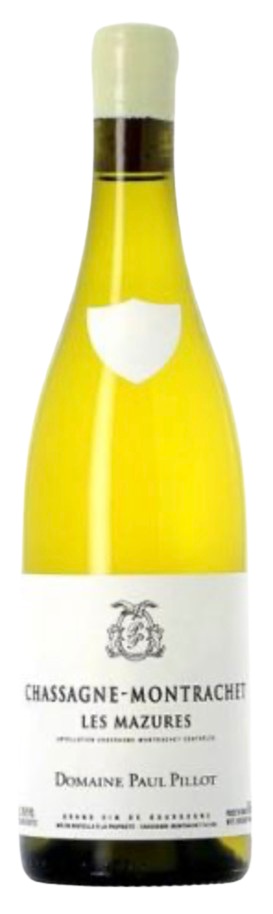 Domaine Paul Pillot - Chassagne-Montrachet, Mazures 2023Chassagne-Montrachet→
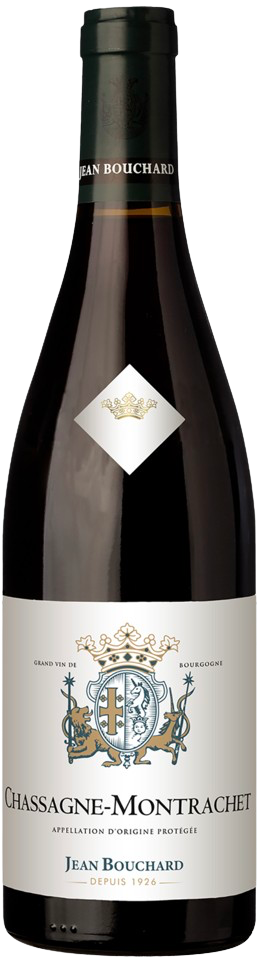 Jean Bouchard - Chassagne-Montrachet 2024Chassagne-Montrachet→
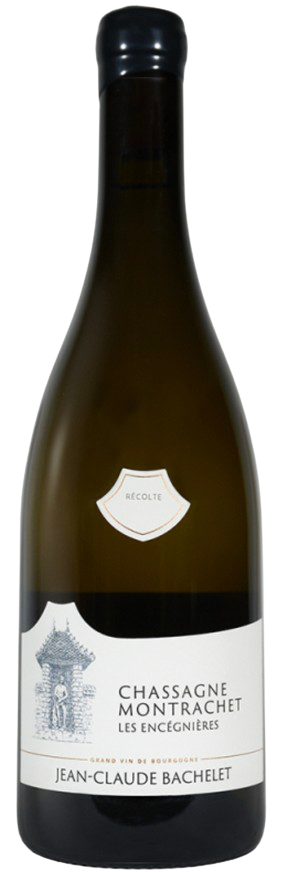 Jean-Claude Bachelet - Chassagne-Montrachet, Les Encegnieres 2021Chassagne-Montrachet→
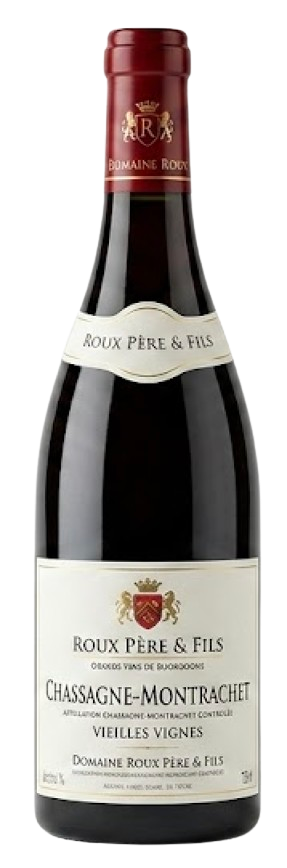 Roux Père & Fils - Chassagne-Montrachet 1982chassagne-montrachet→
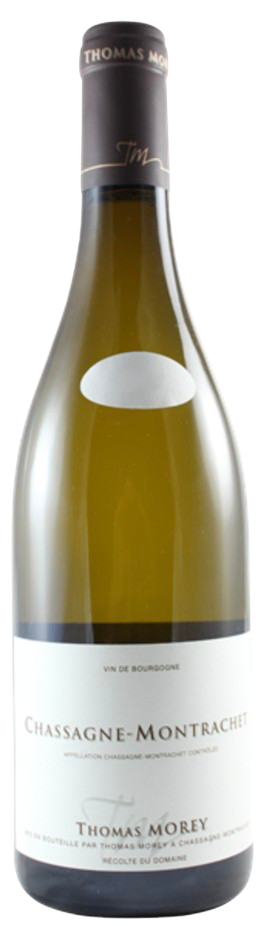 Thomas Morey - Chassagne-Montrachet 2022Chassagne-Montrachet→