A Combe in the Côte: The Rhoin
Savigny-lès-Beaune lies in the Côte-d'Or, between the Corton hill to the north and Beaune to the south, a stone's throw from the A6 motorway. Its distinctiveness is topographic: here the heights of the Côte draw back a little, on either side of a small river, the Rhoin, which comes down from the Hautes-Côtes and emerges into the plain. This combe abruptly widens the vineyard, which ceases to be a simple east-facing band and instead occupies two slopes facing one another.
The result is one of the largest village appellations of the Côte de Beaune: 354 hectares of vines, against 122 for Aloxe-Corton or 158 for Pernand-Vergelesses. That scale, combined with the diversity of exposures, explains why Savigny offers a very wide range of wines — and prices that have remained among the most reasonable in the sector, despite the presence of twenty-two Premiers Crus.
The Terroir: Two Slopes, Two Soils
The northern side of the combe, the one looking towards Pernand-Vergelesses, is made of gravelly soils facing south. On that bank, the geology continues that of the Corton hill: the same Jurassic beds, the same limestone scree fallen from the heights. The soils there are light, free-draining, often lean — a terroir of finesse and perfume rather than power, home to the climats of Les Vergelesses, Les Lavières, Aux Guettes and Aux Serpentières.
The opposite slope, turned towards Beaune, shows, as one descends, more clayey, stony limestone soils of a characteristic red-brown colour. This richer matter and ferruginous tint give wines of another temper: denser, more tannic, slower to open. This is where Les Marconnets, La Dominode, Les Jarrons, Les Narbantons and Les Peuillets are found. Here is one of the clearest demonstrations of the Burgundian principle: it is not the variety that changes from one wine to another, it is the soil and the exposure.
Climate and Exposure: The Interplay of the Two Banks
The climate is temperate with a slight continental tendency, that of the whole Côte-d'Or: rainfall spread across the year, pronounced winters, hot and sometimes stormy summers. A sign of the village's central position on the Côte, it is the Savigny-lès-Beaune weather station, at 275 metres in altitude, that serves as the reference for the neighbouring communes of the Corton sector. As everywhere in the region, the vine's cycle has moved forward: in 2003, some estates harvested as early as mid-August, unheard of since 1422 and 1865 according to the archives.
Exposure, for its part, is not uniform: it is in fact the appellation's identity. One bank facing due south, warm, on light gravels; another facing it, cooler, on clay-limestone soils. Two ripening patterns, two speeds of maturation, two tannic profiles. Many estates blend parcels from both sides of the Rhoin for their village cuvée, which gives that balance between fruit and structure by which savigny is recognised; others deliberately play one slope or the other in Premier Cru, and the difference in style is then striking.
The Style of the Wines: "Nourishing and Theological"
Savigny red shows a deep cherry robe, a nose of small red and black fruits — raspberry, cherry, blackcurrant — lifted by a floral note of violet. The palate is substantial and tannic, but round and balanced, with power and no heaviness. It is served between 14 and 16°C and kept for five to ten years. At the table it is unusually versatile: roast poultry, pan-fried foie gras, a cut of beef, tomme, Mont d'Or, époisses or chaource.
The white, rarer — 1,981 hectolitres against 12,351 for the red — shows a golden robe with emerald glints and a nose that is floral, buttery and brioche-like, dotted with lemon and grapefruit. The palate is brisk and clean, but also rich and fleshy. It is served between 11 and 13°C, kept for four to eight years, and accompanies freshwater fish in a white sauce, scrambled eggs or goat's and pressed cheeses.
Twenty-Two Premiers Crus, from One Bank to the Other
The cahier des charges ranks twenty-two climats as Premier Cru: Les Charnières, Les Talmettes, Les Vergelesses, Bataillières, Basses Vergelesses, Aux Fourneaux, Champs Chevrey, Les Lavières, Aux Gravains, Petits Godeaux, Aux Serpentières, Aux Clous, Aux Guettes, Les Rouvrettes, Les Narbantons, Les Peuillets, Les Marconnets, La Dominode, Les Jarrons, Les Hauts Jarrons, Redrescul and Les Hauts Marconnets. They weigh heavily in production: 4,965 hectolitres out of the 12,351 hl of red, and 497 hl out of 1,981 in white.
Their distribution maps exactly the commune's double geography. On the Pernand-Vergelesses side — Les Vergelesses, Basses Vergelesses, Les Lavières, Aux Serpentières, Aux Guettes — one looks for finesse and perfume. On the Beaune side — Les Marconnets, La Dominode, Les Jarrons, Les Narbantons — one finds frame and the capacity to age. La Dominode, a portion of Les Jarrons, and Les Marconnets, on the very boundary of Beaune, are among the most sought-after.
An Old Wine-Growing Land, Cradle of Guyot Pruning
Savigny has a long viticultural history. The commune belonged in turn to the ducal domain, to the neighbouring abbeys and to the Knights of Malta, and its substantial fourteenth-century château bears witness to those old claims. The village's wine was said to be a favourite of the Holy Father: a great deal of it was drunk at the Vatican. The inhabitants, tradition has it, celebrated Dionysus in the very distant past with great festivities.
The village's most concrete contribution to viticulture is technical. Some Savigny growers were among the first to plant their vines in regular rows and to rethink the delicate operation of pruning — giving rise to the pruning method that bears the name of its inventor, Guyot, practised today throughout Burgundy. The appellation was recognised in 1937, and in 1960 the Association technique viticole de Bourgogne carried out variety trials there. A village of growers, then, rather than a village on show.
The grape varieties of Savigny-lès-Beaune
Savigny-lès-Beaune wines on 1001caves
Detailed pages: the cuvée, the estate, the drinking window and the bottles for sale between collectors.
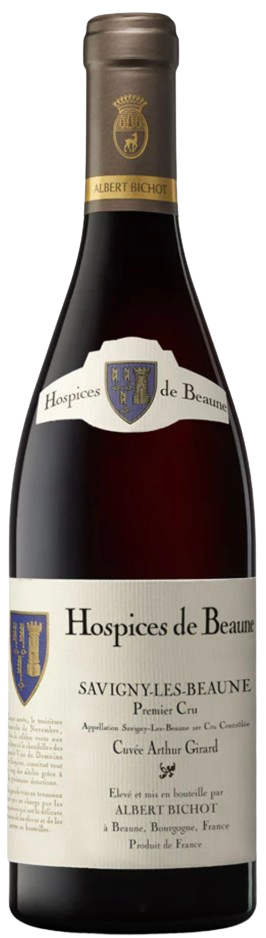 Domaine des Hospices de Beaune - Savigny-lès-Beaune Premier Cru Cuvée Arthur Girard 20171er Cru · Savigny-lès-Beaune 1er Cru→
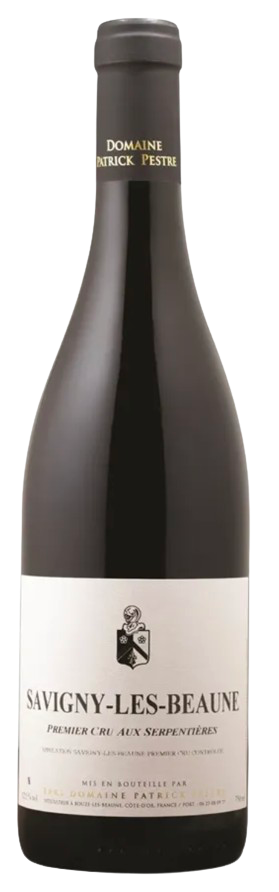 Domaine Patrick Pestre - Premier Cru Aux Serpentières 20221er Cru · Savigny-lès-Beaune Premier Cru→
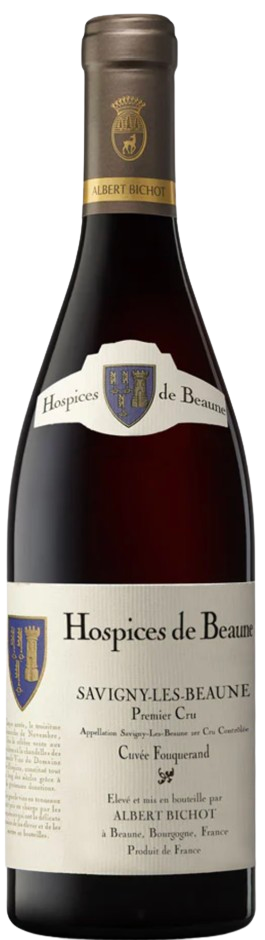 Hospices de Beaune - Savigny-lès-Beaune Premier Cru Cuvée Fouquerand 20191er Cru · Savigny-lès-Beaune Premier Cru→Domaine des Hospices de Beaune - Hospices de Beaune Savigny-lès-Beaune Premier Cru Cuvée Fouquerand 20201er Cru · Savigny-lès-Beaune Premier Cru→
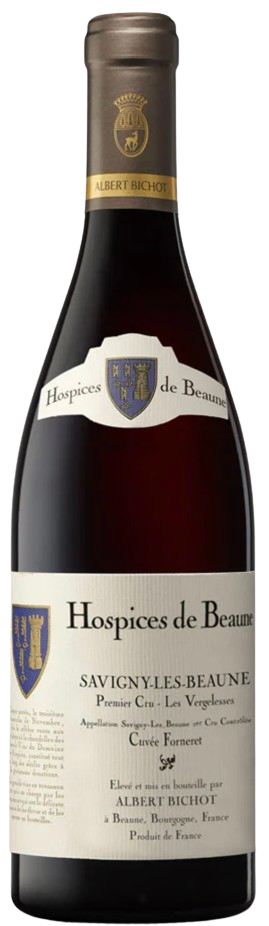 Domaine des Hospices de Beaune - Hospices de Beaune Savigny-lès-Beaune Premier Cru - Les Vergelesses Cuvée Forneret 20211er Cru · Savigny-lès-Beaune Premier Cru→
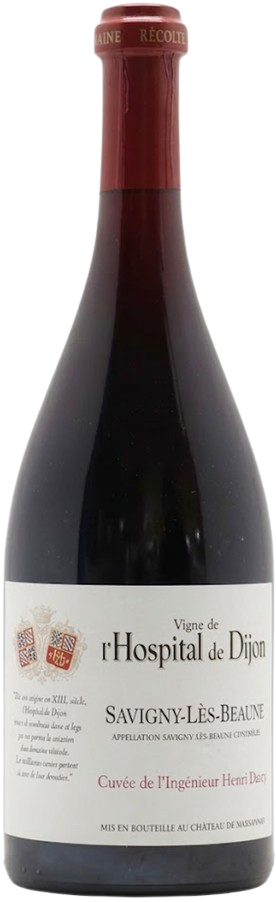 Vigne de l'Hôpital de Dijon - Cuvée de l'Ingénieur Henri Darcy 2020Savigny-lès-Beaune→