Moulis, the small appellation of the inland Médoc
Moulis-en-Médoc — often simply called Moulis — is the smallest of the Médoc's village appellations. It spreads around its village, south of Listrac, a little removed from the Gironde estuary, in this inland band of the vineyard where the wines gain in depth what they give up in worldliness.
Recognized as an appellation d'origine contrôlée by decree as early as 14 May 1938, it built its reputation not on the 1855 classification — from which it is absent — but on the consistency of its best estates, which have become benchmarks of the cru bourgeois category.
Terroir: gravel and clay
Moulis's vineyard is established on gravelly rises, formed of Quaternary deposits resting on the bedrock of sand and silt from the Landes de Gascogne. As elsewhere in the Médoc, these graves — from the erosion of the Pyrenees and the Massif Central — mix sand, gravel and a little clay.
It is this share of clay, more present than elsewhere in certain sectors, that gives Moulis its particular density: it retains water and nourishes deep, structured wines, while the best-drained gravel rises bring concentration. The vine, forced to draw water from deep down, finds here the conditions for fine ripeness.
Grape varieties: cabernet and merlot in balance
In Moulis, cabernet sauvignon and merlot together make up the great majority of the encépagement, in roughly equal parts — a balance that sets the appellation apart from neighbors more squarely dominated by cabernet. On this terroir, cabernet sauvignon proves highly outstanding: it yields powerful wines, dark in color, with very great cellaring potential.
Merlot, which ripens earlier, brings the flesh and roundness that make these reds more approachable earlier on, while cabernet franc and petit verdot round out the blend in small touches. This balance produces wines that are both full-bodied and generous.
Style and the great cru bourgeois estates
Moulis is a wine of character: dense, deeply colored, with a tannic structure that calls for patience and rewards cellaring. The best bottles are readily kept for one to two decades and then pair with red meats, lamb and game.
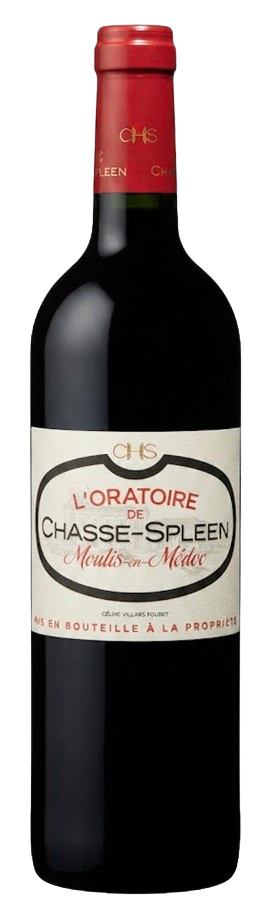
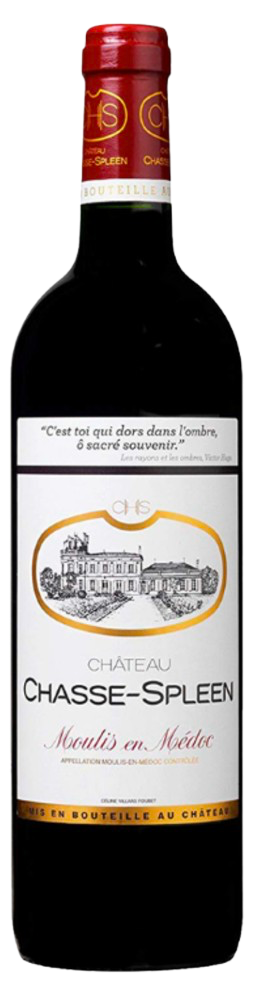
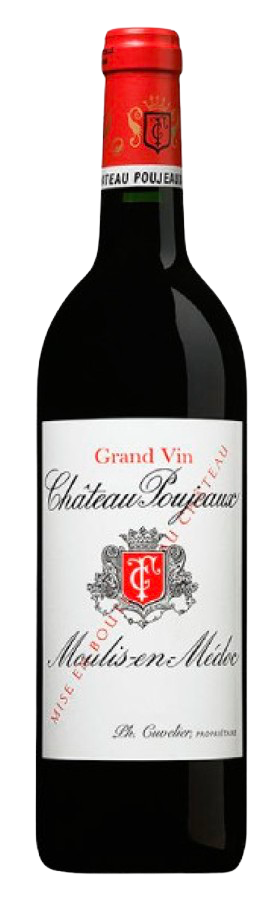
The appellation owes its reputation to a handful of estates that have become classics of the cru bourgeois category — Château Chasse-Spleen, Château Poujeaux, Château Maucaillou, Château Biston-Brillette... — which often rival neighboring classified growths at a fraction of the price. This is the whole appeal of Moulis for the curious wine lover.
The grape varieties of Moulis-en-Médoc
Moulis-en-Médoc wines on 1001caves
Detailed pages: the cuvée, the estate, the drinking window and the bottles for sale between collectors.