The Largest Commune of the Côte de Nuits
Gevrey-Chambertin lies some fifteen kilometres south of Dijon, between Fixin to the north and Morey-Saint-Denis to the south. The appellation area extends over two communes of the Côte-d'Or: Gevrey-Chambertin and Brochon. With nearly four hundred hectares in production and an annual average of about 17,000 hectolitres, it is by far the largest village appellation of the Côte de Nuits — an order of magnitude that only Nuits-Saint-Georges approaches.
The vineyard here is ancient in the most literal sense. In 2008, the extension of a housing estate uncovered, over six thousand square metres, 316 aligned planting pits bearing the traces of a hundred and twenty vine stocks: the oldest known vineyard in Burgundy, dated to the first century. The appellation itself was recognised by the decree of 11 September 1936, its boundaries following those set by a ruling of the Dijon court of 18 June 1929, confirmed on appeal on 20 May 1930.
The Terroir: The Combe Lavaux and its Alluvial Fan
The Côte de Nuits here forms a straight, tectonic north-south relief separating the Hautes Côtes plateaus to the west (400 to 500 m) from the Bresse plain to the east (about 250 m). The front of the Côte, with about 150 metres of relief, is built on a series of Bajocian and Bathonian limestones — Middle Jurassic — of which the very compact Comblanchien limestone forms the framework. A level of Bajocian marls is interbedded in the limestone series in the lower part of the slope and shows in the topography as a slight terrace. Between Gevrey and Brochon, a small tectonically uplifted block exposes the Lias marls at the foot of the slope.
The relief is interrupted by a deep dry valley draining the hinterland: the Combe Lavaux. At its mouth spreads a wide alluvial fan reaching two to three kilometres out into the plain, made of gravelly, calcareous, well-drained alluvial formations. It is this fan that explains the unusual eastward extension of the Gevrey vineyard, further than in most neighbouring communes — a delimitation regularly debated by critics, but founded on a geological reality. The cahier des charges itself draws two profiles from it: on the slope, on shallow soils rich in clay and iron oxides, powerful, deeply coloured wines for long cellaring; on the alluvial fan, on free-draining gravelly soils, fruitier wines of lighter structure and quicker expression.
Climate, Exposure and Vineyard Management
The climate is cool oceanic, with about 750 millimetres of annual rainfall and an average of 10.5°C. The slope soils are weakly developed, generally carbonated and thin — as little as fifty centimetres at the foot of the slope, decarbonated at the surface — but free-draining despite a high clay content. From the top of the slope down, the topo-sequence runs from meagre, very calcareous soils to the deeper piedmont spreads.
The cahier des charges imposes a minimum density of 9,000 vines per hectare, row spacing of no more than 1.25 metres, pruning limited to eight true buds per vine and a maximum load of 9,000 kilos per hectare; irrigation is forbidden, as are continuous presses and the use of wood chips. The wines are aged at least until 15 June of the year following the harvest and may be released only from 30 June. The minimum sugar content of the grapes is set at 180 g/l at village level and 189 g/l for premier cru.
The Style of the Wines and Their Ageing
Gevrey-chambertin is a pinot noir of frame. The robe is deep, the nose mixes small black fruits, spice and, with age, undergrowth and leather; the palate is ample, structured by firm but well-coated tannins. It is one of the most muscular expressions of the Côte de Nuits, the opposite of the lace of Chambolle-Musigny a few kilometres to the south — a classic contrast, and one that the terroir justifies.
Village cuvées ask five to ten years to unfold; premiers crus from fine vintages are worth waiting ten to twenty years for, and the grands crus longer still. Note one little-known provision: wines from the areas of the nine grands crus may be declassified into Gevrey-Chambertin premier cru, without a climat name. A premier cru with no lieu-dit named may therefore, in some cases, have been born a grand cru.
Nine Grands Crus and Twenty-Six Premiers Crus
The commune's nine grands crus are as many separate appellations: Chambertin, Chambertin-Clos de Bèze, Chapelle-Chambertin, Charmes-Chambertin, Griotte-Chambertin, Latricières-Chambertin, Mazis-Chambertin, Mazoyères-Chambertin and Ruchottes-Chambertin. Only the first two are entitled to place the name Chambertin first; they sit on the outcrop of the Prémeaux limestone, which begins here and continues as far as Premeaux-Prissey. The Clos de Bèze goes back to a donation by Duke Amalgaire to the monks of the abbey of Bèze in the seventh century; it was bought by the Chapter of Langres in 1219, and the chapel that gives Chapelle-Chambertin its name was built in 1155.
The village appellation also counts twenty-six climats classified premier cru, among them Clos Saint-Jacques, Les Cazetiers, Combe au Moine, Lavaut Saint-Jacques, Estournelles-Saint-Jacques, Champeaux, Les Corbeaux, Petite Chapelle, Clos du Chapitre, Fonteny and Aux Combottes. No official hierarchy separates them, but the market traditionally puts at the top the group of climats on the south side of the Combe Lavaux, Clos Saint-Jacques first — which many judge worthy of grand cru rank. The commune's very name was a piece of marketing before its time: in 1847 Gevrey added to its own the name of its most prestigious cru. Tradition has it that Chambertin comes from the "champ de Bertin", after a peasant who farmed next to the Clos de Bèze; the etymology is more legend than record. It is established, on the other hand, that Thomas Jefferson stopped at Gevrey in 1787 and later bought this wine for the cellars of the White House, and that Napoleon made it his favourite.
The grape varieties of Gevrey-Chambertin
Gevrey-Chambertin wines on 1001caves
Detailed pages: the cuvée, the estate, the drinking window and the bottles for sale between collectors.
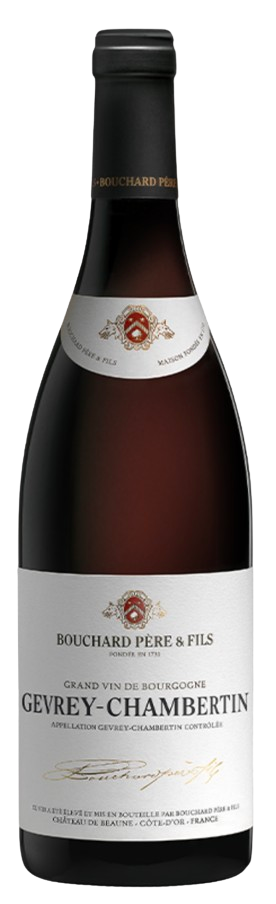 Bouchard Père & Fils - Gevrey-Chambertin 2014Gevrey-Chambertin→
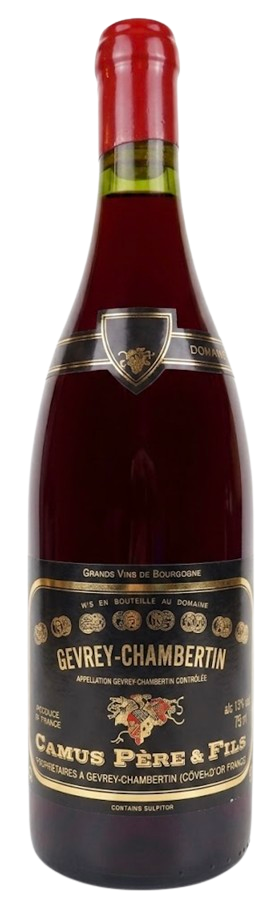 Camus Père et Fils - Gevrey-Chambertin 2013gevrey-chambertin→
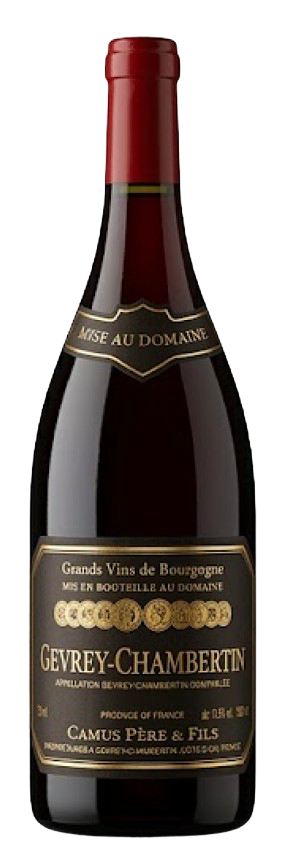 Camus Père et Fils - Gevrey-Chambertin 2017Gevrey-Chambertin→Camus Père et Fils - Gevrey-Chambertin 2018Gevrey-Chambertin→
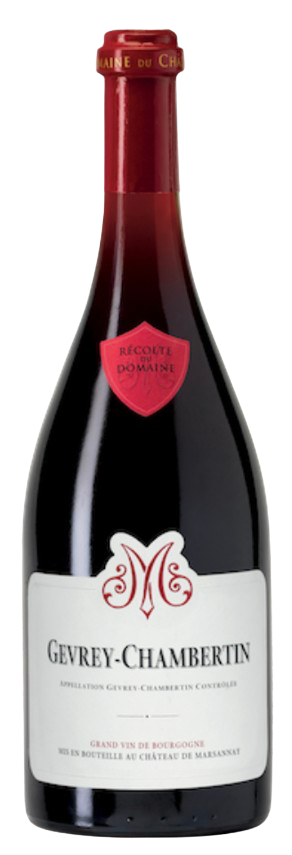 Château de Marsannay - Gevrey-Chambertin 2020Gevrey-Chambertin→
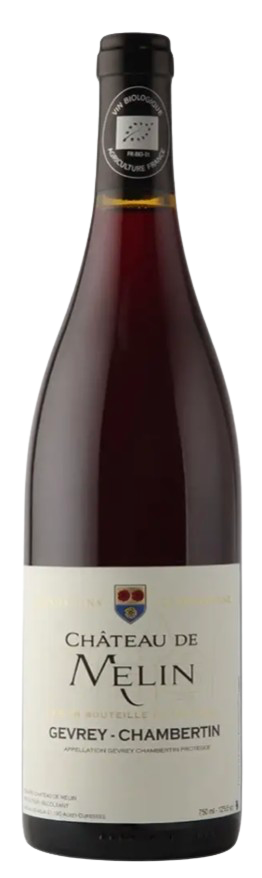 Château de Melin - Gevrey-Chambertin 2022Gevrey-Chambertin→
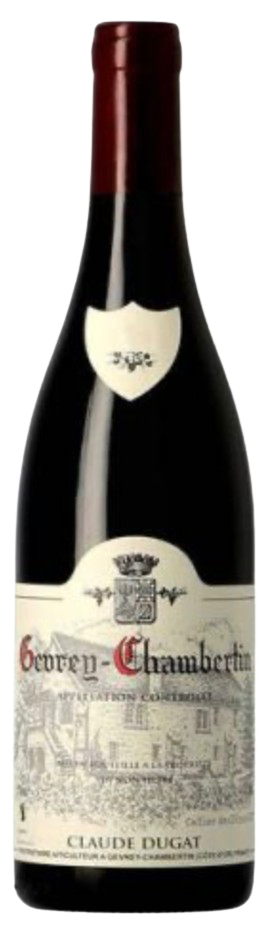 Claude Dugat 2004Gevrey-Chambertin→
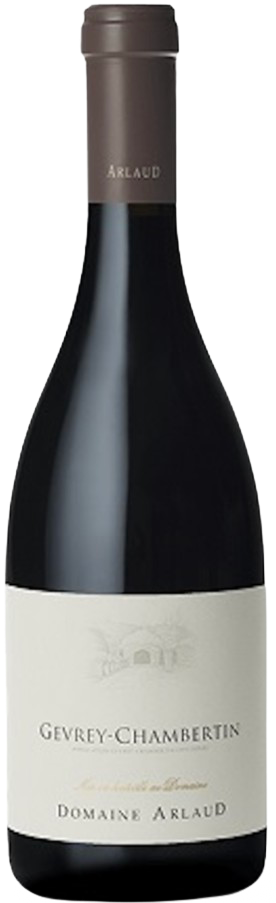 Domaine Arlaud - Gevrey-Chambertin 2021Gevrey-Chambertin→
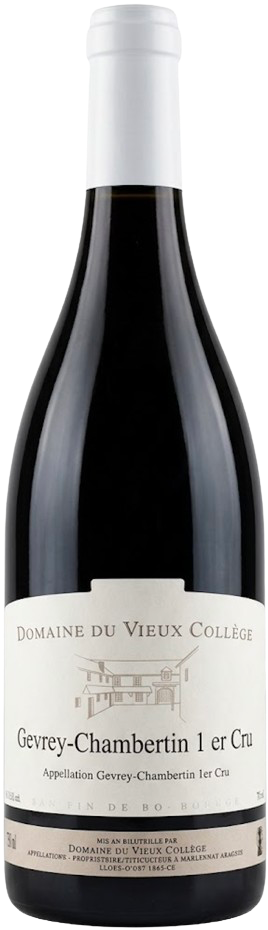 Domaine du Vieux Collège - Gevrey-Chambertin 1er Cru 20221er Cru · Gevrey-Chambertin 1er Cru→
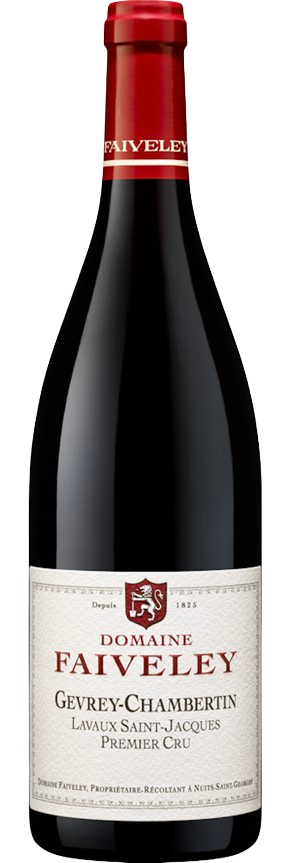 Domaine Faiveley Gevrey-Chambertin Premier Cru "Lavaux Saint-Jacques" 20141er Cru · Gevrey-Chambertin Premier Cru→
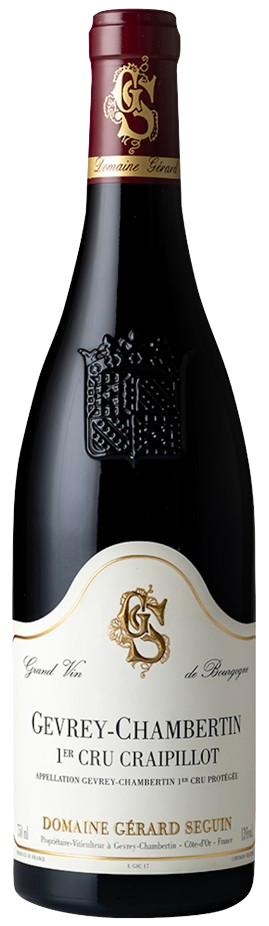 Domaine Gérard Seguin - Gevrey-Chambertin Premier Cru Craipillot 20231er Cru · Gevrey-Chambertin Premier Cru→
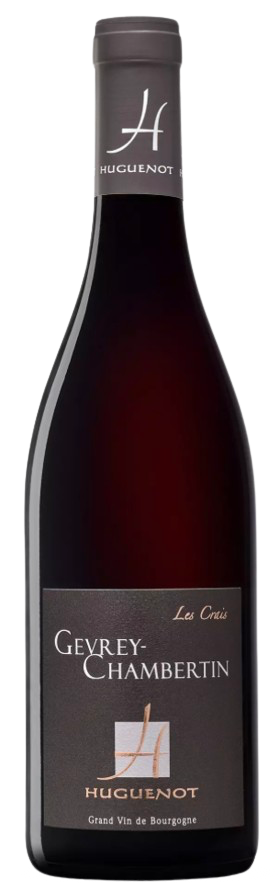 Domaine Huguenot - Gevrey-Chambertin Les Crais 2023Gevrey-Chambertin→
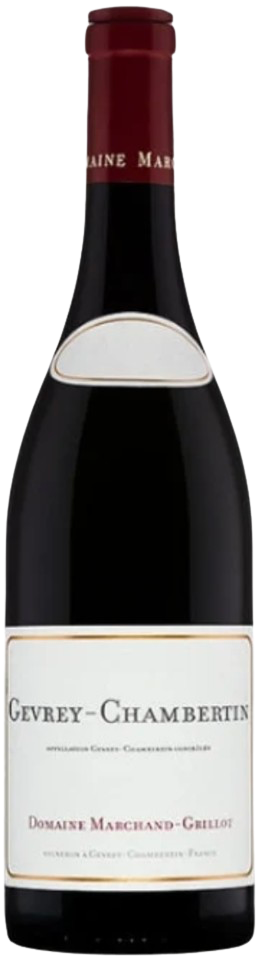 Domaine Marchand-Grillot - Gevrey-Chambertin 2023Gevrey-Chambertin→
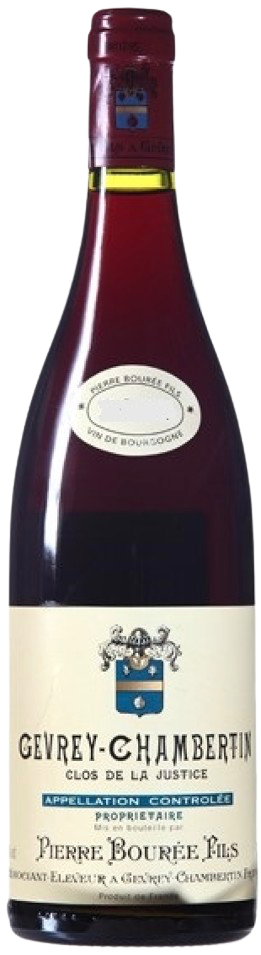 Pierre Bourée Fils - Clos de la Justice 2017Gevrey-Chambertin→