Between Beaune and Volnay, a Village at the Mouth of a Combe
Pommard occupies the next slope along from Beaune, heading south down the Côte: the Beaune vineyard to the north, Volnay to the south, then Meursault beyond. The village settled at the outlet of a combe cutting into the Côte, and the vineyard is tiered on either side of that notch, on both flanks — a configuration that multiplies exposures and explains the appellation's internal diversity.
The name itself speaks of orchard country before vine country: Polmareum in 1004, then Pomareum in the thirteenth and fourteenth centuries, from the Latin pomarium, "orchard". The vineyard's surface has varied greatly — around 700 hectares in 1826, including land for ordinary wine, against 340 hectares at the end of the 1970s, after the refocusing on the best slopes and the recognition of the AOC in 1936.
The Terroir: Clay, Gravel and Iron Oxides
Pommard's geology reads in three bands, from bottom to top. At the foot of the slope, in the lowest part, lie ancient alluvia washed down from the combe: deep, heavier soils that give broad but less chiselled wines. At mid-slope, the clay-limestone soils are lightened by a gravel of rock debris that ensures drainage — this is the belt of the great Premiers Crus. At the top of the vineyard, Oxfordian marls come to the surface along with brown calcic and calcareous soils, cooler and later-ripening.
Pommard's distinctiveness lies in the iron content of these grounds. The slope cuts across the ferruginous oolitic limestones of the Callovian — the same levels that carry corton further north — whose weathering releases iron oxides that tint the earth red and ochre: the climat of Les Rugiens, Rugiens-Bas and Rugiens-Hauts, owes its very name to that colour. This iron, combined with a higher proportion of clay than in the neighbouring communes, gives thick-skinned grapes and wines with a dense tannic weave, where Volnay, on leaner, stonier limestones, produces wines that are supple from the outset. The Pommard/Volnay opposition is not a taster's figure of speech: it is written in the subsoil, a few hundred metres apart.
Climate and Exposure: The Role of the Combe
The climate is that of the whole Côte-d'Or: temperate with a slight continental tendency, with pronounced winters, hot and stormy summers, and a vineyard sheltered to the west by the high ground bordering the Côte. The reference figures are those recorded at Dijon, upstream of the Côte, Pommard lying further south and therefore slightly milder.
The combe carved by the Avant-Dheune, which cuts here into the marls and limestones of the Côte, nevertheless introduces an important local nuance. It has built an alluvial fan at its outlet — those alluvia of the lower slope — and it offers, on its two flanks, a range of exposures running from due south to east. The best-placed climats are those that stay at mid-slope, on the free-draining gravel, away from the valley floor.
The Style of the Wines: Power and Time
Pommard is a wine of deep colour and intense bouquet, and frankly astringent in its early years — the classic literature allows it about four years of austerity before the tannins begin to melt. It is a wine for keeping, which asks for a good ten years to improve, and more for the great Premiers Crus of sun-filled vintages.
At maturity it unfolds dark flesh, notes of black fruit, undergrowth and spice, over a frame that remains perceptible: that is its signature. It is served warmer than the Burgundian average, at around 16 to 18°C, with game or strong cheeses — livarot, pont-l'évêque. As much as Volnay calls for poultry or a delicate dish, Pommard demands a dish that can stand up to it.
Twenty-Eight Premiers Crus, No Grand Cru
Pommard has twenty-eight climats ranked Premier Cru, close to 116 hectares out of 322: Les Rugiens-Bas and Les Rugiens-Hauts, Les Grands Épenots and Les Petits Épenots, Clos des Épeneaux, Clos de la Commaraine, Clos Blanc, Les Pézerolles, Les Jarolières, Les Chaponnières, Les Arvelets, Les Charmots… The Burgundian labelling rule applies: the appellation name may be followed by the words Premier Cru, by the name of the climat, or by both; an unranked climat may appear on its own on the label.
And yet, no Grand Cru. This is one of the least understood singularities of the Côte de Beaune: Pommard and Volnay, two of Burgundy's most famous names, stopped at Premier Cru level when the hierarchy was fixed in the 1930s. Les Rugiens-Bas, regularly cited as the most legitimate candidate for promotion, has never made the step — the Burgundian classification, once established, almost never moves. The consequence is a happy one for the wine lover: here you buy terroir of the very highest level without paying for the words "grand cru".
An Ancient Reputation, Carried by History
Few Burgundian villages can line up so many written testimonies. Ronsard marvelled "that so small a place could give birth to so great a wine"; Henri IV and later Louis XV enjoyed pommard; Victor Hugo made it one of his favourite wines. On the revocation of the Edict of Nantes, Protestant inhabitants of Pommard, forced into exile, took with them the taste and the reputation of their village's wine.
Modern history is that of a value taking off: from 1970, massive buying from the United States drove prices sharply higher, and Pommard became one of Burgundy's most sought-after export names. As everywhere on the Côte, the vineyard came through the crises of the nineteenth century — grape moth, powdery mildew, downy mildew and then phylloxera — before being reborn on grafted rootstock, then thoroughly modernised from the 1960s onwards.
The grape varieties of Pommard
Pommard wines on 1001caves
Detailed pages: the cuvée, the estate, the drinking window and the bottles for sale between collectors.
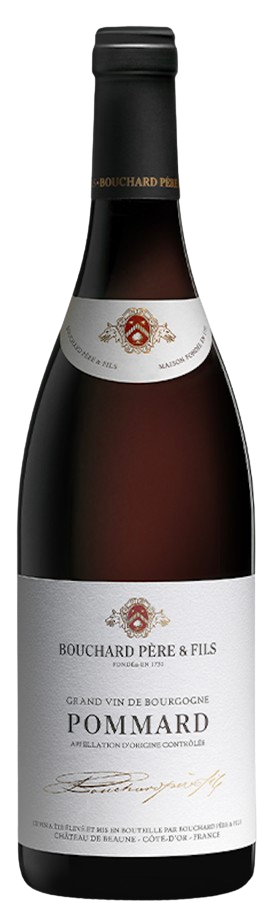 Bouchard Père & Fils - Pommard 2014Pommard→
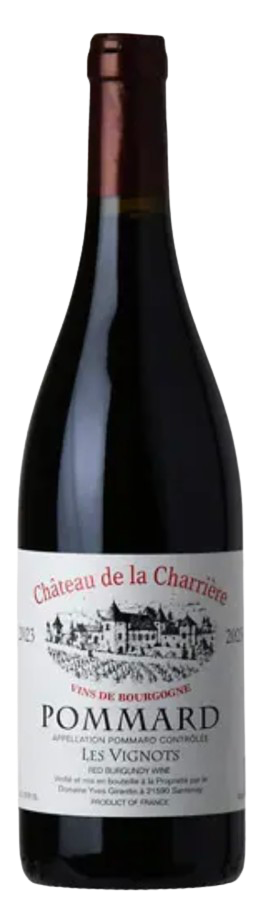 Château de la Charrière - Les Vignots 2021Pommard→
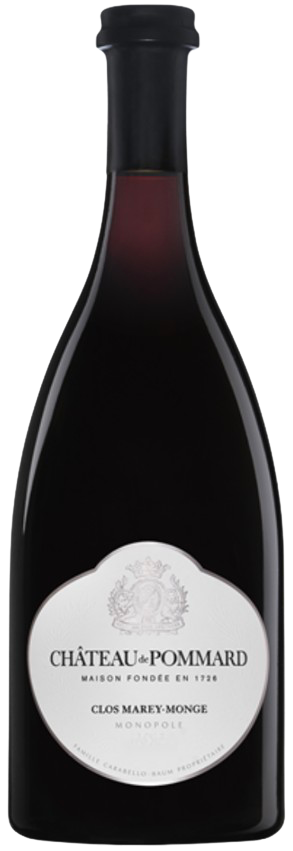 Château de Pommard - Clos Marey-Monge 2011Pommard→
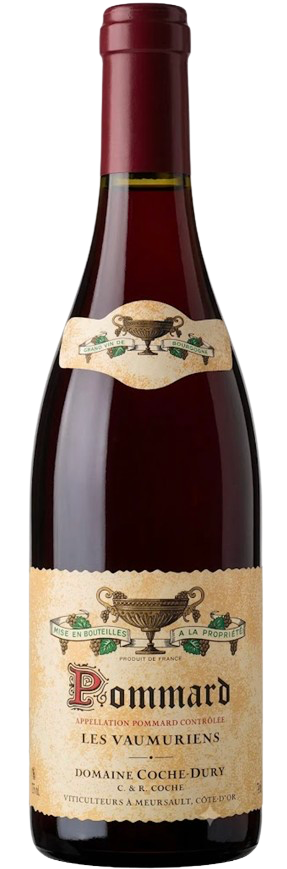 Coche-Dury - Pommard Les Vaumuriens 2008Pommard→
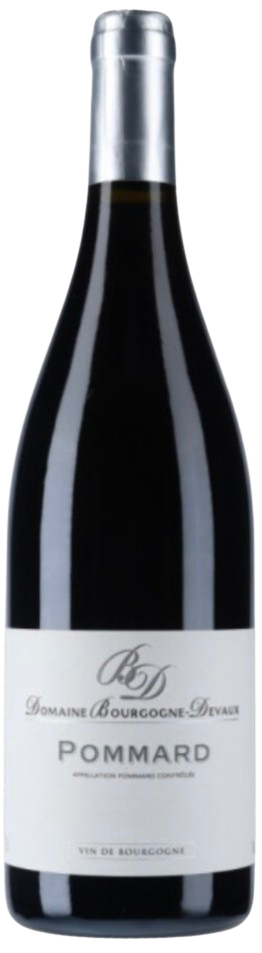 Domaine Devaux - Pommard 2020Pommard→
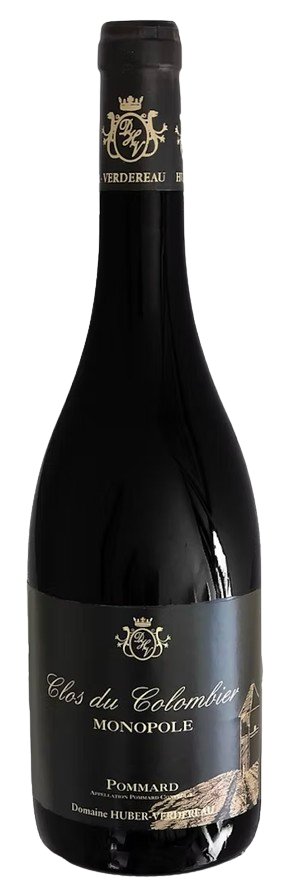 Domaine HUBER-VERDERE - Clos du Colombier Monopole 2019Pommard→
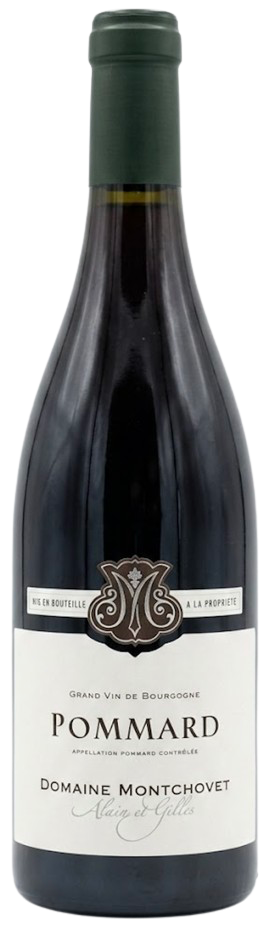 Domaine Montchovet Alain et Gilles - Pommard 2023Pommard→
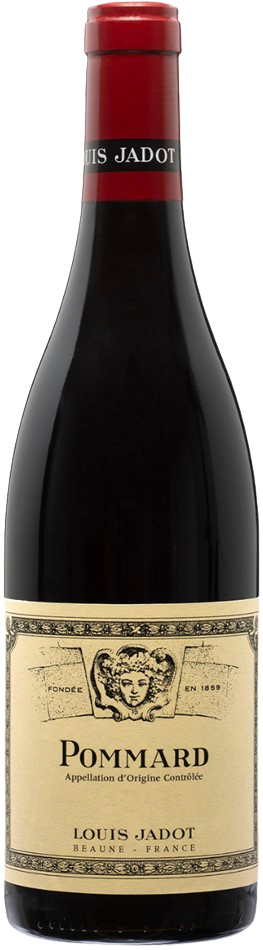 Louis Jadot - Pommard 2023Pommard Appellation d'Origine Contrôlée→
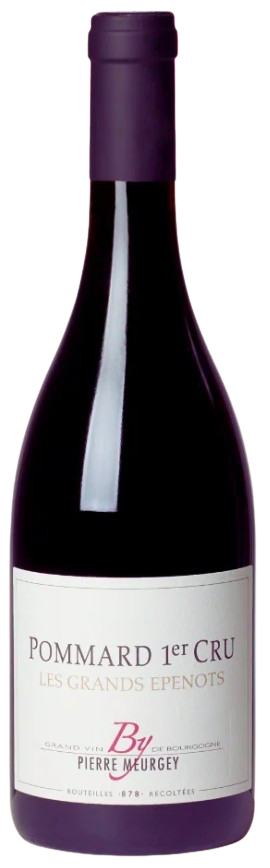 Pierre Meurgey - Pommard Premier Cru Les Grands Epenots 20231er Cru · Pommard Premier Cru→
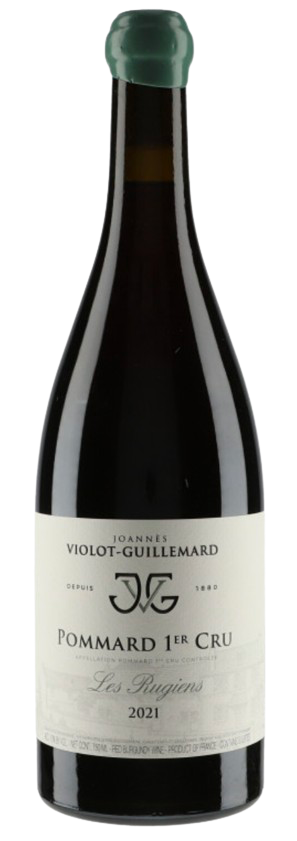 Thierry Violot-Guillemard - Pommard Premier Cru Rugiens 20001er Cru · Pommard Premier Cru→
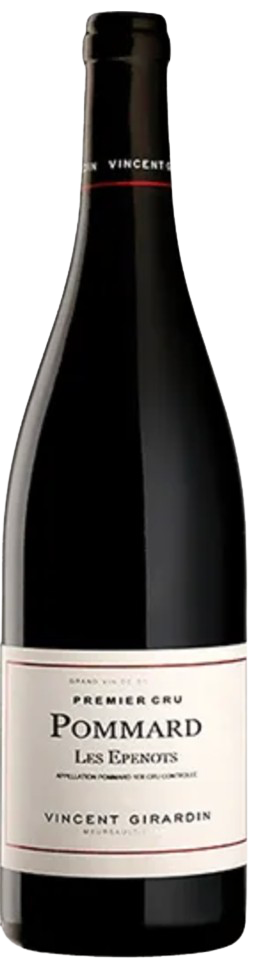 Vincent Girardin - Pommard les Epenots 20151er Cru · Pommard Premier Cru→
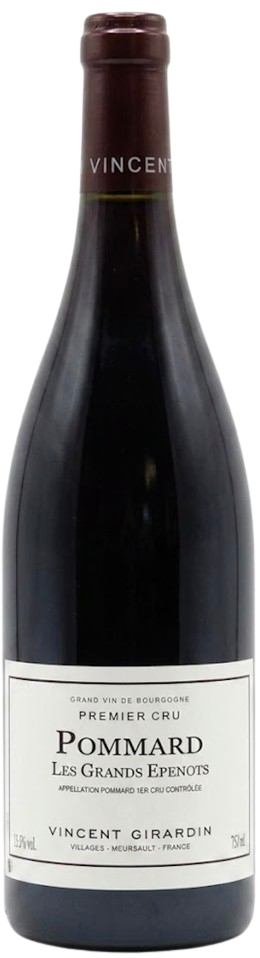 Vincent Girardin - Pommard les Grands Epenots 19981er Cru · Pommard Premier Cru→