Placing Saint-Julien within the Médoc
Saint-Julien occupies the heart of the Haut-Médoc, on the left bank of the Gironde estuary, some fifty kilometres north of Bordeaux. The communal appellation stretches mainly over Saint-Julien-Beychevelle, with a few parcels in Cussac-Fort-Médoc to the south and Saint-Laurent-Médoc to the west. It is one of the most compact in the Médoc, yet of uncommon qualitative density.
Its position is a geographical inheritance rich in meaning. The Romans called the Médoc in medio aquæ, “in the middle of the waters”, between the ocean and the estuary. Saint-Julien touches Pauillac to the north and heralds Margaux to the south: it inherits a little of both — structured enough to age for a long time, polished enough to remain readable young. It is this in-between position that underpins its reputation as the linking thread of the Médoc.
The terroir: gravels torn from the Pyrenees and the Massif Central
Saint-Julien's soil was not born on the spot. These are detrital alluvia carried by the Garonne during the Quaternary, from the Pyrenean heights and the Massif Central, then deposited over the Médoc's old sandy substrate. Rolled over hundreds of kilometres, these pebbles, gravels and sands mixed with a little clay form what are called the “graves” — the same that gave its name to the Graves AOC further south.
In the communes of the great Médoc appellations, including Saint-Julien, these layers of graves are especially thick: they can exceed ten metres. They are arranged in gentle hills, the “croupes de graves” (gravel rises), separated by small drainage streams, the “jalles”. On the surface, Saint-Julien offers a veritable sea of pebbles, seemingly uniform; it is in the subsoil, where clay lenses alternate with more or less gravelly beds, that the complexity lies which gives the wines their variety from one château to the next.
Why these gravels make great wines: drainage
Everything hinges on the vine's relationship with water. A gravel rise holds very little water: the jalles drain the excess towards the estuary, and the soil, poor and free-draining, offers no easy reserve. The vine is therefore forced to send its roots deep in search of water, sometimes several metres down. This moderate, steady water stress curbs vigour, limits berry size and concentrates the material: colour, tannins and aromas are all densified.
The strength of this terroir is its regularity. Once the vines are old enough to have colonised their entire rooting space, they fear neither excess water — filtered by the graves — nor drought — offset by moisture drawn from the depths. Hence vintages more consistent than on less free-draining soils, and this ability to ripen a Cabernet-Sauvignon for long ageing year after year.
The Gironde, a natural thermostat
Saint-Julien lives facing the estuary, and this mass of water plays a decisive climatic role. In a temperate oceanic climate, the Gironde cushions temperature swings: it limits spring frosts, tempers summer heat peaks and, above all, prolongs the mildness of the late season.
This factor is decisive for Cabernet-Sauvignon, a late-ripening variety that needs a long, luminous autumn to reach full phenolic ripeness. In the Médoc the rule is well known: years with a fine late season produce the great vintages. Proximity to the river gives Saint-Julien an extra chance of achieving it every year.
Cabernet-Sauvignon, a grape born in the Médoc
Cabernet-Sauvignon reigns here, as throughout the Médoc. Yet this variety is probably a child of the region: genetic analyses carried out at the University of California, Davis showed that it was born from a cross, less than six centuries ago, between Cabernet Franc and Sauvignon Blanc — a hybridisation that most likely occurred in the Médoc itself. Formally identified at Pauillac in 1783, it only established itself as the king grape after the replanting that followed phylloxera.
Each grape plays a precise role in the blend. Cabernet-Sauvignon brings the backbone, the tannic structure and the ageing capacity; Merlot, planted on the more clayey sectors, gives flesh, roundness and more immediate pleasure; Cabernet Franc adds perfume and finesse. In more discreet touches, Petit Verdot reinforces colour and spice in the great vintages, while Malbec, once widespread, survives only as a historical presence and Carménère as a relic. All the skill of Saint-Julien's growers lies in this balance, readjusted each year parcel by parcel.
The style of the wines: between the power of Pauillac and the grace of Margaux
If one word had to sum up Saint-Julien, it would be balance. The colour is a deep ruby, almost black in youth. The nose, fine and complex, blends red and black fruits (blueberry, blackberry) then, with time, notes of prune and of ageing — cocoa, toast, coffee, tobacco. On the palate the material is dense yet the texture stays velvety, the tannins deep and silky, the finish long.
Two temperaments are traditionally distinguished according to geography — a convenient reading, though debated. In the north of the appellation, around the Léoville estates, the wines are more powerful and structured, close to the spirit of Pauillac. In the south, around Beychevelle, they turn more supple and charming, nearing the finesse of Margaux. Between the two, a whole range of nuances makes the richness of Saint-Julien.
A little history: Dutch drainage, Anglo-Irish trade and the 1855 classification
The Médoc was not always wine country. This marshland was drained from the reign of Henri IV onwards thanks to engineers from the Netherlands; once drained, the gravel rises reminded Bordeaux merchants of the great terroirs of their day. The financing of the works and the rise of the vineyard owe much to English and Irish traders, whose names still mark Saint-Julien's labels — Léoville-Barton and Langoa-Barton are the most famous witnesses.
The appellation's aura also owes to the imperial classification of 1855, drawn up for the Paris Universal Exhibition. Eleven Saint-Julien growths appear in it — five seconds, two thirds and four fourths — an extraordinary proportion for an appellation of this size. The AOC's current specification was approved in 2011. Finally, tradition has it that the name Beychevelle comes from “baisse-voile” (lower-sail): ships sailing up the Gironde would lower their sails before the château of the Duke of Épernon, Grand Admiral of France — an anecdote that captures Saint-Julien's estuarine roots.
Serving and pairing a Saint-Julien
The classified growths demand patience: in fine vintages they blossom between fifteen and thirty years, sometimes more. The second wines and cru bourgeois, more supple, open from eight to ten years. Decanting for one to two hours usefully airs still-young bottles; serve them at around 16–17 °C.
At the table, these structured reds call for honest, flavourful dishes: roasted or grilled beef such as an entrecôte à la bordelaise, lamb, feathered and furred game, and characterful cheeses such as an aged Cantal or a blue. The balance between fruit, tannin and freshness — the appellation's signature — reveals itself fully.
The grape varieties of Saint-Julien
Saint-Julien wines on 1001caves
Detailed pages: the cuvée, the estate, the drinking window and the bottles for sale between collectors.
 Château Beychevelle 19664ème Grand Cru Classé · Saint-Julien→Château Beychevelle 19824ème Grand Cru Classé · Saint-Julien→Château Beychevelle 20054ème Grand Cru Classé · Saint-Julien→Château Beychevelle 20104ème Grand Cru Classé · Saint-Julien→Château Beychevelle 20124ème Grand Cru Classé · Saint-Julien→Château Beychevelle 20224ème Grand Cru Classé · Saint-Julien→
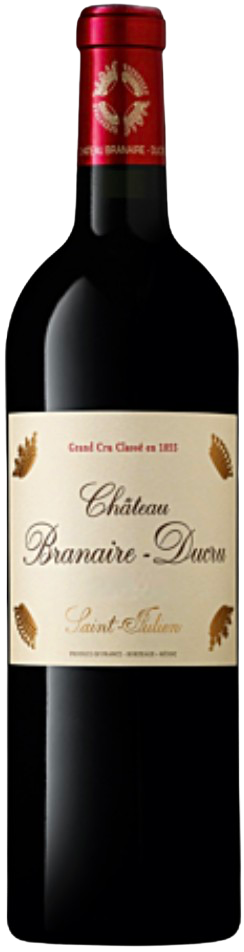 Château Branaire-Ducru 19854ème Grand Cru Classé · Saint-Julien→
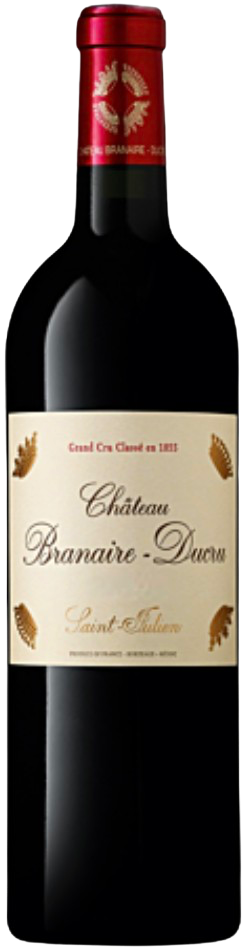 Château Branaire-Ducru 19864ème Grand Cru Classé · Saint-Julien→
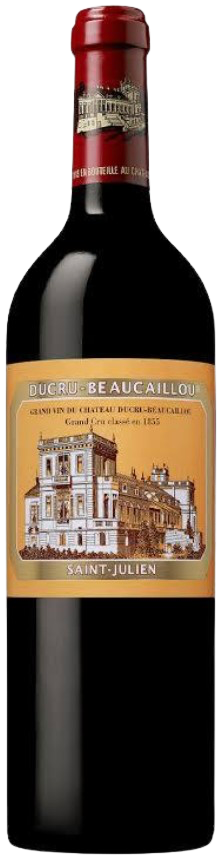 Château Ducru-Beaucaillou 19992ème Grand Cru Classé · Saint-Julien→
 Château Gruaud Larose 19852ème Grand Cru Classé · Saint-Julien→
 Château Lagrange 19943ème Grand Cru Classé · Saint julien→
 Château Léoville Las Cases 19962ème Grand Cru Classé · Saint-julien→
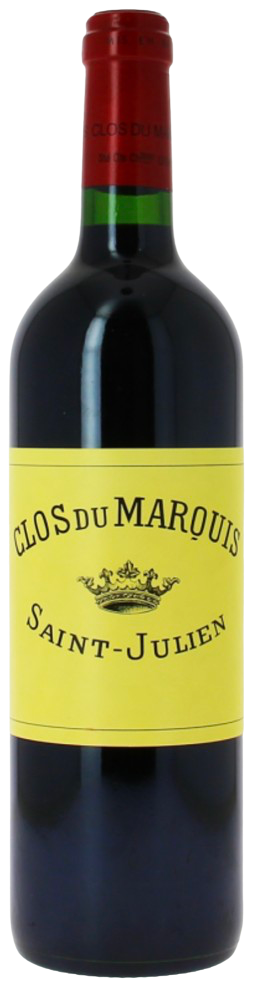 Château Léoville Las Cases - Clos du Marquis 1989Saint-Julien→
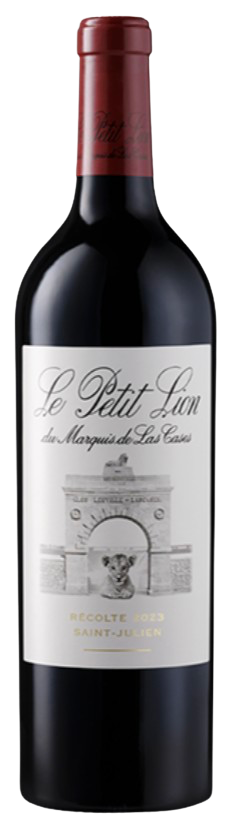 Château Léoville Las Cases - Le Petit Lion 2012Saint-Julien→
 Château Léoville Poyferré 19962ème Grand Cru Classé · Saint-Julien→
 Château Talbot 19814ème Grand Cru Classé · Saint-Julien→
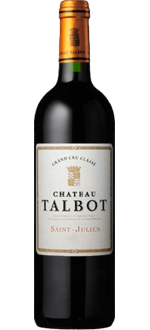 Château Talbot 19854ème Grand Cru Classé · Saint-Julien→Château Talbot 19894ème Grand Cru Classé · Saint-Julien→Château Talbot 20064ème Grand Cru Classé · Saint-Julien→Château Talbot 20144ème Grand Cru Classé · Saint-Julien→Château Talbot 20224ème Grand Cru Classé · Saint-Julien→
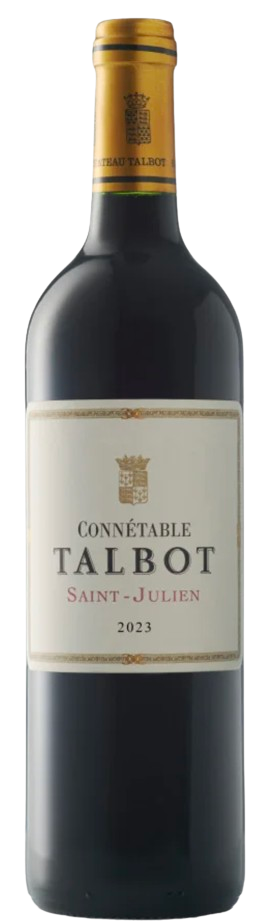 Connetable Talbot, Saint-Julien 2019Saint-Julien→Connetable Talbot, Saint-Julien 2023Saint-Julien→
 Domaines Henri Martin - Château Gloria 2023Saint-Julien→Domaines Martin - Château Gloria 2016Saint-Julien→
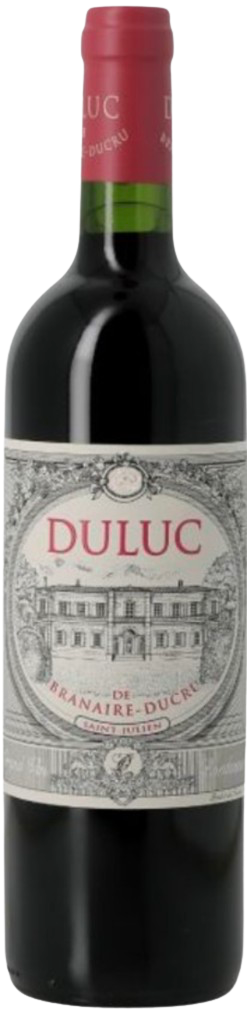 Château Branaire-Ducru - Duluc de Branaire-Ducru 19974ème Grand Cru Classé · Saint-Julien→
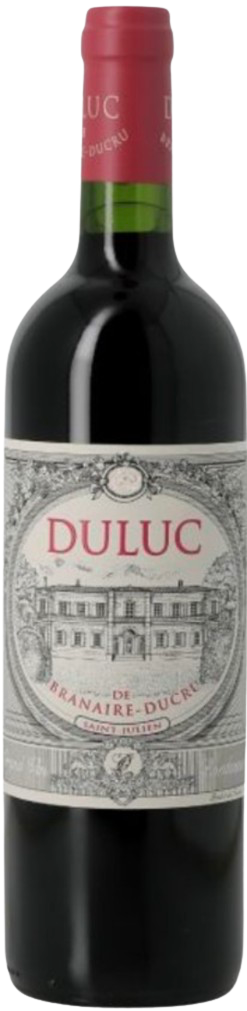 Château Branaire-Ducru - Duluc de Branaire-Ducru 20054ème Grand Cru Classé · Saint-Julien→
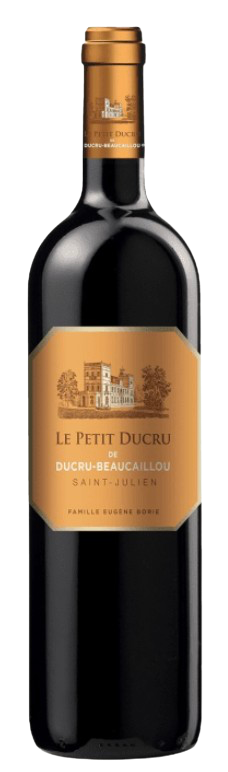 Famille Eugène Borie - Le Petit Ducru 2018Saint-Julien→
 Gruaud Larose 20082ème Grand Cru Classé · Saint-Julien→Léoville Poyferré 19702ème Grand Cru Classé · Saint-Julien contrôlée→
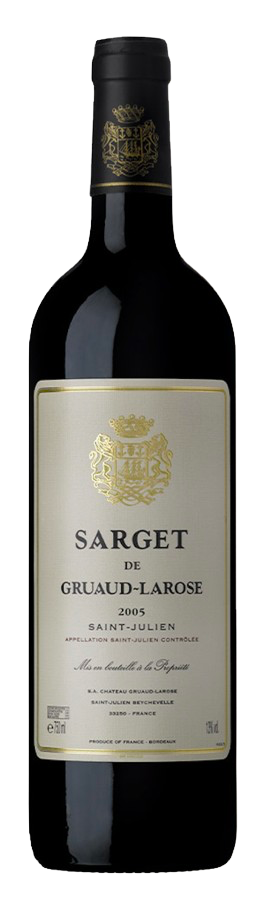 Château Gruaud Larose - Sarget de Gruaud Larose 2012Saint-Julien→